







Introduction:When you see a bag of coffee beans labeled "Huakui from Brazil," do you find yourself puzzled? This article delves into the true origins of Huakui coffee beans, common packaging misconceptions, and how to identify authentic Huakui based on origin, variety, and processing method. From the natural-processed beans from the Guji Hambella region in Ethiopia’s Guji zone to the frequent confusion between Typica and Ethiopian heirloom varieties, this guide will help you grasp the core characteristics of Huakui and avoid being misled by incorrect information.
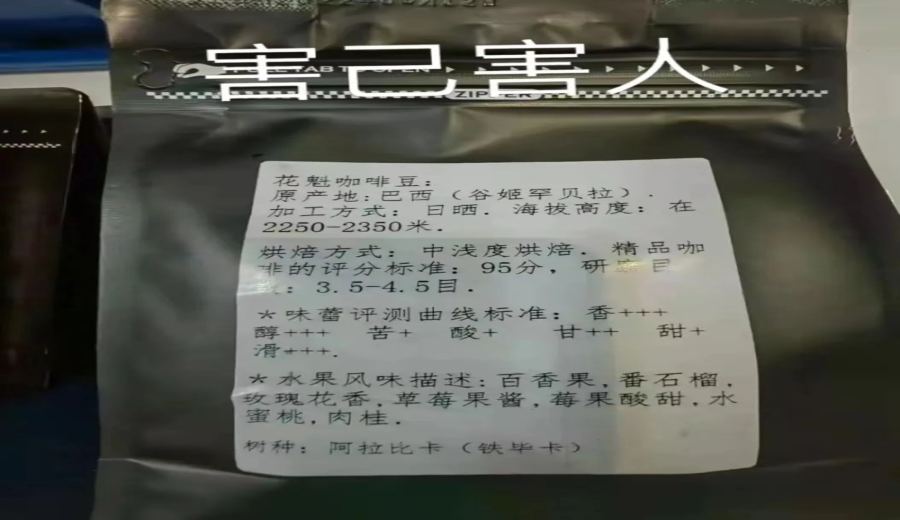
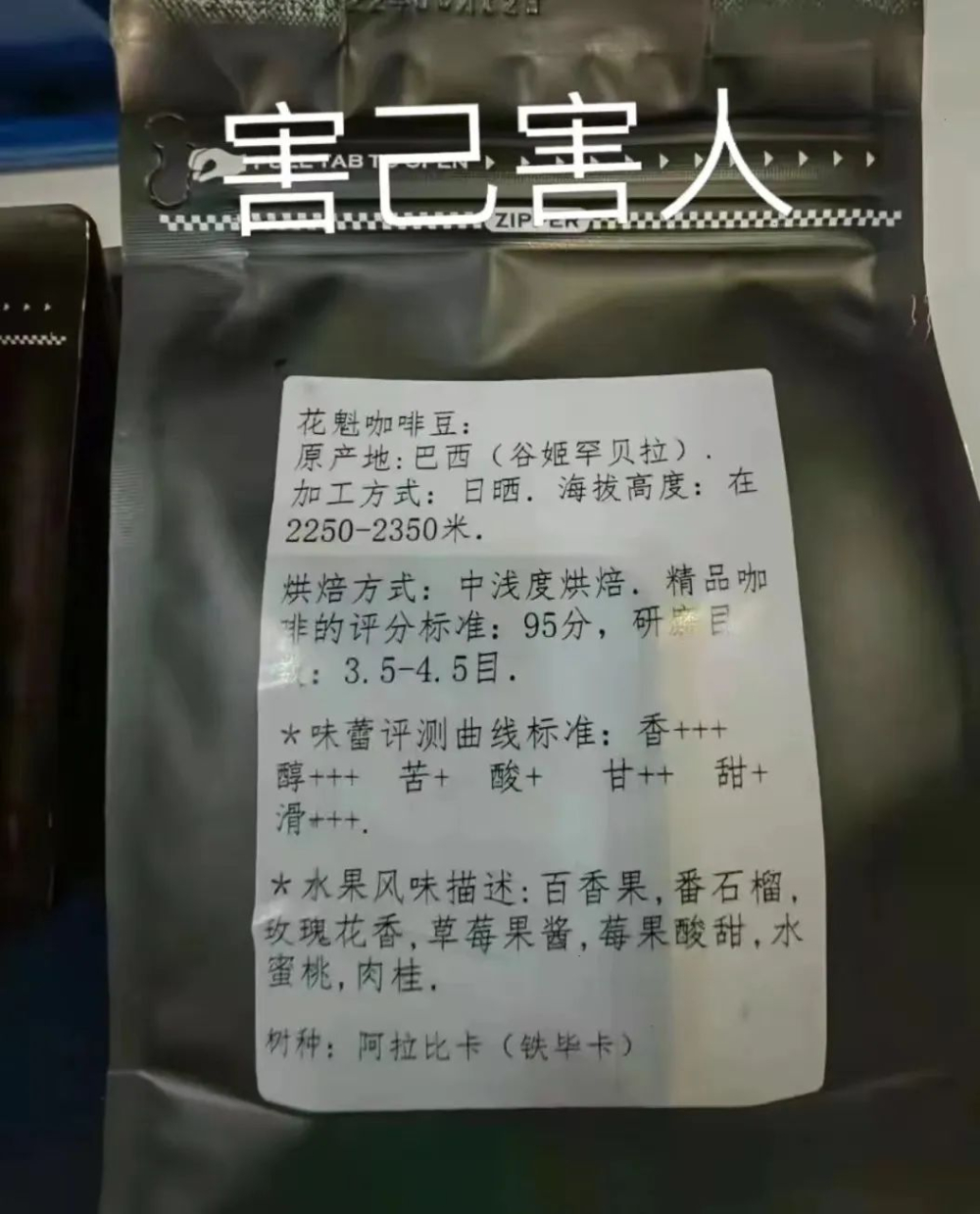
Recently, a photo of a coffee bean package sparked widespread discussion on social media. The product, labeled as "Huakui coffee beans," astonishingly listed its origin as "Brazil (Guji Hambella)." This left many industry professionals and coffee enthusiasts shocked. Beyond a simple labeling error, it touches on the authentic origins, varietal traits, and common market misunderstandings surrounding the renowned Huakui beans. This article will dissect the historical background, regional distribution, varietal identification, processing methods, and common packaging myths to help readers understand the true nature of Huakui.
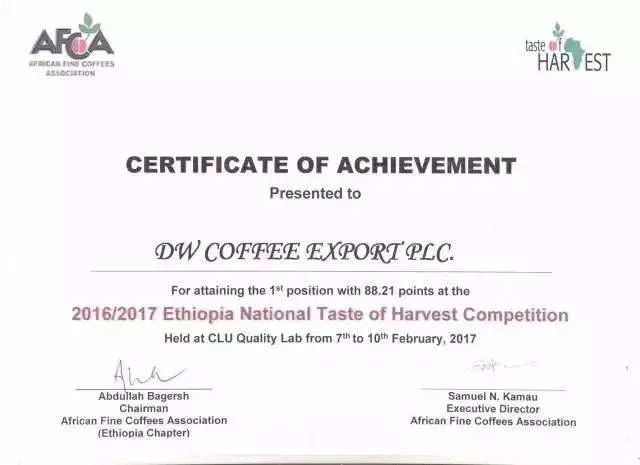
The history of Huakui (by DHW Specialty Coffee) dates back to the 2017 TOH (the Taste Of Harvest) green coffee competition. At that time, in the Hambella sub-region of Ethiopia’s Guji zone, a natural-processed lot of Ethiopian heirloom variety coffee beans from the Buku Abel washing station won the natural category championship with its intense strawberry and creamy aroma. Initially unnamed, the beans were later officially named "Huakui" after being introduced by a Beijing-based green coffee trader, specifically referring to the championship-winning lot.
After winning the championship in 2017, DW company continued to expand by establishing additional washing stations in the Dimtu area, which lies at the heart of the Hambella region. These include Buku Abel, Buku Saysay, Haro Soresa, and Tirtiro Goye, producing approximately 1,100 tons of coffee annually. Among them, only the specific small sub-region processed by Buku Abel encompasses the area where the original Huakui champion beans were produced. In subsequent years, Huakui 2.0, 3.0/3.1, 4.0, 5.0 were successively released, and by 2022, the latest Huakui 6.0 crop had arrived at the port awaiting export, though it has not yet entered the Chinese market.
In addition to the standard X.0 series of Huakui, between 2018 and 2019, there were also batches with flavors similar to the 2017 Huakui, though slightly less rich in body and aftertaste. Comparative analysis revealed that these unique flavor profiles mainly came from a small quantity of particularly small-sized beans within the lot. These small beans were confirmed to exist in 2019, so starting in 2020, Huakui was divided into the standard X.0 series and the small-bean Huakui, the latter not belonging to the X.0 series.
Returning to the controversial packaging image, we can examine its obvious errors one by one. First is the origin labeled as "Brazil (Guji Hambella)." In reality, Brazil is located in South America and is one of the world’s largest producers of Arabica coffee, but Guji Hambella (correctly spelled Guji Hambella) is a sub-region within Ethiopia’s Guji zone. Combining two entirely unrelated continents and regions in this way is not only geographically incorrect but also misleads consumers about Huakui’s true provenance.
Importantly, for coffee beans to be called "Huakui," they must strictly meet the following criteria: originating from the Guji Hambella region in Ethiopia, processed using the natural method by the Buku Abel washing station under DW company, and made from Ethiopian heirloom varieties. In other words, not all coffee beans from Ethiopia’s Guji Hambella can be called Huakui.
Next is the varietal labeled on the packaging as "Arabica (Typica)." Typica is one of the oldest and most distinct single varieties within the Arabica family, with clear defining characteristics, but the beans used in Huakui are not Typica—they are Ethiopian heirloom varieties. Ethiopian heirloom varieties refer to a collective term for various naturally hybridized, unselected coffee varieties native to the region. Due to diverse growing environments and mixed harvesting, these beans often vary in size and appearance. It is worth noting that Brazil typically does not grow Typica because it is less resistant to disease, has low yield, and is unsuited to the country’s generally high temperatures, low altitudes, and lack of microclimates. The main variety grown in Brazil is Bourbon, chosen for better economic returns and disease resistance.

Another obvious misconception is the altitude labeled as "2250m-2350m." While this height does align with the actual growing environment of Ethiopia’s Guji Hambella region, Brazil, as a country with generally low altitudes, primarily cultivates Arabica coffee between 600–1000 meters, rarely exceeding 1500 meters. Therefore, labeling the origin as Brazil while also stating this altitude range is contradictory.
In terms of scoring, the packaging claims that Huakui achieves a specialty coffee score of "95 points." However, according to the SCA (Specialty Coffee Association) cupping standards, a score above 80 qualifies as specialty coffee—80–84.99 is "Very Good," 85–89.99 is "Excellent," and 90–100 is "Outstanding." Under the COE (Cup of Excellence) standards, a score above 87 is considered competition-level excellence. While Huakui is indeed high-quality coffee, not all lots reach such an extreme score, and the Huakui commonly encountered by consumers usually falls within the 85–90 range, rather than the legendary 95-point ratings.
Regarding grind size, the packaging states "3.5–4.5 mesh," which is actually a common misunderstanding. Mesh refers to the number of holes per square inch of a sieve—the higher the number, the finer the particles. However, coffee grounds are not traded or measured by mesh size. Generally, pour over recommends a grind size of about 600–800 microns, equivalent to 22–26 mesh, far from the 3.5–4.5 mesh range stated. This kind of labeling is not only unprofessional but also likely to confuse consumers.

Finally, the packaging also features something called a "taste bud evaluation curve standard," which is not an industry-recognized cupping system. The most authoritative global coffee evaluation systems are SCAA and COE, both of which have clear cupping categories and scoring criteria. For example, SCA includes 11 categories: dry/wet aroma, flavor, aftertaste, acidity, body, uniformity, balance, cleanliness, sweetness, overall impression, and defect deductions. COE includes 9 categories: dry/wet aroma, cleanliness, sweetness, acidity, mouthfeel, flavor, aftertaste, balance, and overall impression.
Additionally, regarding flavor descriptions, if these beans are indeed from the Buku Abel washing station in Ethiopia’s Guji Hambella region, processed naturally using Ethiopian heirloom varieties, then presenting berry and creamy notes under medium-light roasting is reasonable. However, it should be noted that coffee, as an agricultural product, can vary in flavor each year due to subtle changes in climate, soil, and processing methods. Although in recent years Huakui has been characterized by rich berry acidity and sweetness, not every harvest presents the same flavor profile.
In summary, the authentic identity of Huakui coffee beans has strict definitions—from origin and variety to processing method, none of the steps can be confused. By understanding these key details, you can not only avoid being misled by incorrect packaging information but also more accurately select and enjoy truly premium Huakui coffee. For coffee professionals, respecting the essence of the product and conveying accurate knowledge is a fundamental responsibility to consumers and the industry.
The above content is compiled by CoffeeHunters, a coffee news website.


