








Introduction:To brew a well-balanced Americano, the key lies in mastering the coffee-to-water ratio. This article delves into the ideal ratios for different roast profiles, using a classic Italian blend as an example to suggest practical ranges from 1:7 to 1:8. It also breaks down the golden ratio for iced Americanos and the brewing tips for “all-ice Americanos,” teaching you how to adjust proportions and steps to make the coffee aroma last longer and the taste crisper.
Many people think an Americano is just espresso with water added, but the amount and ratio of water actually have a huge impact on the final flavor. To brew a cup that’s refreshing yet layered, getting the coffee-to-water ratio right is crucial. Especially for beans with varying roast levels and flavor profiles, the ideal espresso-to-water ratio differs.
Take a common Italian blend, for example. These beans usually feature notes of caramel, nuts, and cocoa, and the espresso itself tends to be bold and slightly bitter. Therefore, it’s recommended to use a higher coffee-to-water ratio, typically in the range of 1:7 to 1:8 , which helps mellow the intense taste of the espresso and delivers a smoother coffee experience.

When we talk about Americanos, it’s essentially espresso diluted with water, but this “dilution” process is actually full of nuance. Some coffee enthusiasts might wonder how much water is just right. In truth, the amount of water does significantly affect the overall coffee performance—not just strength, but also the layering and balance of flavors.
Especially when making iced Americanos, in addition to the coffee-to-water ratio, you also need to consider the volume of ice cubes and their melting dilution effect. A common practice is to use 40g of espresso, paired with 100g of large ice cubes and 120g of water, forming 1:2.5:3 the golden ratio. This combination ensures the coffee isn’t overly sharp upon drinking, maintains a rich enough flavor, and the large ice cubes melt slowly, helping to prolong the coffee’s cool temperature for a better drinking experience.
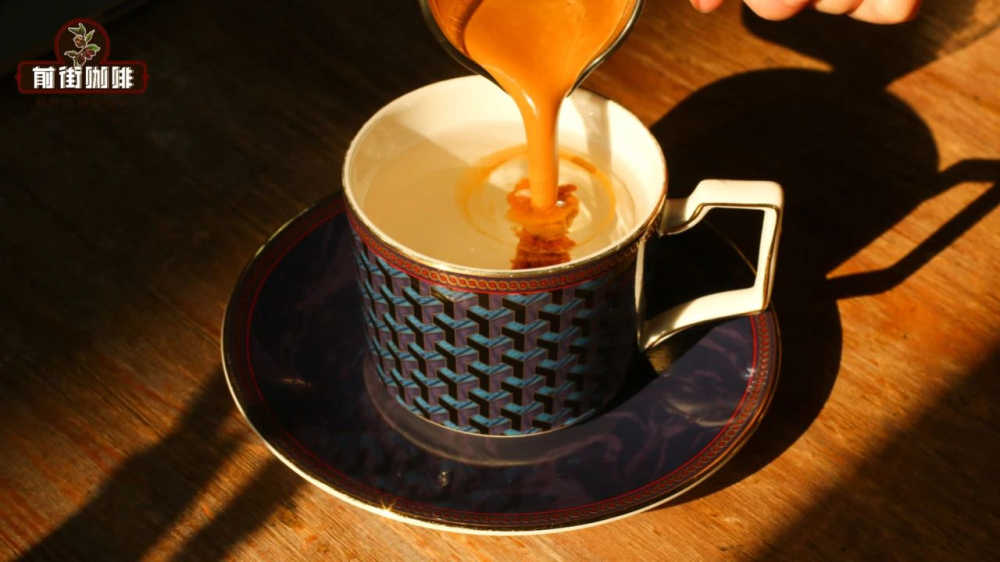
Beyond the traditional iced Americano, many coffee shops also offer a “hidden menu” item—the all-ice Americano. This drink uses only espresso and ice cubes. Though it seems simple, its preparation hides some tricks. The most crucial difference is: add the ice cubes first, then pour in the espresso.
The purpose of this is to let the freshly extracted hot coffee liquid come into immediate contact with the ice, rapidly lowering the temperature—a process known as “extraction cooling.” This method effectively slows down the evaporation of aroma, making the coffee’s fragrance more concentrated and long-lasting. Many baristas point out that this is similar in principle to a chilled portafilter, both aiming for instant cooling to preserve more aromatic compounds.

A coffee’s aroma performance is closely related to temperature. At high temperatures, aroma molecules are more active and evaporate quickly, which can lead to aroma loss. Rapidly cooling the coffee after extraction helps lock in more volatile aromatic compounds, allowing you to enjoy a richer, more multi-dimensional coffee aroma.
Additionally, the sequence of “adding ice first, then pouring espresso” also cools the coffee liquid more quickly, thereby improving the overall mouthfeel. Many professional baristas suggest that if you want to further enhance aroma retention and cooling effects, you can add one more small trick to elevate the all-ice Americano to an even better flavor level.
The above content is compiled by CoffeeHunters, a coffee news website.


