








Introduction:Have you ever wondered just how much the flavor of pour over coffee differs from that of drip bags? This article delves into an actual side-by-side test of pour over and drip bag brewing, taking a close look at the tangible differences in grind consistency, fine particle distribution, and extraction stability between hand grinders and electric grinders. The author shares a personal experience using a mid-range hand grinder at home during the Spring Festival and an electric grinder at a county-level coffee shop, helping you understand the impact of pre-ground coffee on flavor and how to make the most suitable coffee choice based on your equipment.
So which is better, pour over or drip bag coffee? From the perspective of a coffee enthusiast who’s self-taught along the way, I’ve always stood firmly on the side of pour over, because drip bags simply can’t compare when it comes to flavor expression. Professional pour over emphasizes freshly ground beans and proper filter cup pairing—two things that pre-ground drip bags lack.
“I’d rather not drink coffee at all than drink coffee made with pre-ground beans.” That’s my honest opinion. I remember about two weeks ago during the Spring Festival when I returned to my hometown. As someone who feels off without their daily coffee, I naturally brought along my full pour over setup.

My gear isn’t top-tier, but it’s considered mid-range: including a Hario V60 filter cone, pour over kettle, Kono filter paper, and a Tiamo thermometer. The overall setup is not far off from what many professional shops use. As for the grinder, it’s a hand grinder I bought about four years ago for around 800 yuan. At the time, it was considered a mid-to-high-end model. I used it frequently in the first six months, and it felt great in hand. But as the number of times I returned home decreased, this grinder ended up collecting dust.
With the basic tools already in place, all I needed to do was bring coffee beans home to start brewing. However, on the very first day back, after eagerly brewing a cup, problems immediately arose. Based on my experience with the bed of grounds, it was obvious that a large amount of fine particles had settled, causing blockage in the V60’s bottom holes and making the water flow unusually slow. I made some immediate adjustments.
Although the overall flavor of the coffee was still decent—after all, the beans themselves were of good quality—the level of detail and body were noticeably inferior compared to what a professional shop could achieve with a high-quality grinder.
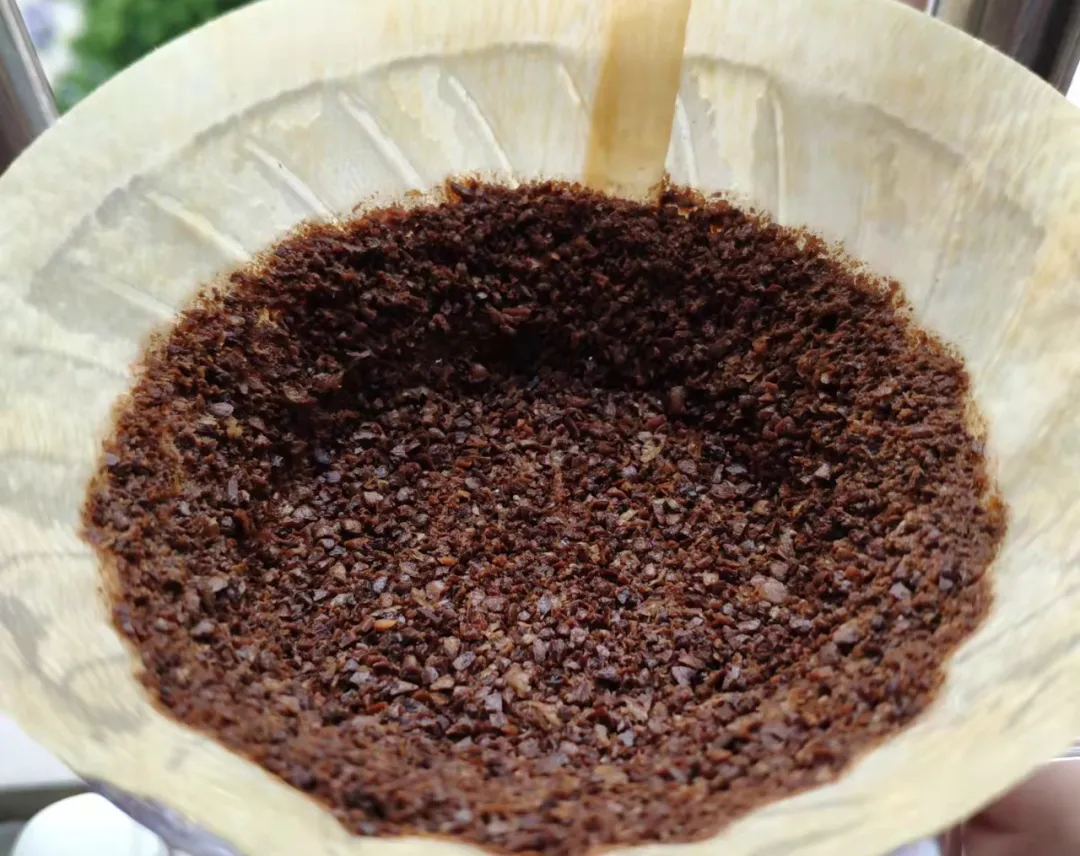
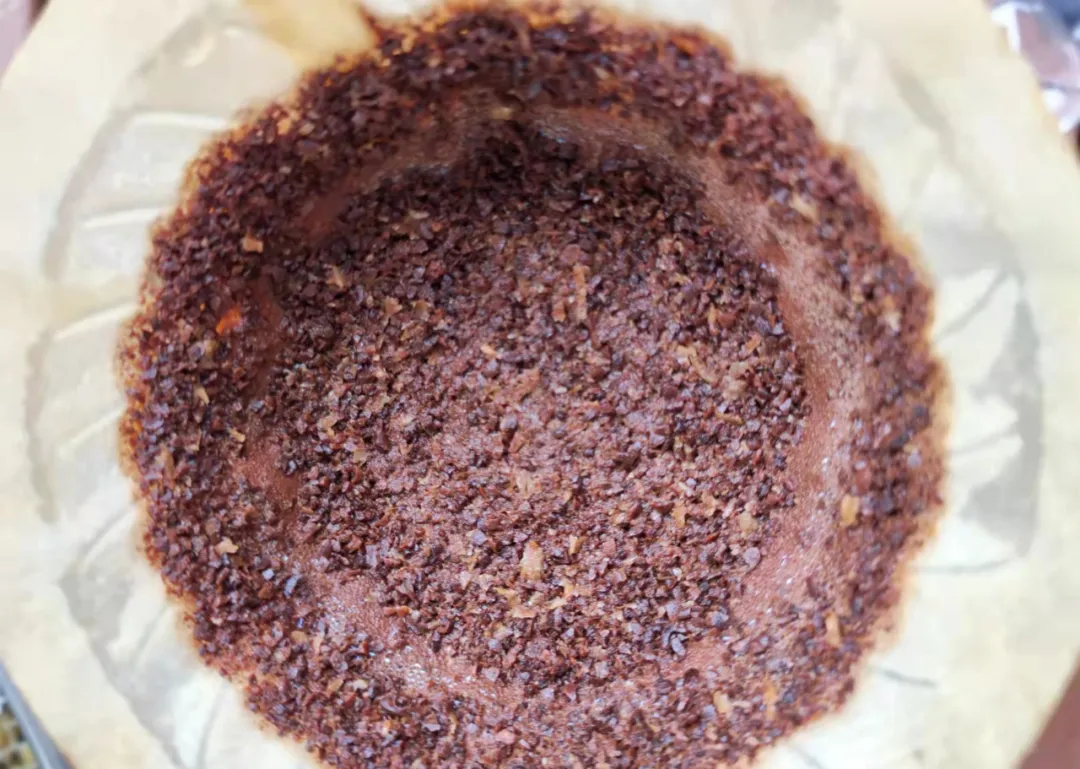
Looking at the bed of grounds, the distribution of coarse and fine particles at the bottom of the coffee bed was extremely uneven. It was easy to spot distinct areas of larger particles and piles of extremely fine grounds, especially along the inner wall and base of the filter cone, where muddy-like ultra-fines accumulated. This is exactly what some brands have referred to as “excessively scattered particle distribution,” where coarse and fine grounds cluster separately, leading to uneven extraction.
If this had happened four years ago, I might have thought the coffee was pretty good, because I hadn’t yet experienced equipment capable of more uniform grinding. But once you’ve used a grinder with excellent grind consistency, it becomes hard to accept such unstable extraction results. Of course, there are industry insights on how to improve extraction through technique adjustments even with inconsistent grinds—“If the grinder performs so poorly and the coffee particles are so uneven, is there still any way to brew good coffee?”
I tried out each of the suggestions mentioned in that article, such as adjusting the grind size and pour rate. The next day, I tried again, and the flavor did improve somewhat, particularly in terms of more distinct details—but compared to the coffee made with the county coffee shop’s EK electric grinder, there was still a clear gap. More importantly, what would normally take five minutes turned into a fifteen-minute process due to multiple adjustments and blockages.
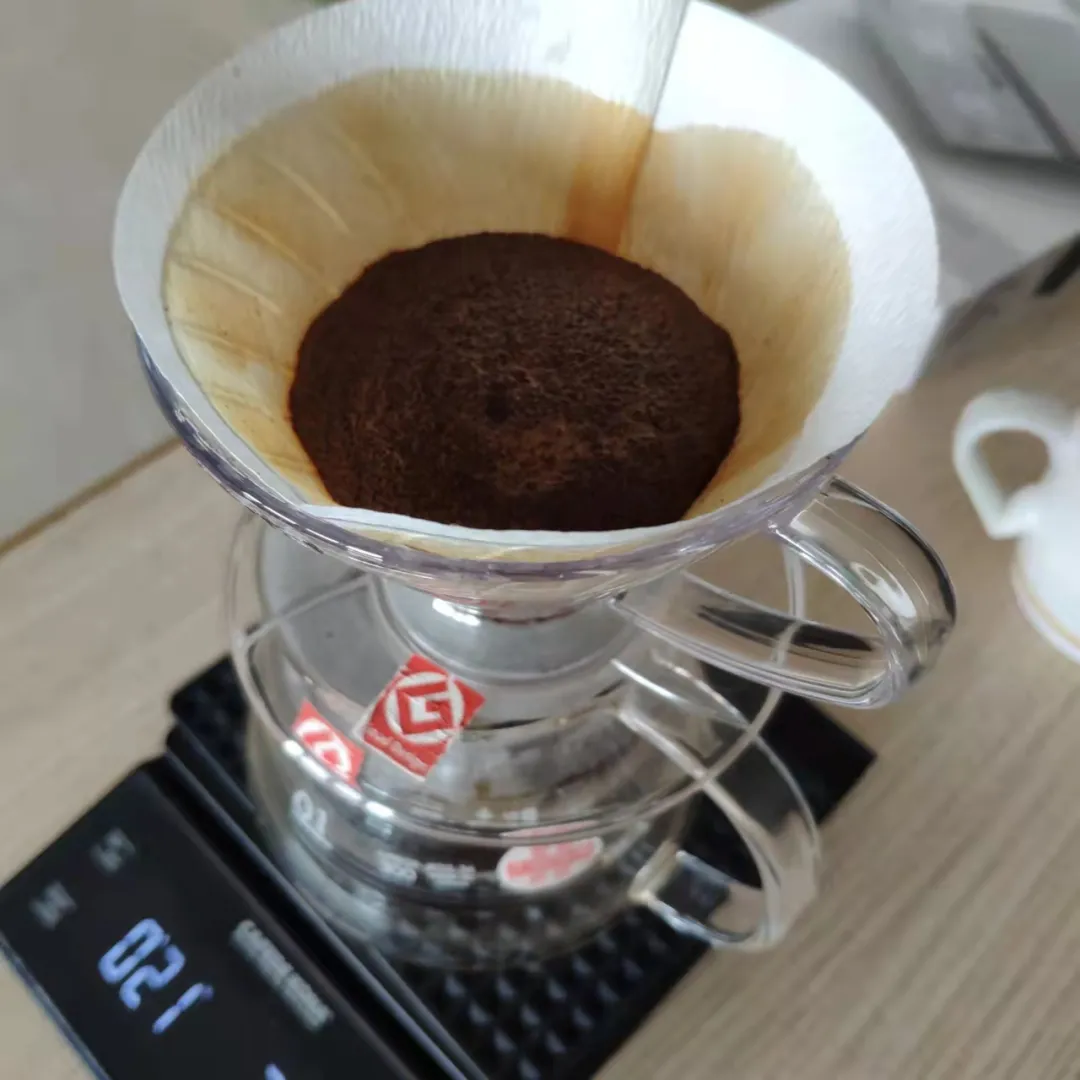
During the Spring Festival, my family schedule was packed tight, with every second precious. To avoid wasting time on repeated adjustments, I decided to head to a coffee shop in the county town and have them use their EK grinder to freshly grind the beans and make me a drip bag. Surprisingly, even small-town coffee shops these days are generally equipped with EK-grade mid-to-high-end commercial grinders.
The reason I opted for a drip bag instead of bringing my own beans and brewing pour over myself was mainly because I believe the biggest difference between pour over and drip bags isn’t the brewing method, but rather the difference between “pre-ground” and “freshly ground.” For me, drinking a drip bag and having the coffee shop freshly grind beans for pour over don’t feel all that different in the overall drinking experience. Plus, drip bags are much more convenient, saving you the hassle of weighing, distributing grounds, and cleaning the filter cone.

This hometown trip made me re-evaluate the relationship between hand grinding and pour over. In the past, I saw manual grinding as a kind of ritual and romance. But in reality, if your equipment is limited, it can also become a burden. If you ask me whether I’d choose to use that hand grinder to brew coffee again, the answer is clear: I’d without hesitation go for the drip bag.
From this real-world test and experience, I learned a simple truth: if you haven’t experienced higher-quality equipment, your current choice is the best one for you; if you’ve never used a high-performance grinder like the EK, you might think that a hand grinder is already more than sufficient.

The above content is compiled by CoffeeHunters, a coffee news website.


