







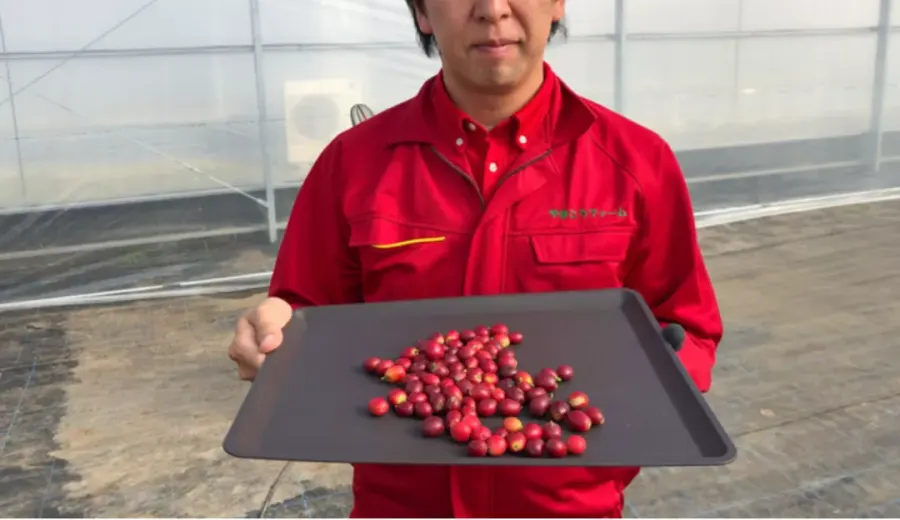
Introduction:After years of research, Yamako Farm in Okayama City, Japan, has successfully cultivated Typica coffee trees in a greenhouse and is expected to harvest its first batch of domestically grown coffee beans in February 2022. This breakthrough is not only a milestone in the history of coffee cultivation in Japan but also offers new insights for the coffee industry in high-latitude regions. This article delves into the cultivation journey of Yamako Farm, the key technical details, and the future potential of domestic coffee production, providing a comprehensive look at everything from greenhouse environment control to flavor potential.
Global coffee cultivation has long been concentrated within the coffee belt between the Tropic of Cancer and the Tropic of Capricorn. Due to its cold climate, Japan has historically been unable to achieve commercial domestic cultivation. However, Yamako Farm in Okayama City, after years of experimentation, has finally succeeded in getting Typica coffee trees to flower and fruit in a greenhouse environment, with the first harvest of domestically grown Japanese coffee beans expected in February 2022. This achievement not only marks a breakthrough in Japan’s coffee cultivation technology but may also pave a new path for the coffee industry in high-latitude regions.
Despite numerous challenges, Japanese growers have not given up. They have chosen relatively warmer southern regions and implemented multiple cold protection measures to address the severe winter cold, striving to create a microenvironment suitable for coffee tree growth. After relentless effort, the coffee trees at Yamako Farm have finally borne fruit successfully, with the fruits now entering the maturity stage and an historic harvest season on the horizon.
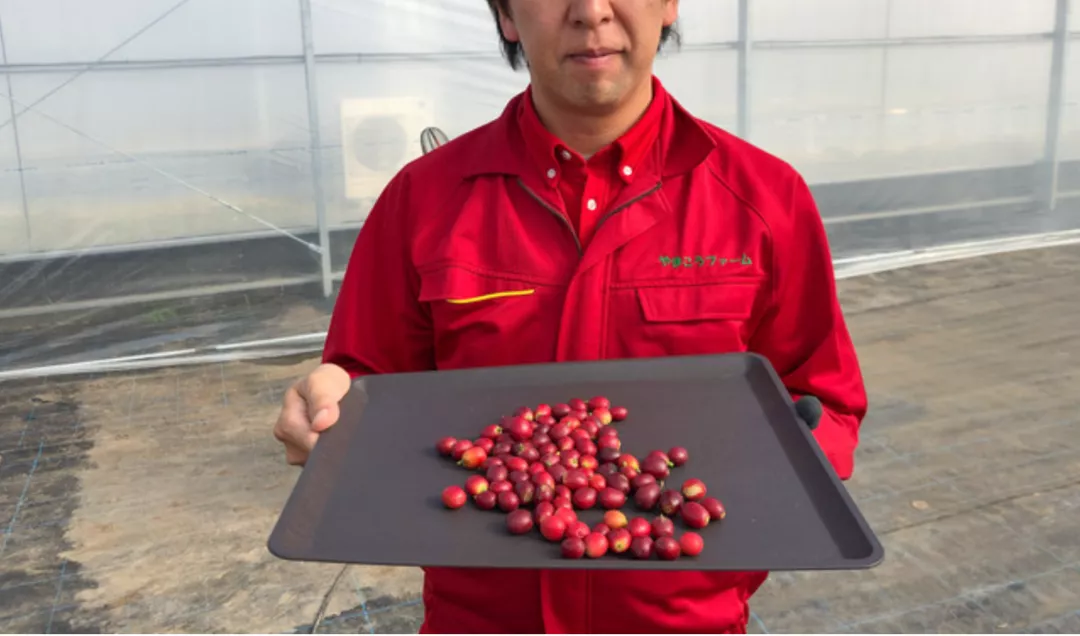
Located in southern Japan, Okayama City is known as the “Land of Sunshine” and enjoys abundant sunlight and a relatively warm climate. Yamako Farm initially focused on the localized cultivation of tropical crops such as pineapples, mangoes, papayas, and bananas. After successfully growing papayas and bananas in greenhouses, they extended their expertise to the more challenging endeavor of coffee cultivation.Temperature and humidity control in the greenhouse environmentbecame crucial, and the farm owner, Yasuke Yamamoto, further optimized the greenhouse design to ensure the coffee trees could grow under stable conditions.
Yasuke Yamamoto stated that as the world’s fourth-largest coffee-consuming country, Japan leads in roasting and brewing techniques but has long lacked a supply of domestic coffee beans. After successfully cultivating tropical fruits, he introduced Typica variety coffee trees and planted them inside the greenhouse. Considering the intense sunlight in the Okayama area, solar panels were specially installed on the greenhouse roof. In addition to generating electricity, they also provide moderate shading to prevent the coffee trees from being damaged by prolonged exposure to strong light.The shading rate is controlled at 30%-50%to simulate the light conditions of the coffee trees’ native environment.
The successful cultivation of domestic coffee beans in Japan relies not just on the greenhouse as an auxiliary tool, but more importantly on years of in-depth research into agronomic factors. The Yamako Farm team analyzed not only coffee varieties, climate, water quality, and soil, but also went a step further to studythe impact of earthworm species on the soil. Different earthworm species can alter soil acidity and structure, thereby affecting the development of coffee fruits and the final flavor profile. This meticulous soil management is a critical aspect often overlooked by many coffee growers.
Yasuke Yamamoto hopes that this success will attract more industry players to invest in the cultivation and research of domestic coffee in Japan and promote related technologies to rural areas of Honshu. He has also launched the “Japan Organic Coffee Project,” providing coffee seedlings and technical support while recruiting skilled personnel to join the cultivation efforts.If domestic coffee cultivation is scaled up, it could develop into a new agricultural industry in the future, creating more job opportunities.
This batch of coffee beans from the Okayama production area will be showcased at the Kansai Agricultural Week in March 2022 and the Tokyo Agricultural Week in October of the same year, demonstrating the potential of Japanese-grown coffee to the industry. The farm also plans to open for visits in the future, allowing the public to witness the entire process of domestic coffee cultivation and harvesting firsthand.
However, most parts of Japan lie outside the coffee belt between the tropics, and frost is common in winter, so large-scale coffee cultivation still faces challenges. Unless there are further technological breakthroughs, cost-effectiveness remains a primary consideration.But this success has already proven that it is possible, and perhaps one day we will truly be able to enjoy uniquely flavored coffee beans produced in Japan.

The above content is compiled by CoffeeHunters, a coffee news website.


