







Introduction:In 2022, the global coffee market was impacted by multiple factors including abnormal weather conditions and rising costs. As the largest producer of Arabica coffee, Brazil faced a double blow from frost and alternating droughts and floods, leading to poor yield expectations and long-term high futures prices. Yunnan small-grain coffee was not immune either, being significantly influenced by international market trends. This article provides an in-depth analysis of the challenges faced by Brazil’s key coffee-growing regions, the impact of soaring fertilizer costs on coffee quality, as well as the historical and current pricing trends of Yunnan coffee, helping readers grasp market dynamics and bean selection strategies.
In 2021, Brazil’s coffee belt experienced rare natural disasters, including severe frost, prolonged drought, and localized flooding, which made the outlook for the 2022 Arabica coffee harvest highly pessimistic. As a result, futures market prices remained at high levels throughout the early part of the year. Meanwhile, Yunnan small-grain coffee, located in China’s southwest and belonging to a different producing region, also could not escape the fluctuations of the international coffee market.
Looking back from the end of 2021 to the beginning of 2022, Brazilian coffee farmers faced a succession of adverse weather conditions. The arrival of spring in the southern hemisphere had initially brought long-awaited rainfall, allowing coffee trees to flower smoothly, which briefly reassured the industry. However, disappointing news soon followed: a large number of coffee flowers failed to be successfully pollinated and bear fruit after blooming, leading to a significant drop in estimated yields and further intensifying market concerns about a tightening supply of Arabica coffee.
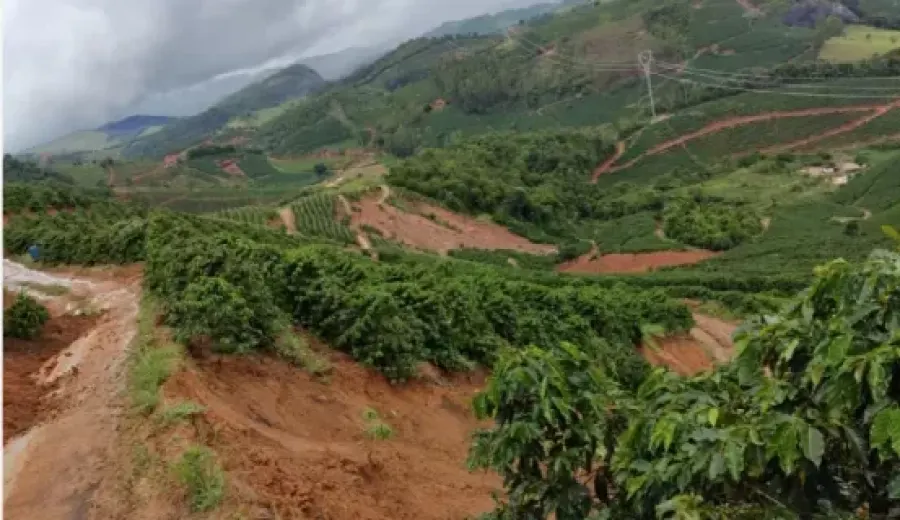
Entering 2022, the situation did not improve. Especially in the first few weeks of the year, Brazil’s coffee-producing regions were hit by consecutive heavy rains, with some areas even experiencing severe flooding, leading to overly saturated soil. This not only hindered coffee plantation management but also increased the risk of landslides. The Minas Gerais state, which accounts for the core of the country’s coffee production, was particularly hard hit, significantly affecting Brazil’s overall coffee exports.
It is worth noting that 2022 was originally expected to be a high-yield year for Brazilian Arabica coffee, theoretically offering greater potential output. However, the extreme weather conditions over the past year have severely weakened this advantage. As early as July 2021, most coffee-growing areas in Brazil experienced widespread frost, damaging the leaves and young buds of many coffee trees; this was followed by a prolonged drought in September, which delayed the flowering period and directly affected both the overall flowering rate and subsequent fruit-setting rate.
According to a local coffee technology promotion specialist, even during what should have been a high-yield year, the flowering performance of coffee trees in 2022 only reached 50–60% of that in 2020, and the proportion of flowers expected to eventually bear fruit is also projected to be significantly lower. However, since it is still the peak year within the production cycle, Brazil’s overall coffee output is still expected to see a slight increase compared to an average year.
The world’s leading coffee trading company Volcafe holds a more conservative assessment. The firm pointed out that due to multiple climate-related disruptions, Brazil’s 2022 Arabica coffee production may see a notable shortfall, predicting an overall reduction of approximately 17%. Meanwhile, between 2021 and 2022, global coffee consumption demand grew by only about 1%. To balance supply and demand, the market may likely turn to the relatively cheaper and less complex-flavored Robusta variety as a substitute.
Despite facing numerous challenges, Brazilian authorities recently released some positive signals. According to their published estimates, Brazil’s total coffee production in 2022 is expected to reach 55.74 million bags (each bag weighing 60 kilograms), representing an increase of about 16.8% compared to the previous year. However, this estimate is still significantly lower than market expectations and falls short of the historical peak production of 63 million bags in 2020.
The lower-than-expected production may lead to a global inventory shortage, further supporting futures prices to hover near their highest levels in the past decade. For consumers, this not only means that coffee prices may remain high for some time to come but may also affect the range and stability of bean varieties available for pour over or other brewing methods.
Another focal point worth noting is the surge in fertilizer costs. According to reports from Brazilian local media, many coffee farmers stated that the cost of purchasing fertilizer in 2022 was three times that of the previous year, and some suppliers even required advance reservations, with delivery arranged only after the goods arrived. The fertilizer shortage and price hikes have directly impacted the nutrient supply to coffee trees, potentially further reducing the flavor, acidity, and body of future coffee bean harvests. Additionally, the continuously rising production costs have forced some small-scale growers to reduce their cultivation areas, with some cutting back by more than half, posing a hidden concern for long-term supply stability.
Yunnan small-grain coffee, closely linked to the Brazilian market, has also been affected by international market trends. Between 2010 and 2011, driven by rising market demand, Yunnan coffee beans once soared to 40 RMB per kilogram, but quickly fell back to between 12 and 15 RMB the following year, and have never returned to those peaks since. Although global coffee prices have risen noticeably over the past year, they still fall short of those historical highs, though their price trends remain highly correlated with the international market, making them a key point for coffee enthusiasts to continue monitoring.
Overall, the global coffee market in 2022 was full of uncertainties. Whether it’s the weather challenges and cost pressures faced by Brazil’s Arabica-producing regions or the phenomenon of Yunnan small-grain coffee being influenced by international market trends, all will directly or indirectly affect the quality, price, and choices of coffee beans available to consumers. It is recommended that readers who enjoy pour over or specialty coffee pay close attention to regional news and price trends, in order to make more informed decisions when selecting coffee beans.
The above content is compiled by CoffeeHunters, a coffee news website.


