







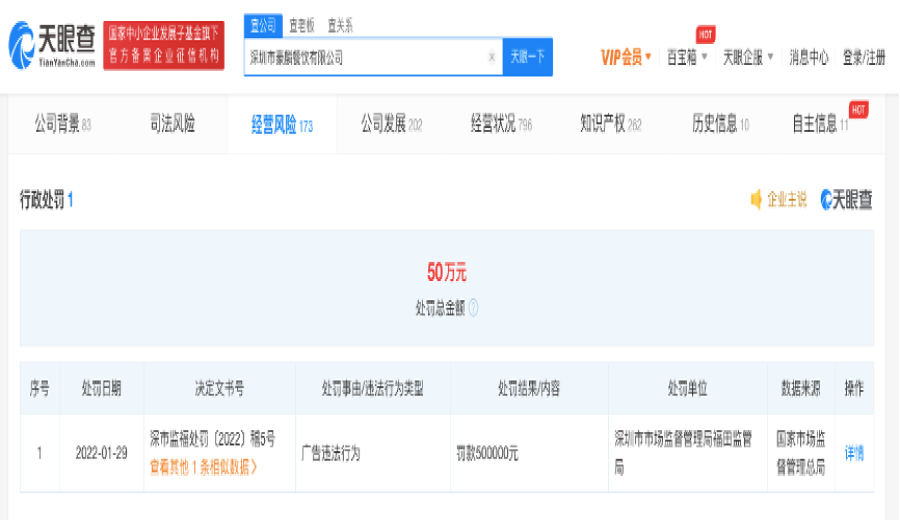
Introduction:A cup of olive juice priced at up to a thousand yuan once sparked heated discussion. The wild brew brand Ye Cui Shan (Wild Extract Mountain), which claimed to use the expensive Jinyu San Nian olive, was investigated and found to have made false claims. As a result, it was fined 500,000 yuan by the Shenzhen Market Supervision Administration. This article details the ins and outs of the incident, analyzes pricing and promotional chaos in the tea beverage industry, and explores how consumers can discern the true value of premium drinks.
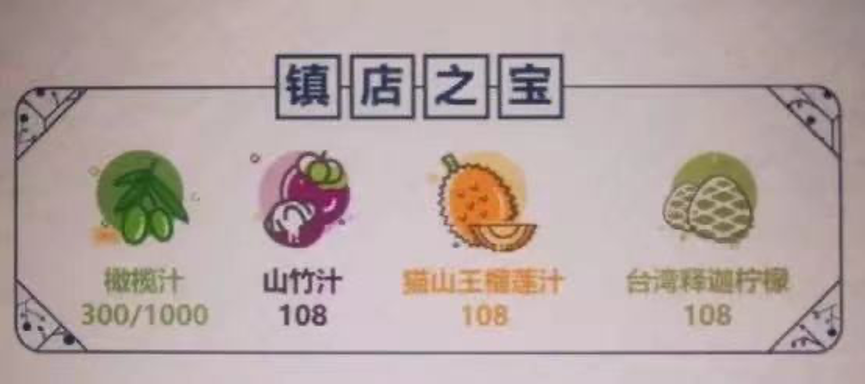
Once upon a time, a cup of olive juice priced as high as a thousand yuan shot Ye Cui Shan, a Shenzhen-based tea beverage brand, straight to the top of Weibo’s trending list—and caught the attention of market regulators. This drink, claimed to be made from the so-called "Jinyu San Nian olive" that cost nearly 800 yuan per jin (500g), faced scrutiny when its actual purchase price was found to be drastically different from what was advertised. The Shenzhen Market Supervision Administration launched an investigation, and the involved company was eventuallyfined 500,000 yuan. This incident not only damaged Ye Cui Shan’s brand reputation but also drew public skepticism toward Heytea, which had recently invested in the brand.
Going back to the end of August 2021, Ye Cui Shan stood out in the new-style tea beverage market with its unique positioning as a “molecular juice” brand, distinctly different from mainstream players like Nayuki’s Tea and Heytea. At that time, a menu item featuring an extremely expensive olive juice provoked online discussion, with the wide price range making many people wonder: is this drink really worth the money?
Faced with external doubts, Ye Cui Shan responded by stating that the olive juice used olives priced at around800 yuan per jin—the Jinyu San Nian olive—and emphasized that the production process took nearly three hours, highlighting its “premium” and “exquisite” nature. This explanation initially led some consumers to sympathize, believing there might be justification for the high price.
However, on November 22, 2021, when the thousand-yuan drink once again became a hot topic due to the brand's response, the Shenzhen Market Supervision Administration quickly initiated an on-site inspection. Just four days later, on November 26, the authorities officially launched an investigation into the involved company for suspected false advertising, after confirming that the actual purchase price of the olive juice’s raw materials was significantly inconsistent with the advertising claims.
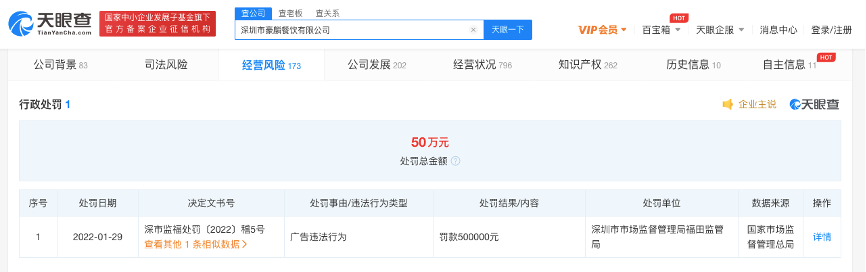
According to Tianyancha data, Shenzhen Haolin Catering Co., Ltd., the company behind the Ye Cui Shan brand, was ultimately fined500,000 yuanfor the advertising violation related to the “thousand-yuan olive juice” incident. This outcome led many netizens to exclaim that the milk tea industry is riddled with chaos, where the pricing of so-called “premium” products vastly exceeds their actual costs, and consumers may end up being the ones taken advantage of.
Notably, Heytea announced its investment in Ye Cui Shan in November 2021. While originally seen as part of the brand’s expansion and market strategy, the fine associated with this incident ended up affecting Heytea as well. Many netizens jokingly referred to Heytea as the “king of hype” and questioned its investment judgment.
In fact, the thousand-yuan olive juice incident reveals not just the promotional tactics of a single brand, but also highlights multiple challenges across the entire tea beverage market—including pricing strategies, transparency in ingredient sourcing, and communication with consumers. Many consumers, when faced with so-called “rare ingredients” or “premium craftsmanship,” often take the merchants’ one-sided claims at face value, while ignoring the authenticity and rationality of the supply chain behind them.
Industry experts point out that when choosing high-priced beverages, consumers should pay more attention to the actual sources of product ingredients, market prices, and the credibility of the brand, avoiding paying unreasonably high prices due to marketing gimmicks. At the same time, brands should uphold integrity and truthfully present the value of their products in order to earn long-term consumer trust in a competitive market.
In summary, the fine issued over the “thousand-yuan olive juice” incident is not only an expensive market lesson, but also a reminder to all businesses: only by standing on a foundation of genuine quality and transparent pricing can one truly earn the recognition of the market and consumers.
The above content is compiled by CoffeeHunters, a coffee news website.


