







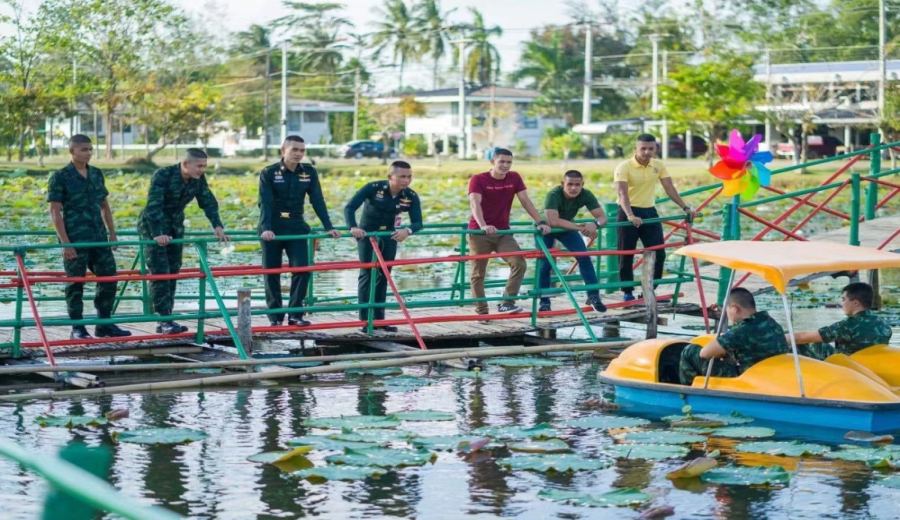
Introduction:The "Soldiers' Café," located within a Thai military camp and staffed by uniformed soldiers, has gone viral due to its unique concept. Combining a leisurely atmosphere with a lotus pond and pedal boats, it has attracted numerous visitors eager to take photos. However, this café, operated by the Thai Army’s Fourth Infantry Regiment, has also sparked controversy. Netizens have questioned whether it wastes taxpayer money and debated the boundaries between soldiers’ primary duties and part-time work. This article delves into the background of this unusual café, its operational model, and the conflicting social perspectives surrounding it.
In recent years, Southeast Asia has seen a rise in themed cafés—ranging from toilet-themed to zoo-style—but Thailand’s "Soldiers' Café," situated inside a military base, stands out. Operated by the Fourth Infantry Regiment of the Royal Thai Army, the café features soldiers dressed in full military uniforms serving as baristas and promotional models. Paired with the serene lotus pond and pedal boats on-site, it creates a uniquely relaxing ambiance that quickly gained popularity on social media.
According to Thai media reports, the café is open daily from 8:00 AM to 7:00 PM. While its primary clientele consists of soldiers stationed nearby, it has also drawn many civilians who come to take photos and check in. All the staff are active-duty military personnel, and promotional photos show them sitting in pedal boats gliding through the lotus pond—an image that feels both approachable and strikingly contrasting.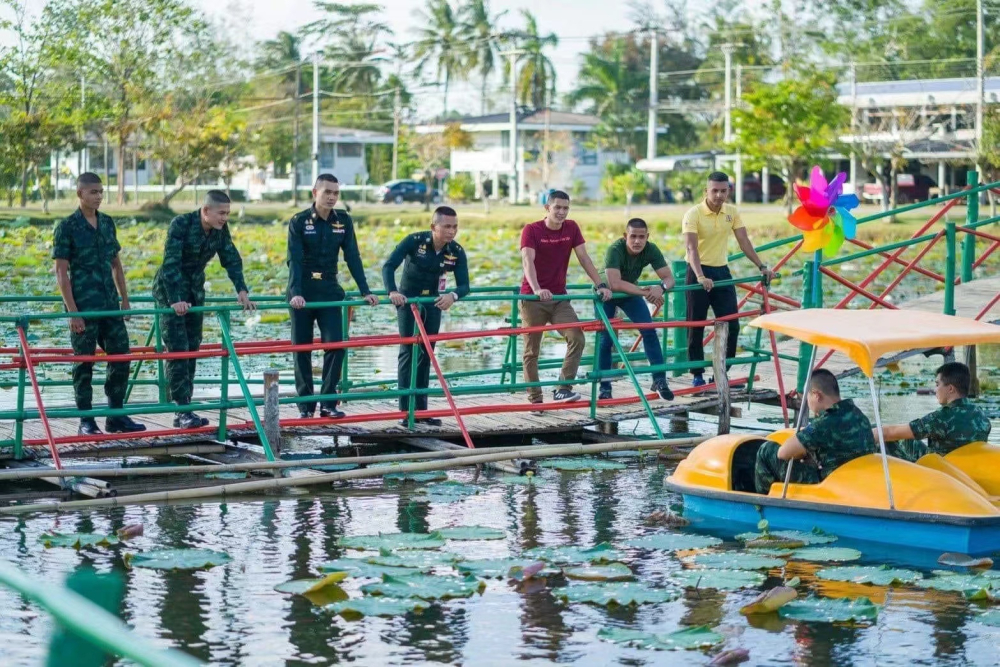
The café even has an official Facebook page, where a series of photos posted on January 19 clearly show that the service staff are all soldiers. Despite the typically serious image of military bases, this location fosters a relaxed, civilian-friendly environment, which many find novel.
However, as the café’s fame grew, so did the backlash. Some Thai netizens questioned whether such an operation uses taxpayer money and challenged the soldiers’ roles: "Is a soldier’s duty to defend the nation or to moonlight as a barista?" Such comments frequently appeared in the comment sections of social media posts, sparking heated discussions.
Some users expressed understanding that military bases also need recreational and leisure facilities, but they argued that using soldiers as promotional tools—or having them engage in coffee-making unrelated to their military duties—might blur the professional image of the armed forces. Supporters, however, believe that soldiers, too, deserve normal social and leisure needs, and that the café simply provides a space for relaxation.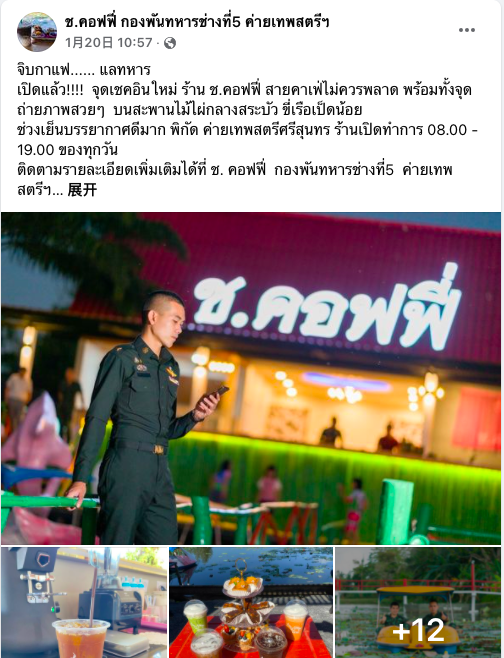
In fact, themed cafés like this are not uncommon globally—from ruins-inspired to animal-themed concepts—but combining a military camp with a café is unprecedented. Especially when soldiers wear their uniforms not for duty but to pose for promotional photos to attract customers, it raises questions about whether military resources are being used appropriately.
Notably, this café is not directly subsidized by the government but is independently operated by the Fourth Infantry Regiment, meaning its funding sources and operational model remain under the military’s internal management. Nevertheless, with the exposure on social media, this military café has become a hot topic online in Thailand, prompting the public to re-examine the boundaries between soldiers’ roles and the use of public resources.
The above content is compiled by CoffeeHunters, a coffee news website.


