







Introduction:Although the one-pour pour over method may seem to involve only a single pour after blooming, it is an ultimate test of a barista’s understanding of coffee bean characteristics and control over parameters. This article delves into the scientific principles of the one-pour technique, its operational details, and compares it with multi-pour methods to help you master key skills—from determining bloom time and water flow stability to assessing coffee bed condition—so that even this simple method can produce balanced, layered flavors.
Among the many pour over techniques, "one-pour" is often seen as simple to start but extremely precise in execution. It forgoes complex segmented pouring, requiring only a single pour of the remaining water after blooming. Though the steps appear simplified, it actually demands a higher level of skill in understanding coffee bean traits and fine-tuning parameters. This article will comprehensively break down practical tips for one-pour, covering its principles, scientific rationale, comparison with multi-pour techniques, and judgment of blooming.
Many assume that one-pour is simply about pouring all the water in one go after blooming, with the main focus being on keeping a steady pouring motion. But this is much like learning Japanese: though the entry barrier seems low due to cultural familiarity, true advancement brings complex honorifics and grammar challenges. Similarly, while one-pour may seem easy to learn on the surface, achieving precise control and understanding extraction is far from straightforward.
In short, the operation process of one-pour is extremely concise: after a small initial bloom pour, all the remaining brewing water is poured in one go. Precisely because the process is so straightforward, the key lies in prior preparation and judgment—for example, adjusting water temperature, brew ratio, and grind size based on the coffee bean’s origin, processing method, and roast level. Only by customizing these factors to each coffee's unique traits can the full potential of this “single pour” be unlocked.
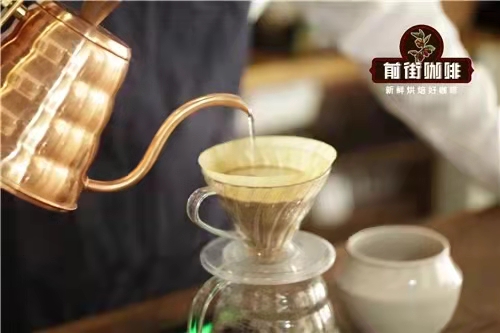
From a scientific perspective, the first stage of one-pour involves a small pour intended to allow the coffee grounds to fully absorb water and expand, while releasing CO₂, laying a solid foundation for the subsequent main extraction phase. The following larger pour is responsible for extracting flavor compounds and completing the overall extraction. This logic applies to coffee beans of all roast levels—as long as core parameters are mastered, it can be flexibly applied to beans with different flavor profiles.
However, the challenge of one-pour does not lie in the pouring steps themselves, but in adequate preparation and judgment before extraction. You need to determine the most suitable water temperature, brew ratio, and grind size based on detailed information about the coffee beans—such as origin characteristics, altitude, processing method, and roast depth. Many people, when practicing, merely imitate commonly recommended generic parameters, overlooking the importance of fine-tuning according to the specific traits of each coffee bean, which makes it difficult to consistently extract ideal flavors.
Additionally, when discussing the differences between one-pour and multi-pour techniques, a common claim is that coffee brewed with one-pour tends to be cleaner with brighter acidity, but has a thinner mouthfeel; whereas multi-pour methods often deliver richer sweetness and a fuller body. However, such evaluations are usually based on identical parameter settings. If parameters better suited to multi-pour are used, the latter performing excellently is only natural; conversely, using one-pour-specific parameters for multi-pour may yield less-than-ideal results.
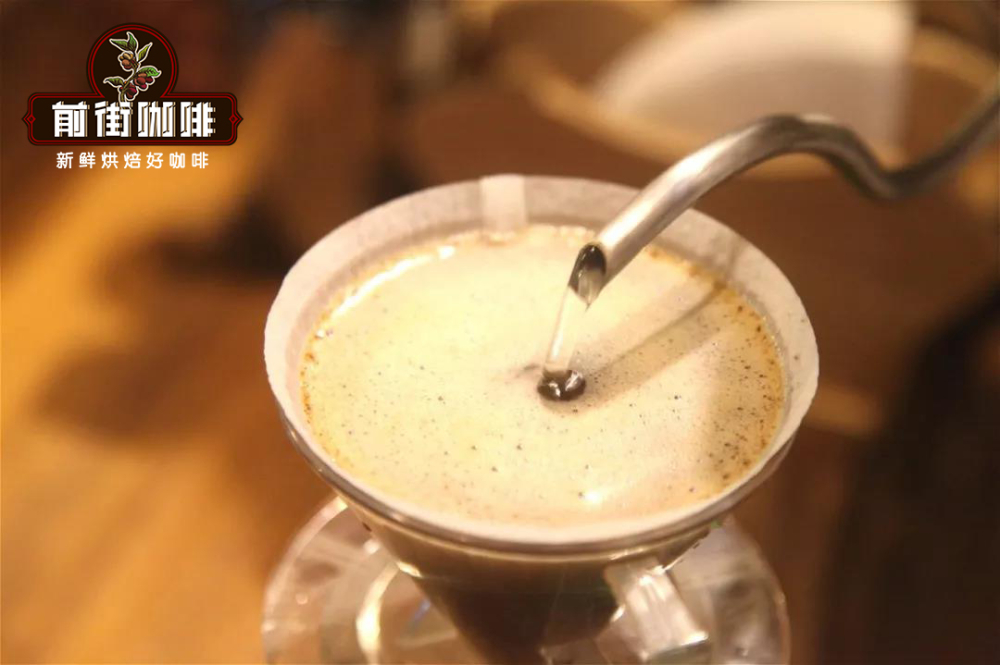
Furthermore, one-pour also faces a frequently overlooked key challenge: accurately judging bloom time. Many beginners follow the advice of "blooming for 30 seconds," but in reality, the absorption rate and expansion response of coffee grounds vary depending on factors like roast freshness, bean density, and processing method. Thirty seconds is just a reference value—the real key is observing whether the coffee bed is evenly saturated and whether bubbles continue to emerge. Insufficient blooming can lead to uneven extraction during subsequent pours, resulting in thin flavors, overly sharp acidity, or even unpleasant mouthfeel.
In summary, although one-pour does not rely on complex segmented techniques, it heavily depends on a deep understanding of the essence of coffee and the variables affecting extraction. Every step from the beginning of blooming—including interactions between coffee grounds and water, heat distribution, and time management—requires adjustments based on experience and observation. This is also why many specialty shops rarely use one-pour as their standard brewing method—it may seem simple, but every pour must be executed with peak precision.
The above content is compiled by CoffeeHunters, a coffee news website.


