







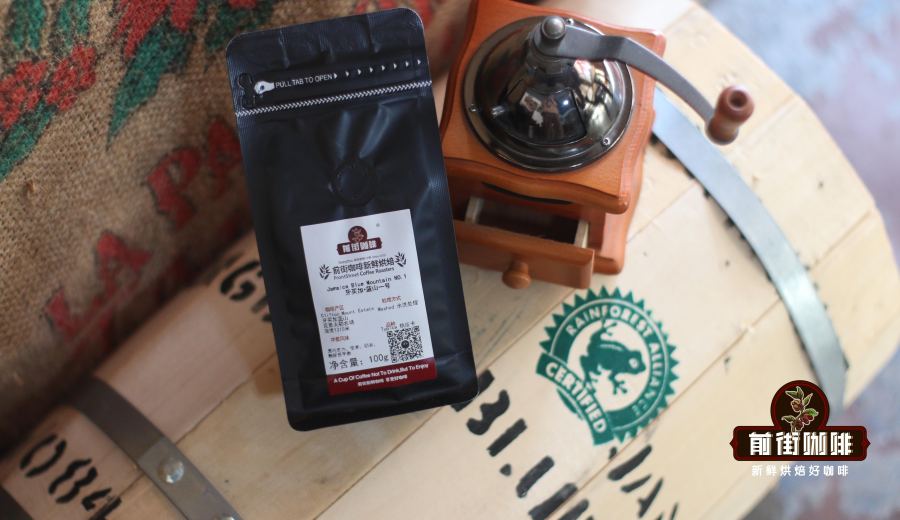
Introduction:Jamaican Blue Mountain coffee is renowned for its rich, balanced flavor, but the market is flooded with impostors. How can you identify truly high-quality Blue Mountain beans? This article delves into the region’s regulations, grading standards, introduces the washed processing method used at the Clifton Estate, and provides expert medium-dark roast pour over parameters to help you master everything from bean selection to brewing—so you can savor the most authentic Blue Mountain flavor.
When it comes to specialty coffee, Jamaican Blue Mountain is undoubtedly a representative of top-tier growing regions. Its smooth, mellow profile and rich, full-bodied aroma have long been cherished by coffee enthusiasts worldwide. Among them, the most celebrated is the nationally treasured Jamaican Blue Mountain No. 1 coffee bean. These beans not only adhere to strict regional and grade standards but are also exceptionally rare and precious.
The rise of Jamaican Blue Mountain coffee is inseparable from its unique geographical environment. The special climate and high-altitude terrain of the Blue Mountains create a distinctive coffee flavor. As early as the 1960s, Blue Mountain coffee began to gain international recognition. However, Hurricane Gilbert in 1969 severely damaged the local industry, and it gradually recovered with financial and technical support from Japan’s UCC. In gratitude, Jamaica signed an agreement with Japan, stipulating that 90% of production would be prioritized for export to Japan, leaving only about 10%—approximately 245 tons—for other markets. The resulting supply-demand imbalance, coupled with marketing efforts, drove up the price of Blue Mountain coffee.
This “Blue Mountain craze” initially took off in Asia, including Singapore, South Korea, and Chinese Hong Kong and Taiwan, before gradually gaining popularity in mainland China after 2000. After the 2008 financial crisis, as the agreement expired, more Blue Mountain coffee became available globally. Today, many merchants can import directly from Jamaica, with the No. 1 grade from the Clifton Estate being one of the classic representatives.
According to Jamaica’s Coffee Industry Regulation Act, true Blue Mountain coffee can only be grown in four administrative parishes: Saint Andrew, Saint Thomas, Portland, and Saint Mary. The altitude must be between 910 and 1,700 meters, and the variety must be Typica. Only coffee meeting these criteria can be labeled as “Jamaica Blue Mountain.” Notably, these four regions cover a total area of just 6,000 hectares—roughly one-third of the total Blue Mountain planting area—highlighting its rarity.
The Jamaica Coffee Industry Board (CIB) further classifies Blue Mountain coffee into four grades: Blue Mountain No. 1, No. 2, No. 3, and Peaberry. Among them, No. 1 is the highest grade, requiring beans of 17 or more screen size, a defect rate below 2%, moisture content maintained at 10% to 12.5%, and a cup profile demonstrating an exceptional balance of acidity, sweetness, bitterness, body, and aroma. Precisely because of these strict standards, production is extremely limited.
Exported Blue Mountain No. 1, No. 2, and No. 3 green beans are all packaged in handcrafted wooden barrels, available in capacities of 70 kg, 30 kg, and 15 kg, helping to preserve freshness and moisture during transport. In contrast, other grades of Jamaican coffee are exported in 60 kg jute sacks.
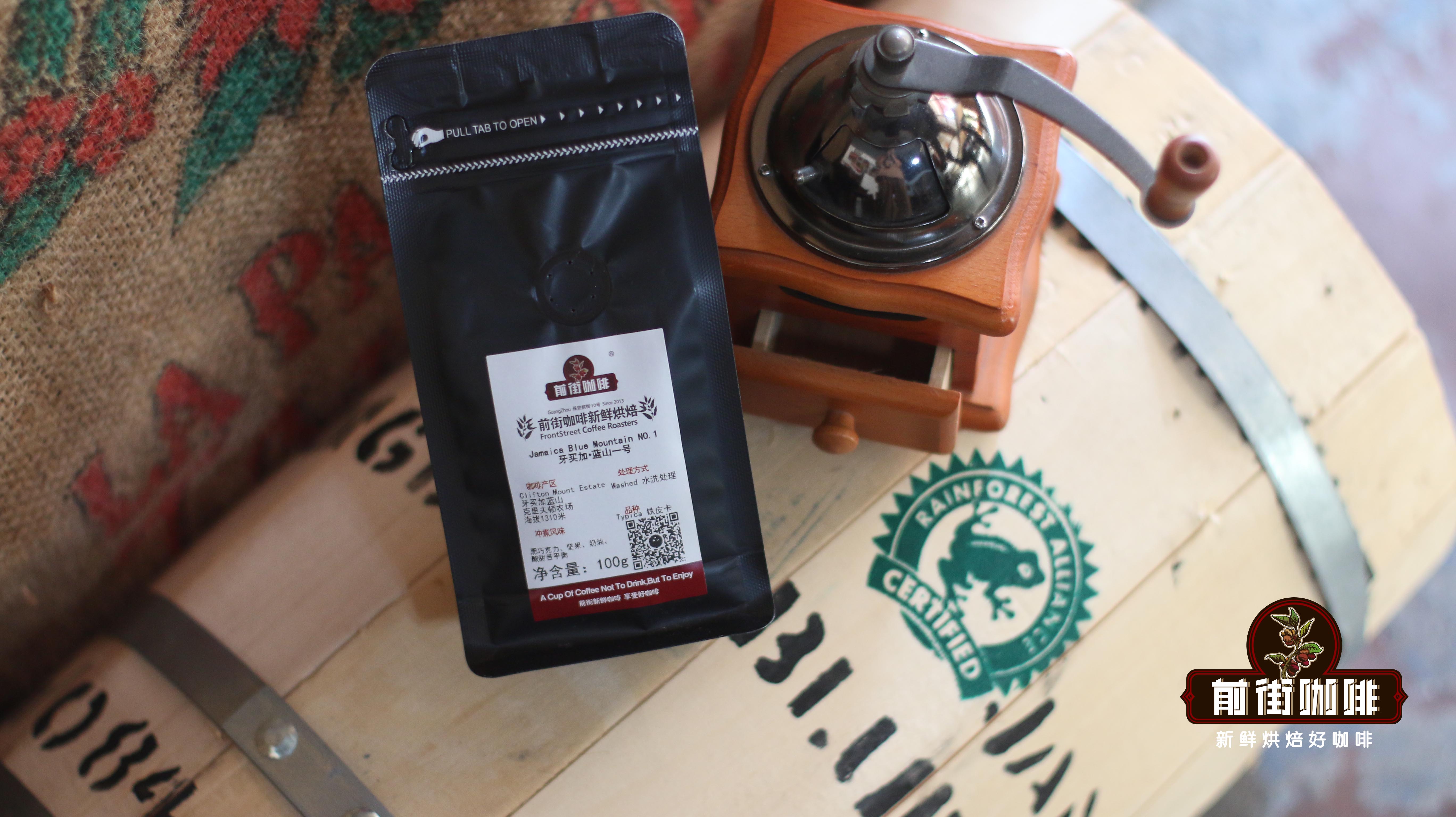
The Blue Mountain No. 1 coffee introduced in this article comes from the historic Clifton Estate, which uses traditional washed processing. Established in the 1790s, it is one of Jamaica’s oldest coffee farms and holds Rainforest Alliance certification, often marked by a green frog logo on its barrels—a symbol of quality. The estate is located in the Blue Mountains, with planting and processing areas at an altitude of about 1,310 meters. The high elevation extends the ripening time of coffee cherries, aiding in the accumulation of flavor compounds.
During processing, the Clifton Estate strictly follows washed method steps: first using floatation to separate ripe and unripe beans, then channeling ripe cherries through water to a pulper to remove the skin. The depulped beans, still coated in mucilage and parchment, undergo fermentation until the mucilage breaks down, are rinsed clean with water, and then sun-dried to the target moisture level before storage. This process effectively reduces defect rates, yielding cleaner, brighter flavors and more consistent quality.
For brewing, the Jamaica Coffee Industry Board recommends a roast level that highlights the traditional flavor of Blue Mountain. In practice, medium-dark roast balances body and gentle fruit acidity, making it a common choice. Baristas suggest using a medium grind size, with water at 87–88°C, and coffee ground to pass about 75% through a standard #20 sieve (e.g., EK43s at setting 10.5) to avoid over-extraction.
A KONO filter is recommended for pour over, as its rib design reduces airflow and prolongs coffee puck absorption time, ensuring more even extraction. Specific parameters are as follows: 15 g coffee, 1:15 brew ratio, the aforementioned grind size, 87–88°C water, and a pulse pouring technique.
Steps: Place the filter in the KONO dripper, rinse it with hot water to preheat and adhere it to the walls. Add coffee grounds and gently tap to level. First pour 30 g water for a 30-second bloom. Second pour to about 125 g, circling steadily. When the liquid level drops halfway, continue pouring to 225 g, with a total brew time of around 2 minutes.
In terms of flavor, the high-temperature stage reveals intense dark chocolate notes paired with distinct almond sweetness. As it cools, hazelnut and cream sweetness emerge, accompanied by a hint of soft acidity and caramel notes. The aroma lingers with a long, satisfying finish—exemplifying the classic profile of top-tier Blue Mountain No. 1.
The above content is compiled by CoffeeHunters, a coffee news website.


