







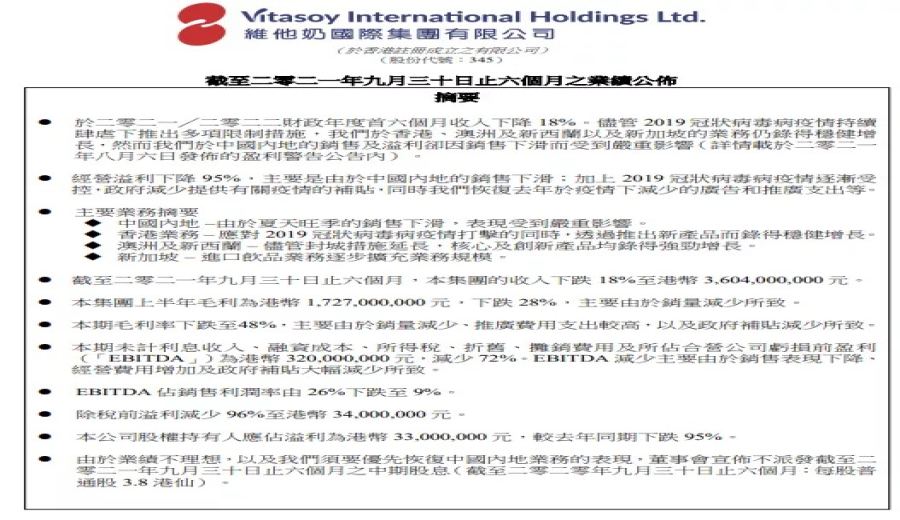
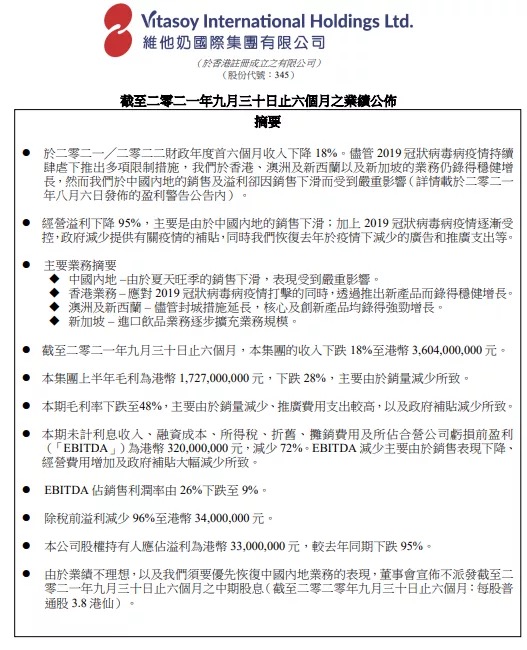
Introduction:Vitasoy International’s interim financial results for the 2021/2022 fiscal year showed an 18.28% decline in revenue and a staggering 95% plunge in net profit, primarily due to boycotts in the mainland Chinese market. This article delves into the background of the incident, the challenges of market recovery, and the brand’s path to revival, helping readers focused on the beverage sector understand the adjustment strategies and future challenges of plant-based milk brands in the aftermath of a crisis.
Vitasoy International Group recently released its interim financial report for the 2021/2022 fiscal year, which revealed that operating income fell by 18.28% compared to the same period last year, while net profit plummeted by 95%—the steepest drop in recent years. These figures have drawn widespread market attention, especially as sales performance in its key market, mainland China, became a focal point.
The catalyst for this sharp decline in performance was an incident in July 2021 where an employee took their own life after attacking a police officer. A subsequent internal notice issued by Vitasoy was deemed to contain inappropriate wording, sparking strong dissatisfaction among mainland consumers and distributors, which led to large-scale boycotts. As the mainland market accounts for approximately 60% of the company’s total revenue, the sharp contraction in sales there delivered a devastating blow to overall performance.
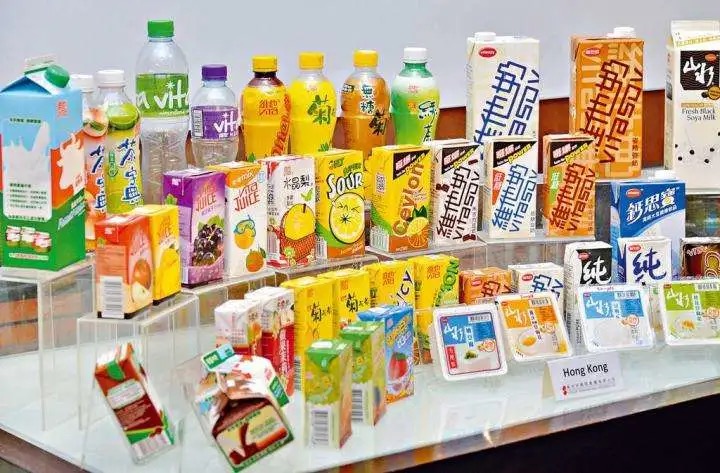
The incident occurred during the peak summer season for beverage sales. Vitasoy had originally planned to launch several new products—including oat milk and sparkling lemon tea—as well as upgrade the packaging for its sugar-free lemon tea and introduce a new Ceylon black tea flavor. However, the boycott severely disrupted these product launches, with market feedback and sales performance falling far short of expectations.
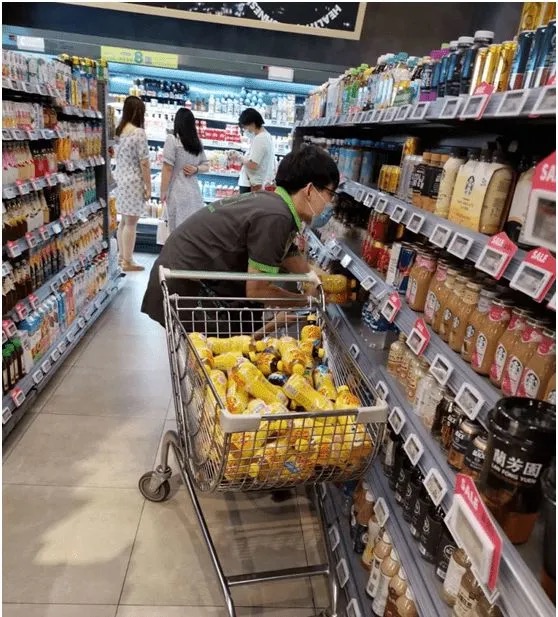
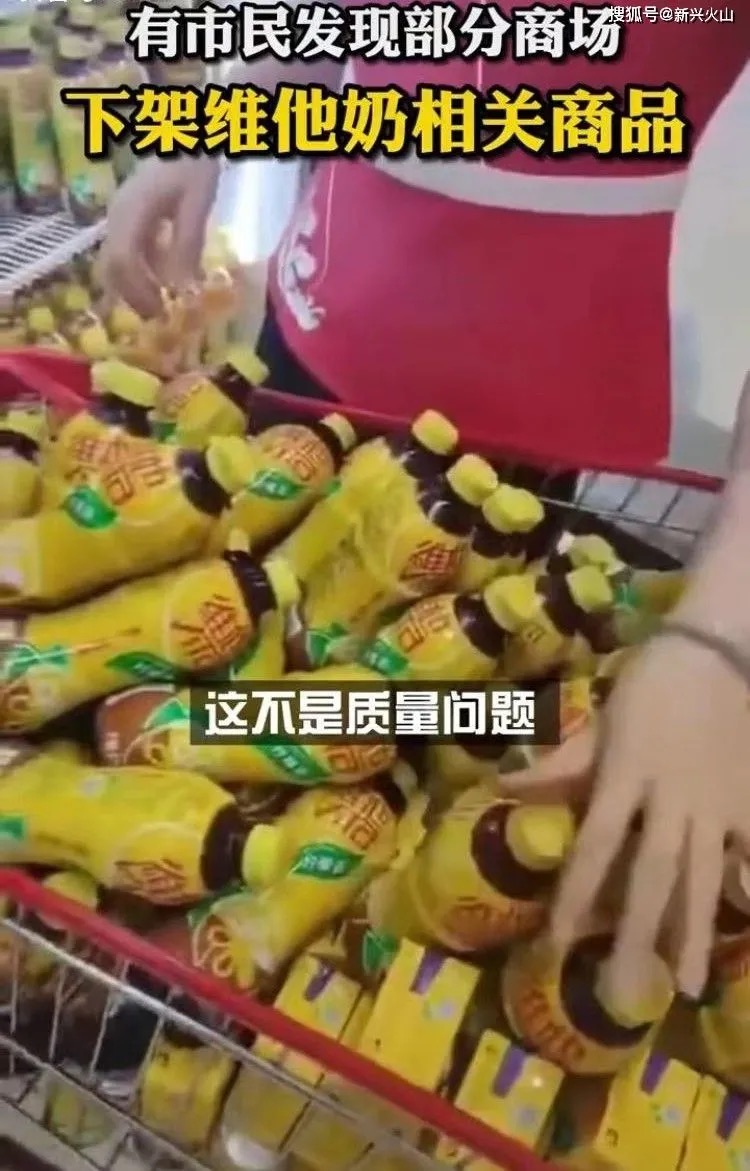
As the public outcry escalated, supermarkets and e-commerce platforms across the country successively removed Vitasoy products from their shelves, and several well-known celebrities also announced the termination of their endorsement deals. The company’s stock price subsequently plummeted, with its market value evaporating by over HK$1 billion in a single day. It dropped by nearly half from its previous high, shrinking to around HK$18 billion.
In response to the crisis, Vitasoy issued three public statements, clarifying that the internal notice was the act of an individual employee and not authorized by the company, and expressed sympathy for the injured police officer. Although some retailers later restocked the products and the brand launched discount promotions in an attempt to win back the market, it had already missed the peak sales season. Coupled with eroded consumer trust and limited penetration in northern markets, overall sales failed to rebound.
Industry analysts pointed out that, aside from the sudden public relations crisis, structural issues in Vitasoy’s mainland market strategy could not be ignored. The brand has long been heavily reliant on the Pearl River Delta region, with noticeably low penetration in northern markets, resulting in insufficient overall resilience to risk. At the same time, other domestic and international plant-based milk and beverage brands quickly seized the market gap, introducing more appealing packaging and product portfolios, further eroding Vitasoy’s market share.
Additionally, the prices of key raw materials for soy milk and lemon tea continued to rise, and Vitasoy’s pace of updating its product packaging design and market communication was relatively slow, further affecting its brand image among consumers. Analysts generally believe that even if market conditions improve in the future, it will take the brand at least three years to gradually restore profitability and re-establish a solid foothold in the plant-based milk market.
For readers observing the coffee and plant-based milk industries, Vitasoy’s case provides valuable insights into market recovery and brand rebuilding. Whether the brand can regain consumer favor through channel restructuring, adjustments to its new product strategy, and improved market communication will remain a key focus of industry attention.
Overall, from brand crisis management and imbalanced market layout to the pace of product innovation, the challenges faced by Vitasoy are highly representative. How the company rebounds from the crisis will not only test its adaptability but also influence its long-term development prospects in the fiercely competitive beverage market.
The above content is compiled by CoffeeHunters, a coffee news website.


