







Introduction:Darjeeling black tea is world-renowned for its unique floral-fruity aroma and alpine character, but the true key to its flavor lies in the tea plant varieties and growing environment behind it. This article delves into the characteristics of the three main species of the Camellia genus—China type, Assam type, and Cambodia type—and explores how they adapt to Darjeeling’s high altitude and variable climate. It also explains how soil, altitude, and climate together shape the layered complexity of black tea. Understanding these fundamentals helps in selecting and appreciating truly premium Darjeeling black tea.
The reason Darjeeling black tea possesses globally unparalleled aroma and flavor is not just the result of tea processing techniques, but also closely tied to its tea plant varieties and growing environment. Starting with the three main cultivars of the Camellia genus—China type, Assam type, and Cambodia type—we can better understand why teas from certain regions can exhibit distinctive floral and fruity notes, even with subtle hints of muscat grape.
Tea raw materials come from various cultivated varieties of the Camellia sinensis species within the Theaceae family. The three main types used for making black and green tea are: China type (Camellia sinensis var. sinensis), Assam type (Camellia sinensis var. assamica), and Cambodia type (Camellia sinensis var. cambodiensis). These three tea plant types differ significantly in appearance, environmental adaptability, and final liquor characteristics.
The China type Camellia, scientifically named Camellia sinensis var. sinensis, generally has a smaller plant size, typically between 3 to 6 feet in height. Its leaves are relatively small, oval-shaped, with clearly serrated edges and a smooth, glossy surface. The most notable characteristic of this tea plant is its strong cold resistance and excellent adaptability to high altitudes and cool climates. As a result, it is widely cultivated in China’s Yunnan region, Taiwan’s high mountain areas, and the foothills of the Himalayas in India, such as Darjeeling. Teas made from the China type often exhibit delicate floral aromas and elegant aftertastes, making it one of the main varieties in Darjeeling’s high-altitude tea gardens.
In contrast, the Assam type (Camellia sinensis var. assamica) is an entirely different variety. This tea plant is native to India’s Assam region, with large, thick, oval-shaped leaves. The plant can grow very tall, reaching up to 90 feet in the wild and living over a century. However, in commercial tea gardens, it is usually replanted or pruned every 50 years for easier harvesting and management. The Assam type thrives in low-altitude, hot and humid plain areas, producing a strong, bold liquor often with malty and honey-like aromas. Although some low-altitude areas of Darjeeling have attempted to cultivate the Assam type, the China type remains predominant overall.
As for the Cambodia type (Camellia sinensis var. cambodiensis), it is less commonly used alone in commercial production. This tea plant’s characteristics fall between those of the China type and the Assam type. Its leaves are of medium size, but its growth rate and disease resistance are not particularly outstanding. Therefore, it is mostly used as a parent in hybrid breeding to develop new varieties that combine disease resistance with desirable flavor profiles. Although pure Cambodia type plants are almost unseen in Darjeeling’s official growing regions, its genetic traits may be hidden within certain local strains or hybrids.
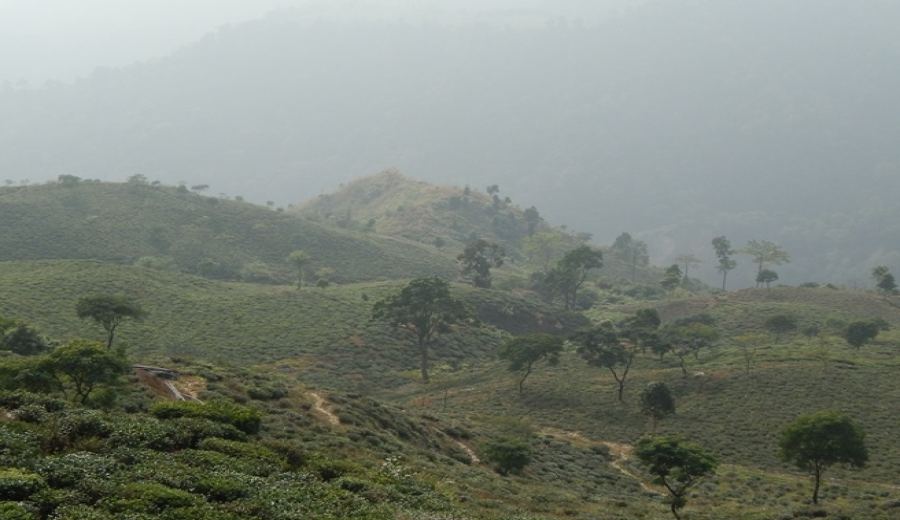
The growing environment of tea plants greatly influences the final flavor of the tea. Darjeeling is located on the southern foothills of the Himalayas, with altitudes ranging from 2,000 to 2,500 meters. The climate is cool and foggy, with abundant summer rainfall and cold but not extreme winters. Such an environment promotes the accumulation of aromatic compounds and theanine in the leaves of China type tea plants, leading to the refined floral-fruity aromas and fresh aftertastes that characterize Darjeeling black tea.
In addition to altitude, soil is also a key factor. Darjeeling’s tea gardens are mostly located on sloping terrain, with soils being slightly acidic, well-drained red and yellow soils rich in iron and organic matter. This type of soil provides the nutrients needed for tea plant growth without allowing the root system to spread excessively, helping to concentrate flavor compounds. Furthermore, the large diurnal temperature variation aids in the accumulation of internal substances in the tea leaves, further enhancing aroma complexity.
Many people mistakenly believe that all black teas taste similar, but in reality, subtle differences in tea plant variety, altitude, season, and processing methods all affect the final flavor profile. For example, Darjeeling’s “First Flush” harvested in spring usually features delicate floral notes and a green-tea-like freshness. In contrast, the “Second Flush” harvested in summer, due to the higher maturity of the leaves, often showcases richer fruitiness and muscat grape tones, and is considered the classic representation of Darjeeling flavor.
In summary, understanding the variety background and growing conditions of Darjeeling black tea not only helps us appreciate its flavor layers more deeply but also enables more informed purchasing decisions. Whether you’re a coffee enthusiast focused on pour over details or a newcomer to black tea, mastering these basic concepts is an essential first step in developing your taste and appreciation.
The above content is compiled by CoffeeHunters, a coffee news website.


