








Introduction:The French press isn’t just a great tool for brewing coffee — it can also be used to froth milk into a velvety texture, making it a practical at-home tool for crafting cappuccinos. This article delves into the origins and classic proportions of the cappuccino, and demonstrates how to use a French press to create milk foam suitable for both hot and iced versions. From controlling the foam thickness of a hot cappuccino to achieving the refreshing taste of an iced cappuccino, the steps are clear and easy to follow. Common mistakes are also addressed to help you recreate a professional-grade flavor in the comfort of your home.
As a common tool in the homes of coffee enthusiasts, the French press is often used for pour over or French press coffee brewing. But here’s a function you might not know about: making velvety milk foam. With the right technique, the French press can help you produce milk foam perfect for cappuccinos, allowing you to enjoy a café-quality coffee experience at home without a professional steam wand.
First, let’s explore the origins of the cappuccino. The name comes from Italian, originally related to the deep brown hooded robes worn by Capuchin monks. Legend has it that when espresso was mixed with milk, the resulting color resembled the habits of the Franciscan monks in Italy, and the foam on top, shaped like a monk’s hood, gave the drink its name, Cappuccino. This classic Italian coffee is typically made with a golden ratio of 1:1:1 — espresso, hot milk, and hot milk foam.

Milk foam can generally be divided into two types: dry and wet. Dry foam is fluffier, thicker, and has larger bubbles, helping it maintain its shape in the cup with a smooth and delicate mouthfeel. Wet foam, on the other hand, is finer and more fluid, with smaller bubbles but a shorter ability to hold its form. Depending on personal taste preferences, you can flexibly adjust the foam to create your own unique cappuccino flavor.
Next is the process for making a hot cappuccino. It’s recommended to use a narrow-mouth cup with a capacity of about 240ml, which helps concentrate the fusion of milk foam and coffee. In this demonstration, we used espresso extracted for about 28 seconds, with 20g of coffee grounds yielding 40g of espresso, paired with 170ml of steamed milk and about 1.5cm of foam thickness. The espresso is ideally a dark roast blend, which brings out rich crema and a bold aroma, enhancing the overall flavor complexity.
In practice, start by pouring the freshly extracted espresso into the cup. Then, slowly pour the prepared hot milk from about 10cm above the cup while using a spoon to guide the flow, ensuring the milk and foam integrate evenly. When pouring to the rim, the foam should be about 1.5cm thick, visually nearly filling the cup, creating a “hamburger-like” plump shape. At this point, be careful not to steam the milk at too high a temperature, as it can scald the milk or degrade its flavor. Also, control the frothing time properly to avoid overly fine or bubbly foam.

Many people making cappuccinos at home often overlook details in extraction and frothing. For example, improper control of espresso extraction time and water temperature can easily lead to flavors that are overly sour, bitter, or under-extracted. Meanwhile, if the milk foam temperature exceeds 65°C, it not only affects the taste but may also alter the protein structure of the milk, causing the foam to collapse or lose its velvety texture. These are key points to pay special attention to when making cappuccinos at home.
Speaking of iced cappuccinos, you might find that they’re rarely offered in coffee shops. This is because the preparation process is more complex, and the combination of cold and hot elements isn’t to everyone’s liking. Traditionally, iced cappuccinos are made with cold milk and ice cubes, resulting in a more refreshing flavor. However, the dilution effect of the ice cubes also means the coffee isn’t as intense as in its hot counterpart.
If you’d also like to try making an iced cappuccino at home, here’s a simple method. First, prepare cold milk, ice cubes, and either homemade or store-bought espresso (if you don’t have an espresso machine, instant black coffee or concentrated coffee can be used as substitutes). Then, use the French press to froth the cold milk foam: pour chilled milk into the French press to about half full, then slowly and evenly pump about 20 times to incorporate air and create fine foam. Pay attention to the speed and force of pumping to avoid foam that is too thin or too thick. The ideal state is foam that evenly covers the liquid surface and has a certain density.
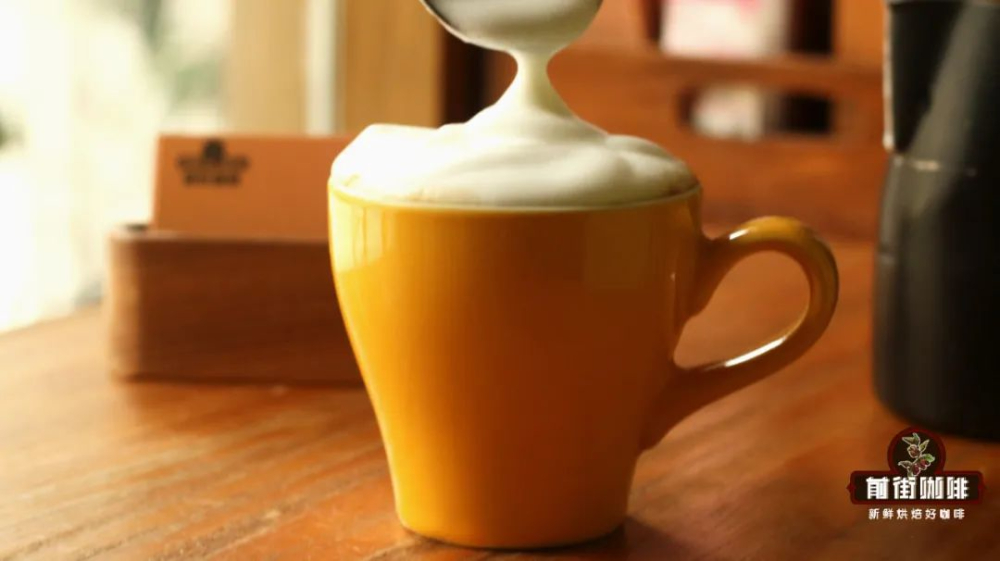
Once the foam is ready, you can begin assembling the iced cappuccino. Start by placing an appropriate amount of ice cubes at the bottom of the cup, then pour in some cold milk, followed by about 40g of espresso. Finally, using a spoon to assist, gently place the prepared iced milk foam on top of the espresso to form a refreshing top layer. And there you have it — a refreshing iced cappuccino with a velvety texture and fresh flavor.
Note that due to the influence of ice cubes and cold milk, the coffee flavor in an iced cappuccino is usually lighter and less intense, but it’s perfect for hot weather or when you want a milder coffee. You can also adjust the ratio of milk to coffee or add a bit of syrup to enhance the flavor profile according to your preference.

In summary, the French press is more than just a coffee brewing tool. By leveraging its pressure and structure, you can easily create professional-grade milk foam at home. Whether it’s a hot cappuccino or a refreshing iced version, you can adjust the details to suit your taste and create your own unique coffee experience. With the step-by-step guide and practical tips in this article, you can now enjoy a perfect cappuccino with velvety foam and rich coffee aroma — all without leaving your home.
The above content is compiled by CoffeeHunters, a coffee news website.


