








Introduction:Panamanian Gesha from Hacienda La Esmeralda is renowned for its delicate floral aroma and rich layered profile, making it a dream bean for many coffee enthusiasts. But do you know why its price remains so high? And how can you fully unlock its citrus, berry, and honey-like aftertaste through the correct pour over technique? This article explores the terroir of the growing region and the characteristics of the variety to uncover the reasons behind Gesha’s premium pricing, while also detailing a beginner-friendly V60 three-stage extraction method and optimal grind size to help you brew a cup that rivals the quality found in top-tier cafés.
When it comes to popular gift coffee sets, many people immediately think of the Panamanian Hacienda La Esmeralda Gesha coffee beans. This premium coffee from the high-altitude regions of Central and South America has won the favor of coffee lovers worldwide with its unique citrus aroma, bright berry notes, and juice-like mouthfeel. Whether you're a beginner or a seasoned coffee connoisseur, its multi-layered flavors are sure to captivate.
However, the reason Gesha has become a top-tier specialty coffee product isn't just due to its exceptional flavor profile. Its rarity in production and demanding growing conditions often place it among the most expensive coffees in the world. So, what exactly makes Gesha so pricey? And how can high-quality Esmeralda Gesha be brewed to showcase its most complete and enchanting aromas and layers?

The biggest reason Gesha coffee has risen to prominence in the global specialty coffee scene is its highly distinctive aroma profile. Typically brewed using the pour over method, Gesha clearly showcases rich floral notes, delicate citrus acidity, along with berry and honey-like aftertastes, making it feel like you’re sipping on a tropical fruit tea. These flavor expressions are inseparably linked to its growing environment.
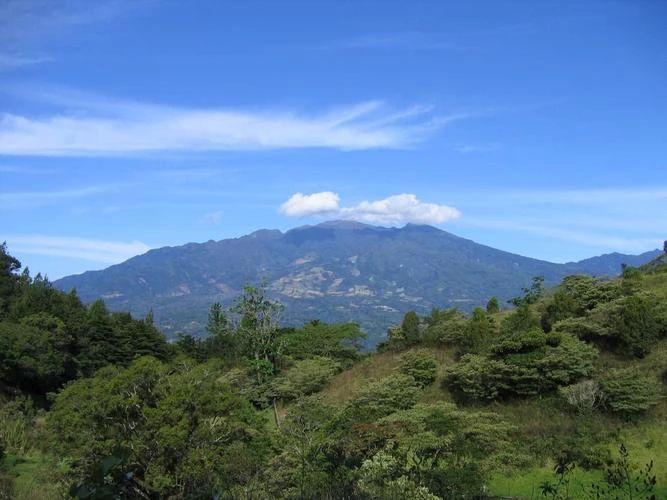
Panamanian Gesha is primarily grown in the high-altitude areas surrounding the Volcán Barú, with the Boquete region being the most well-known. Gesha is extremely particular about its growing conditions and can only thrive at altitudes above 1,500 meters, with cloud cover or tree shade protection, in fertile and well-drained volcanic soil. Only under these conditions can it produce that unique fruity aroma and delicate balance of acidity and sweetness. These factors not only affect the flavor of the coffee but also directly determine its yield and value.
It's worth noting that Gesha coffee trees have relatively thinner leaves compared to other varieties, resulting in lower photosynthetic efficiency. Additionally, their shallow root systems absorb water and nutrients at a slower rate, contributing to an overall lower yield. A single Gesha coffee tree yields less than half that of a Caturra tree per year, and the longer maturation period at high altitudes further limits supply—another key reason for its high price.

Currently, the more well-known Gesha coffees on the market come from regions such as Panama, Guatemala, and Colombia, with Panamanian offerings standing out particularly. Especially notable are certain renowned estates’ Red Label, Green Label, and Boquete series, which are highly sought after by coffee enthusiasts. One shop offers the Esmeralda Red Label Gesha from the Canas Verdes Estate in the Boquete region at elevations above 1,700 meters, processed using the natural (sun-dried) method, featuring distinct citrus, complex fruit, rose tea, and honey aromas—a classic that advanced drinkers shouldn’t miss.
For those on a more modest budget, the Esmeralda Green Label or Boquete Gesha are also great options. These varieties are not only suitable for daily brewing, but can also be used with various devices such as pour over, cold brew, siphon, or French press to highlight Gesha’s refreshing characteristics. Whether you’re a beginner or experienced, you can find a suitable Gesha option to match your preferences.
Among the three major factors that influence coffee flavor, the green beans themselves account for 60%, roasting for 30%, and extraction for just 10%. Therefore, even with top-tier green beans, improper roasting can significantly diminish the overall result. Generally speaking, the darker the roast, the heavier the bitterness; the lighter the roast, the more pronounced the acidity. For a variety like Gesha that naturally boasts floral and fruity aromas, medium-light roasting is the most common approach—it preserves the jasmine floral notes and vibrant fruit acidity, brings out a gentle caramel sweetness, and avoids excessive bitterness or astringency.
For lightly roasted Gesha coffee beans, since their internal structure is relatively dense, higher water temperatures and finer grind sizes are needed to effectively release the aromatic compounds and flavor substances. It is recommended to use hot water at 92–93°C for extraction, and adjust the grind fineness to about 80% through a standard #20 sieve, similar in coarseness to fine sugar. When using a grinder like the Ek43s, this roughly corresponds to a setting of 10.
It is particularly important to note that a coffee bean’s flavor will gradually decline over time, especially beans roasted more than a month ago, where both aroma and acidity may noticeably weaken. Therefore, choosing freshly roasted beans is crucial. It is recommended to prioritize products roasted within 5 days prior to purchase to ensure you can fully experience the richest and most complete layered profile of Gesha.
Below are the standard pour over parameters for the Panamanian Esmeralda Red Label Gesha commonly used by a certain shop, suitable for three-stage extraction using a V60 dripper—perfect for beginners to reference and try out:
Dripper: V60
Water temperature: 91–92°C
Coffee dosage: 15 grams
Coffee-to-water ratio: 1:16
Grind size: Fine sugar size (sifted through a #20 sieve to 80%)
The three-stage extraction steps are as follows:
1. First, pour 30 grams of hot water and let it bloom for 30 seconds;
2. Then pour 95 grams of hot water (scale shows approximately 125 grams), completed within about 1 minute;
3. When the water level drops to 2/3 of the coffee bed, pour the final 100 grams of hot water (scale shows approximately 225 grams), with the total extraction time around 1 minute and 35 seconds;
4. Finally, wait for the dripping to finish (about 10 seconds), then remove the dripper to complete the extraction.
With these parameter settings, the floral aroma, fruit acidity, and honey sweetness of the Gesha can be fully expressed, allowing you to brew a specialty-grade Gesha coffee at home that rivals that of a professional café.
The above content is compiled by CoffeeHunters, a coffee news website.


