







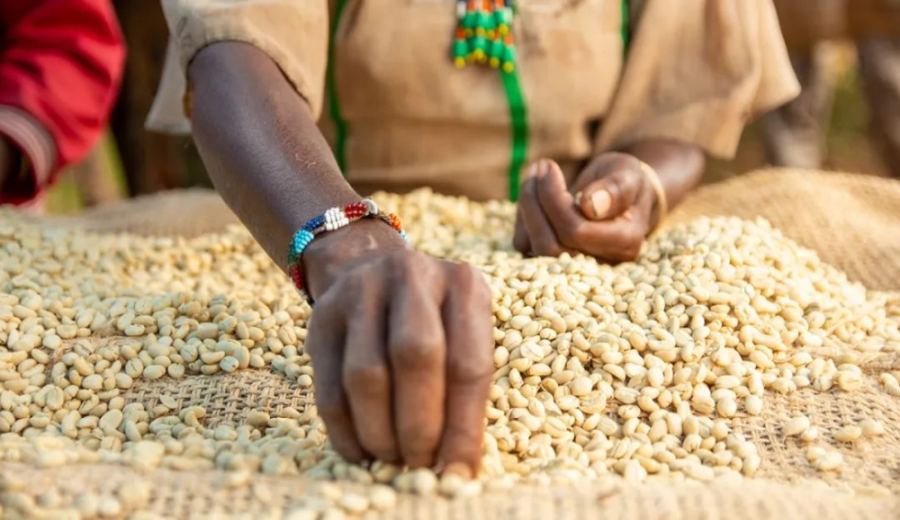
Introduction:Want to understand the grade classification and actual flavor profile of the Gotiti Cooperative coffee beans from Yirgacheffe? This article starts with the regional background and processing method differences, deeply analyzes the characteristics of this high-altitude washed coffee bean, and provides detailed parameter settings and flavor records for both hot pour over and iced pour over, helping you master stable extraction techniques and easily brew high-quality coffee at home with a refreshing fruity acidity and tea-like aftertaste.
Yirgacheffe is a highly representative coffee-growing region in Ethiopia’s Gedeo Zone in the south, renowned worldwide for its unique floral aroma, bright citrus acidity, and tea-like finish. Among them, the Gotiti Cooperative, as a key producer organization in the region, produces washed coffee beans that are favored by global specialty coffee enthusiasts for their clear flavor and consistent quality. This article will take you through a comprehensive understanding of the grading logic and bean variety characteristics of the Yirgacheffe region, and through practical testing, share extraction suggestions and flavor profiles for the Gotiti washed beans under both hot brewing and iced pour over conditions.
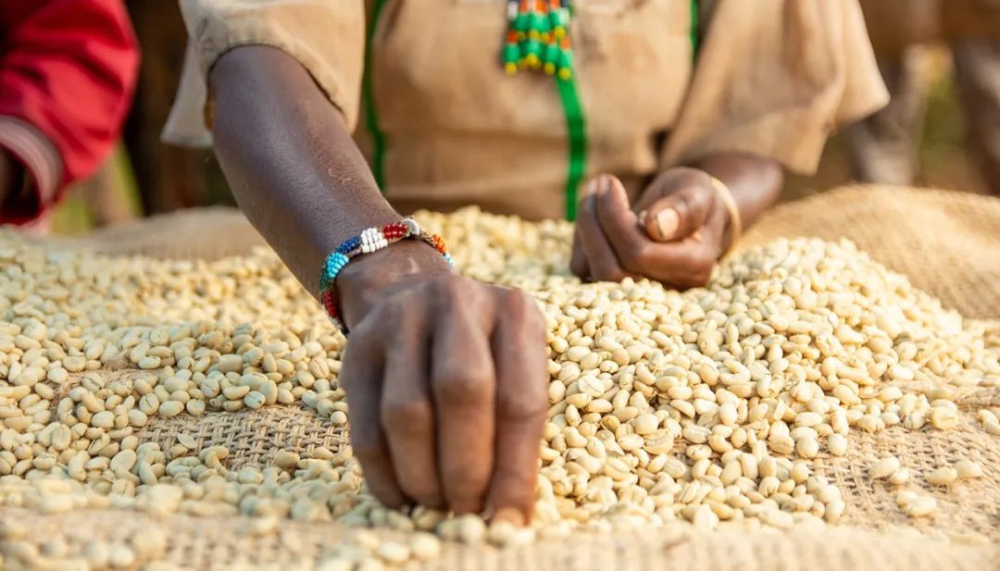
Yirgacheffe was originally just a small town under the Sidamo region of Ethiopia, but because the coffee grown there has a uniquely refreshing acidity and floral-fruity character, it gradually stood out and became a focal point in the global specialty coffee market. In the past, people’s impression of coffee mostly lingered on its strong bitterness, but Yirgacheffe overturned many consumers’ palates with its lemon-like bright acidity, elegant floral notes, and honey-like finish—especially appealing to those accustomed to tea culture.
According to industry observations, the reason Yirgacheffe can present such delicate flavors mainly stems from three factors: high-altitude growing environments, locally unique native hybrid varieties (commonly known as Heirloom), and the continuation of traditional washed and natural sun-drying processing methods. The high altitude allows coffee cherries to mature slowly, accumulating richer flavor compounds; the native varieties endow the beans with diverse and distinctive aromatic expressions; traditional processing methods better highlight the terroir, earning it the reputation of being the “precursor to Geisha in the coffee world.”
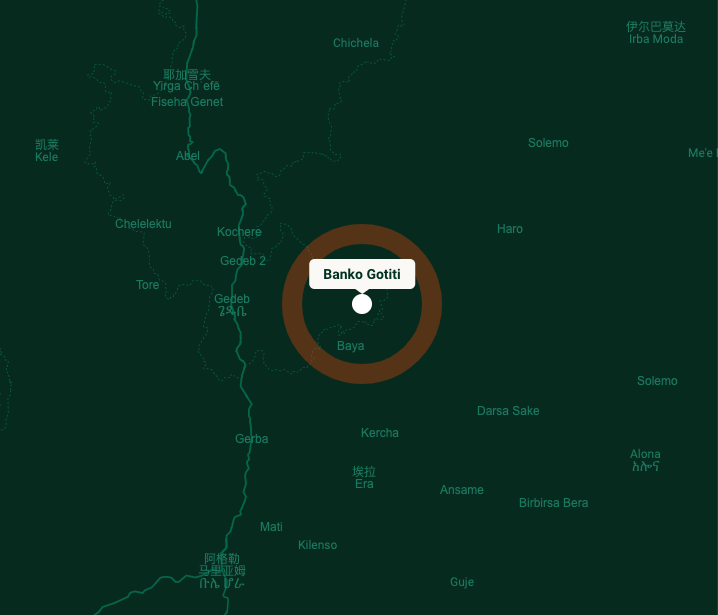
Although Yirgacheffe is now a globally recognized coffee-growing region name, prior to 1995, it was merely a small town within the Sidamo region. Later, due to administrative boundary reorganization, the area came under the jurisdiction of the Gedeo Zone. Subsequently, due to the unique aromatic characteristics of the local coffee—such as white floral and citrusy fresh notes—it received widespread praise in the international market, prompting many traders to separate this area’s coffee and sell it under the name “Yirgacheffe,” further enhancing its value and recognition.
By 2009, the Ethiopian government further established a grading system, categorizing specific micro-regions such as Wenago, Yigacheffe, Kochere, Gelena~Abaya, etc., into two types based on flavor performance: “Yigacheffe A” (exhibiting classic Yirgacheffe flavors) and “Yigacheffe B” (flavors not meeting the classic definition). In other words, the “Yirgacheffe” coffee available in the market today may not necessarily originate from the geographical Yirgacheffe town, but could come from surrounding regions with similar flavor characteristics.
Within the Yirgacheffe region, there are multiple coffee processing factories operated in cooperative forms, including Gotiti, Kochere, Worka, Chelelektu, Misty Valley, and Konga, each with stable quality output and processing features, making them long-term partners for many international buyers and roasters. When trading green beans, they are usually labeled as “Yirgacheffe + Cooperative Name” to precisely distinguish origin and flavor profiles.

Ethiopia possesses the world’s richest coffee genetic repository, with most of the coffee planted by local farmers being native hybrids (Heirloom) without detailed variety classification. These coffee trees have naturally evolved with terrain and climate, resulting in a wide variety of types that are difficult to categorize, hence the coffee beans often exhibit inconsistent sizes—an aspect that requires special attention during processing and roasting. Currently, the main processing methods used in the region are washed and natural sun-dried, with the washed method being particularly suitable for high-altitude, high-acidity coffees like Yirgacheffe due to its ability to highlight clean acidity and distinct layers.
The washed processing method relies on stable water sources and processing facilities. The process involves first removing defective cherries, then stripping the skin and pulp, followed by fermenting to remove the mucilage layer, and finally washing with clean water and sun-drying. This method significantly reduces interference from impurities and undesirable flavors, making the coffee’s acidity brighter and its flavor profile clearer. In contrast, the natural method retains more sweetness and fermentation layers, but the overall flavor tends to be richer and not as clean and refreshing as the washed process.
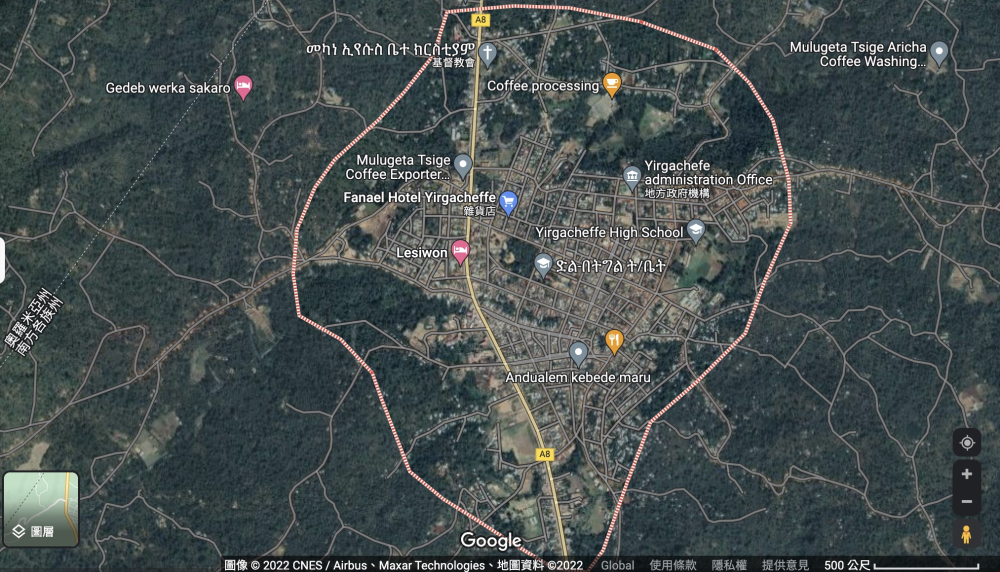
The commercially released “Medium-Light Roast – Gotiti Cooperative Washed Bean from Yirgacheffe,” grown at high-altitude plateaus between 1900 to 2300 meters, uses native varieties (Heirloom) and the washed process. It is an excellent choice for experiencing the classic flavors of Yirgacheffe. It is recommended to use water at 90–91°C, paired with a sugar-like grind size of 80% sieved rate through a Chinese No. 20 mesh sieve. Use the three-stage pouring method for pour over: the first stage is 30 grams of water for a 30-second bloom, the second stage adds 95 grams of hot water, and after the coffee bed settles, add another 100 grams. Maintain a small water flow and circular pouring around the center throughout to ensure even extraction.
Under these parameters, the Gotiti washed beans showcase elegant jasmine floral notes and citrus acidity. The entrance is marked by distinct lemon acidity paired with sugarcane-like sweetness. As the temperature drops, it transitions into a refreshing green-tea-like finish, with a long-lasting and layered aftertaste—perfect for coffee lovers who enjoy a bright fruity acidity.
If you want to further explore its iced pour over potential, you can refer to the following practically optimized extraction plan: use 15 grams of coffee grounds, with a 1:11 coffee-to-water ratio (total water volume 160 grams), adding 75 grams of ice cubes. The grind size is set to EK43s scale 9.5 (approximately equivalent to C40 scale 22). Use the Hario V60 filter cone and perform a three-stage pour—first stage is 30 grams for blooming, after 30 seconds pour 90 grams of hot water with a larger stream while gently stirring 5 times, then after the liquid level drops, add another 45 grams. Total extraction time is controlled between 1 minute 55 seconds and 2 minutes 5 seconds.
This iced pour over method fully brings out the vibrant fruit acidity and sweet layers of the Gotiti washed beans. Upon entry, you can taste juicy acidity and sweetness reminiscent of yellow peach, sweet orange, and grapefruit. With the cooling effect of the ice, the overall flavor becomes even crisper, like an intense iced fruit tea, with a refreshing and sustained aftertaste—making it an excellent choice for summer or when pursuing a fresh taste profile.
The above content is compiled by CoffeeHunters, a coffee news website.


