








Introduction:Have you ever wondered why specialty coffee mostly uses Arabica, while instant coffee often relies on Robusta? This article delves into the fundamental differences between these two major coffee species—from caffeine, fat, and sugar content, to appearance, flavor, suitable brewing methods, and representative growing regions—to help you make choices based on your taste preferences, while also exploring the characteristics and stories of classic varieties such as Typica, Geisha, and Ethiopian heirlooms.
In the world of coffee, Arabica and Robusta are the two pillars. Whether you’re enjoying a pour over or an espresso, every sip you take may come from one of these two varieties. But do you know what the fundamental differences between them really are? From flavor complexity to cultivation conditions, and all the way to the final extraction taste, these differences not only influence baristas’ recipe choices but also shape consumer preferences.
First, looking at chemical composition, the caffeine content in Arabica generally falls within 0.9% to 1.2% , which is significantly lower than that of Robusta. In addition, its fat content is about 60% higher than Robusta’s, and its sugar content is more than double, giving Arabica a sweeter, softer flavor profile along with a hint of bright acidity. In contrast, Robusta has higher levels of caffeine, chlorogenic acid, and amino acids, resulting in a bolder, more robust flavor that often includes notes like nuts, grains, and even a slightly earthy undertone. As a result, it’s commonly used in instant coffee or some espresso blends to enhance crema richness.

Beyond flavor, the two also have significant differences in cultivation requirements. Arabica thrives in high-altitude regions. Although high altitudes mean greater climate challenges and pest risks, the slower growth allows the beans more time to accumulate flavor compounds, resulting in more complex layers. Robusta, on the other hand, contains high concentrations of chlorogenic acid, which gives it natural resistance to pests, so it’s mostly grown at lower altitudes. While easier to cultivate, it sacrifices some of the finesse in flavor.
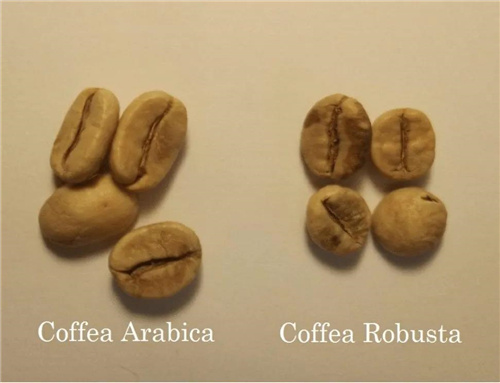
In appearance, even at the green bean stage, the two have distinct characteristics. Arabica beans tend to be oval, elongated, and slightly flat, with a center cut that shows a subtle “S” shape. Robusta beans, in contrast, are more round and plump, with a straight, “1”-shaped center cut. However, it’s worth noting that after roasting, both types of beans expand and deform, making the center cut less obvious, and relying solely on roasted bean appearance can lead to misidentification.
In terms of flavor performance, Arabica can be considered the protagonist of the coffee flavor spectrum. Shaped by different altitudes, climates, and processing methods, it can display a wide range of profiles, from bright fruity notes (in medium to light roasts) to rich caramel sweetness (in dark roasts). Its acidity is vibrant, the mouthfeel smooth and delicate, body medium to low, but often with a pleasant sweet aftertaste. It’s well-suited for appreciation through pour over or siphon methods. Robusta, on the other hand, excels in bold intensity, with very low acidity and pronounced bitterness, often featuring woody or nutty base tones. It’s commonly used as a base in espresso blends to boost the overall body and crema.
Looking at the plants themselves, Arabica coffee trees typically grow to a height of 2 to 3 meters, with slender, oval-shaped leaves. Robusta trees, meanwhile, can reach over 10 metersin height, with broader and thicker leaves. Not only do they look vastly different, their growing conditions and maintenance difficulty also vary greatly, which is reflected in production costs and final market prices.
The Arabica family boasts nearly three thousand varieties, most originating from two ancient Ethiopian heirlooms—Typica and Bourbon. Over time, these varieties have spread around the world and evolved into distinctive strains adapted to various environments. Below are several representative varieties along with the flavor characteristics of their growing regions:
First is the Typica variety from Jamaica, famously known as Blue Mountain coffee. Typica coffee trees are tall, with slender, pointed beans that resemble eggs. Its flavor is built on a citrus acidity base, with a sweet, smooth finish, delivering an overall clean and elegant profile. However, Typica is susceptible to leaf rust and has relatively low yields, leading to its gradual replacement by other disease-resistant varieties. But in Jamaica’s Blue Mountain region, thanks to the unique island-style tropical rainforest climate, Typica has successfully adapted and demonstrated exceptional flavor stability. With a medium-depth roast, its chocolate and nutty aromas are highlighted, while maintaining soft acidity and sweetness, contributing to the irreplaceable status of Blue Mountain coffee.

Another highly regarded variety is Geisha from Panama, a Typica descendant that is extremely demanding in its growing environment—it requires high altitudes, fertile soil, and moderate shade. Geisha coffee trees have thin leaves and fragile root systems, resulting in very low yields, but this also allows them to accumulate incredibly rich flavor layers. Geisha grown at high altitudes takes longer to mature and develops more complex flavors. Its aroma often features notes of rose, citrus, berries, and honey, making it a dream coffee for many specialty coffee enthusiasts. The Emerald Red Label and Green Label Geishas from this origin are flagship offerings from the renowned Finca Esperanza Verde estate, with highly distinctive flavor profiles.
Finally, we must mention the Ethiopian Heirloom varieties from the birthplace of coffee. Due to the region’s pristine forests housing an extremely rich coffee gene pool, many varieties remain unclassified, hence collectively referred to as "heirlooms." These varieties usually vary in bean size, often have a rounder shape, and are commonly found in regions like Yirgacheffe and Sidamo. Some well-known offerings from suppliers, such as Guji Dingding or Huakui, are representatives of Ethiopian heirlooms, often showcasing light floral notes and tropical fruit tones, making them great for coffee newcomers who prefer fresh and vibrant flavors.
The above content is compiled by CoffeeHunters, a coffee news website.


