







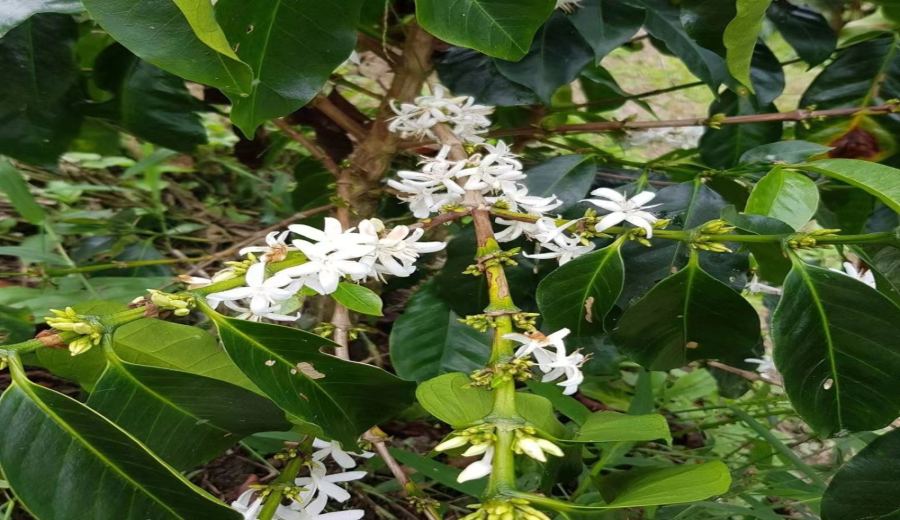
Introduction:Pink Bourbon is a rare coffee variety that has garnered significant attention in the specialty coffee scene in recent years, celebrated for its unique pink coffee cherries and captivating flavor profile. This article delves into the production background of Pink Bourbon in Colombia, its genetic relationship with Red Bourbon and Yellow Bourbon, as well as its semi-washed processing method and recommended roast and pour over parameters, helping coffee enthusiasts gain a more comprehensive understanding of this distinctive bean variety.
Pink Bourbon (Pink Bourbon) is a rare variety that has attracted considerable attention in the specialty coffee field in recent years, with its most notable characteristic being the soft and romantic pink color of its ripe coffee cherries. This variety was first discovered in the town of Palestine, Huila Province, Colombia, and is currently primarily cultivated in the high-altitude mountainous regions of the area. Beyond its visual appeal, Pink Bourbon has also drawn interest from many coffee farmers and roasters due to its unique genetic background and relatively scarce production.
According to statistics from the 2020/21 season, Colombia’s total coffee production is estimated to reach 14.1 million bags, with exports accounting for approximately 12.4 million bags, primarily destined for the U.S. and EU markets. Against this backdrop, although Pink Bourbon accounts for only a very small proportion, it has gradually gained market recognition for its special flavor potential. Domestic coffee consumption in the country continues to grow, leading to a slight decline in inventory levels, further highlighting the market value of specialty varieties.
When it comes to the origins of Pink Bourbon, there are currently two main prevailing theories. The more widely accepted view is that Pink Bourbon is the natural hybrid offspring of Yellow Bourbon (Yellow Bourbon) and Red Bourbon (Red Bourbon). Since both Yellow Bourbon and Red Bourbon are varieties with dominant gene expression, they are stable and easy to propagate; however, the resulting Pink Bourbon exhibits recessive gene expression, making it genetically less stable, with offspring prone to trait segregation, resulting in the difficulty of retaining the pink fruit color.
Some research also suggests that Pink Bourbon may be the result of natural hybridization between the Colombia variety and Caturra. The Colombia variety is a disease-resistant, high-yield variety actively promoted by the country, containing some Robusta genes. While it offers resistance to leaf rust and high productivity, its flavor profile is relatively ordinary; Caturra, on the other hand, is a dwarf variant of Bourbon with better flavor potential. The combination of the two may have given rise to a new variety with unique characteristics.
The rarity of Pink Bourbon lies in the fact that the formation of its pink fruit color is highly dependent on specific recessive gene combinations. Typically, the color of coffee fruits is controlled by genes in the pollen, and these color-controlling genes are often recessive and susceptible to interference from other dominant genes. As a result, even when farmers observe orange or reddish-hued Bourbon fruits, they are often the result of impure gene expression. To stably express pure pink coloration, very strict cultivation and selection conditions are required, along with minimizing cross-pollination from other varieties.
Taking the 2020 harvest season in the Huila region of Colombia as an example, there were approximately 1,800 Pink Bourbon coffee trees in the area, with each tree yielding about 1.8 kilograms of fresh fruit per year. After removing the pulp and mucilage, each tree produces only about 0.36 kilograms of coffee beans, resulting in an overall yield of less than 650 kilograms. Although the numbers may seem low, because the process of natural hybridization is ongoing—and considering that Arabica coffee is mostly self-pollinating—there remains a chance for recessive traits to stabilize in future generations. Maintaining a good isolation environment during cultivation can help preserve the pure expression of the pink color.
The Huila growing region is located in the southern section of the Central Mountain Range in central southern Colombia and is one of the country’s renowned specialty coffee producing areas. With elevations generally exceeding 1,500 meters, the mountainous terrain and stable microclimate provide ideal growing conditions for coffee trees. A well-known coffee brand has cupped multiple lots from this region on several occasions, finding that Huila coffees often exhibit gentle fruit acidity in the front, with rich sweetness and good balance in the mid-to-late stages, making them suitable for exploring diverse flavor expressions through different processing methods.
Pink Bourbon is typically processed using the semi-washed method (Semi-Washed), which involves the following steps: first, a pulper is used to remove the outer skin and pulp of the coffee cherry, leaving the mucilage-covered parchment bean; next, a mucilage remover uses a small amount of water and mechanical force to strip away the sticky mucilage layer, resulting in a smooth surface on the bean; the parchment beans are then dried outdoors or in a dryer until their moisture content drops to 10%–14%; finally, a huller is used to remove the silver skin, completing the process. Coffee beans processed in this manner tend to have softer acidity compared to washed beans, with sweetness and cleanliness surpassing those of typical natural or honey processes, offering a flavor profile that falls somewhere between the two.
In terms of roasting, to fully showcase the floral and fruity characteristics of Pink Bourbon, a medium-light roast is recommended. A typical roast profile could be set as follows: charge at 180°C, with fan speed at 3 and heat at 120; turning point around 1 minute 42 seconds, maintaining heat when the temperature drops to 140°C, with fan speed adjusted to 4; after the beans turn yellow, gradually reduce heat to 100 (176°C) and then 70 (180°C), keeping fan speed unchanged. Approaching first crack, around 8 minutes 17 seconds, the beans show wrinkles and dark spots—pay attention to the onset of first crack, and continue roasting for about 1 minute 30 seconds after first crack begins at 9 minutes 30 seconds, finally dropping the beans at 191.5°C.
Cupping results show that Pink Bourbon possesses a fresh and elegant floral aroma, accompanied by a juice-like sweetness reminiscent of blueberries and green grapes, with a distinct cherry note in the mid-palate and a warm, mellow sweetness akin to brown sugar in the finish. In terms of acidity, it features a complex profile of citrus and berry notes, delivering an overall clean and layered mouthfeel.
For pour over brewing, it is recommended to use a Hario V60 filter, with a water temperature of about 90°C, 15 grams of coffee, a 1:15 coffee-to-water ratio, and a grind size similar to coarse sugar (approximately 80% passing rate through a Chinese standard 20-mesh sieve). Specifically, start with a 30-second bloom using 30 grams of water, then pour in a circular motion with a small stream of water up to 125 grams for the first pour, followed by a pause as the water level drops and the coffee bed begins to show; continue pouring up to 225 grams, then stop and remove the V60 once the water level has dropped again. Total brew time is around 2 minutes. Under these parameters, the flavor is clear and bright, with a refreshing entrance featuring citrus, berries, and cherry tomato notes. As the temperature changes, caramel sweetness and subtle fermentation aromas emerge, while the finish unfolds floral notes and a soft, nutty creaminess.
The above content is compiled by CoffeeHunters, a coffee news website.


