







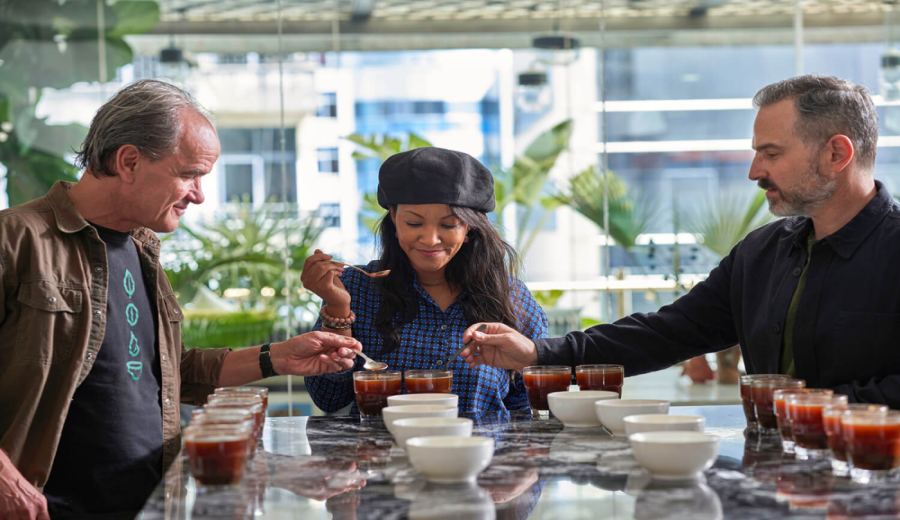
Introduction:Geisha coffee is hailed as the pinnacle of specialty coffee, and the Gold Label lots from Ethiopia's Gesha Village are the crème de la crème. This article delves into the varietal origins of Geisha, the unique geographical environment and rigorous grading system of Gesha Village Estate, provides detailed insights into the characteristics of the auction, Gold Label, Red Label, Green Label, and Chaka lots, and offers professional pour-over recommendations and practical parameters to help coffee enthusiasts fully grasp this uniquely flavorful Geisha coffee.
When it comes to specialty coffee, the name "Geisha" is almost universally known. This bean variety, hailed as the "Hermès of the coffee world," has long been the dream bean for baristas and coffee lovers alike, thanks to its distinctive floral and fruity aromas and complex layers. Among the many producing regions, the Geisha coffee from Ethiopia’s Gesha Village stands out even more due to its extreme flavor expression and rare production, making it one of the most sought-after top-tier coffees in the market.
The history of Geisha dates back to 1931, when it was first discovered in Ethiopia’s Gesha Forest. It later traveled through Kenya, Uganda, Tanzania, and then to Costa Rica and Panama. It wasn’t until the 2000s that Panama’s Hacienda La Esmeralda brought it onto the international stage, winning the COE competition for multiple consecutive years and propelling Geisha to fame. As the birthplace of Geisha, Ethiopia also boasts astonishing flavor potential.

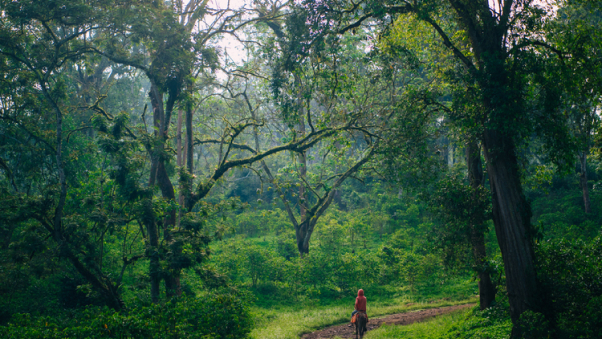
Gesha Village Estate is located in Ethiopia’s Bench Maji region in the west, surrounded by vast jungles, at an altitude between 1,900 and 2,100 meters. The cool and humid climate makes it an ideal environment for growing Geisha coffee. Out of the approximately 471-hectare estate, 320 hectares are dedicated to coffee cultivation, with a refined planting density of about 7,000 plants per hectare. The soil is nutrient-rich reddish-brown loamy soil. The estate is managed by Adam and Rachel, a couple who spent three years searching for this land near the native Gesha forest, which is a two-day drive from the capital, Addis Ababa.
Gesha Village is not only committed to growing high-quality coffee but also places great importance on local community development. It has established the Gesha Village Foundation, supporting education through nearby schools and building strong cooperative relationships with local residents. This commitment to the environment and people is also reflected in the flavors and quality of their coffee.
Gesha Village implements a strict internal grading system, categorizing its coffee into five main tiers based on quality and rarity: Auction, Gold Label, Red Label, Green Label, and Chaka lots. The Auction lots account for just 3.7% of annual production and are top-tier beans that have undergone multiple rounds of selection. They are available only through global auctions, with cupping scores generally ranging from 88.15 to 92.67. For example, the 2018 RSV.6 lot falls into this category. These coffees are typically reserved for competitions or high-end roasters and are extremely rare.
The Gold Label lots make up about 10% of annual production. While not as scarce as the Auction lots, they remain representative of the highest quality from Gesha Village. These coffees offer excellent traceability, with rich and complex flavor profiles. Common tasting notes include bright citrus tones, the sweet-tartness of berries, and the interplay of winey and floral aromas. Take the Oma 059 lot, for instance—it is processed using the natural (sun-dried) method, grown at altitudes between 1,931 and 2,040 meters, and delivers rich fermented wine-like aromas, bright citrus and kumquat acidity, along with a full-bodied berry juice character upon brewing.
The Red Label lots account for about 15% of annual production. They also come with complete traceability information and have cupping scores above 88 (according to SCA standards), showcasing the classic flavor profile of Gesha Village. Compared to the Gold Label, their flavor intensity and complexity are slightly lower, but they offer great value, making them suitable for everyday drinking or for enthusiasts looking to explore the characteristics of Geisha. For example, the Red Label Geisha from the Bench Maji region is naturally processed, primarily of the Gorigeisha variety, and features flavor notes such as coconut, licorice, cream, chocolate, toffee, citrus, almond, and strawberry, along with noticeable fermented aromas. The overall mouthfeel is rich, with a pronounced nutty character.
The Green Label lots come from single plots and single varieties, with each batch fully traceable—including information such as farm plot name, variety, and processing date—making them an ideal choice for understanding the terroir of Gesha Village.
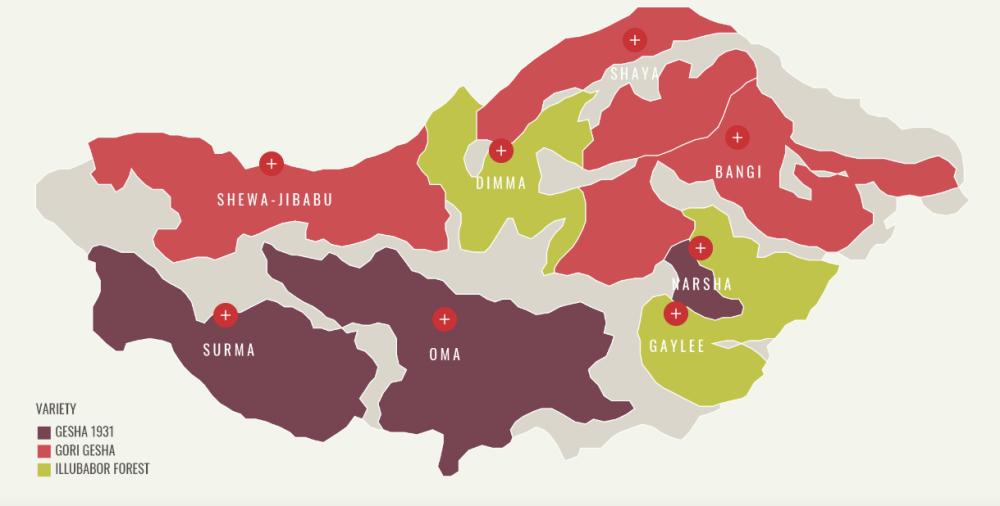
The Chaka lots are blends of coffee from all plots across the entire estate and harvest season, including the Geisha 1931, Gorigeisha, and Illubabor varieties, and employ both natural and washed processing methods. Among them, Gorigeisha replicates the genetic diversity of the native forest; Geisha 1931 is similar to Panamanian Geisha, noted for its bean shape and flavor characteristics; and the Illubabor Forest 1974 was discovered in Ethiopia’s Illubabor Forest in 1974 and later cultivated as a disease-resistant variety after research.
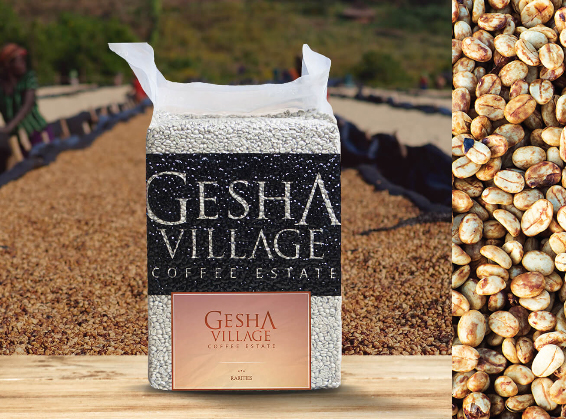
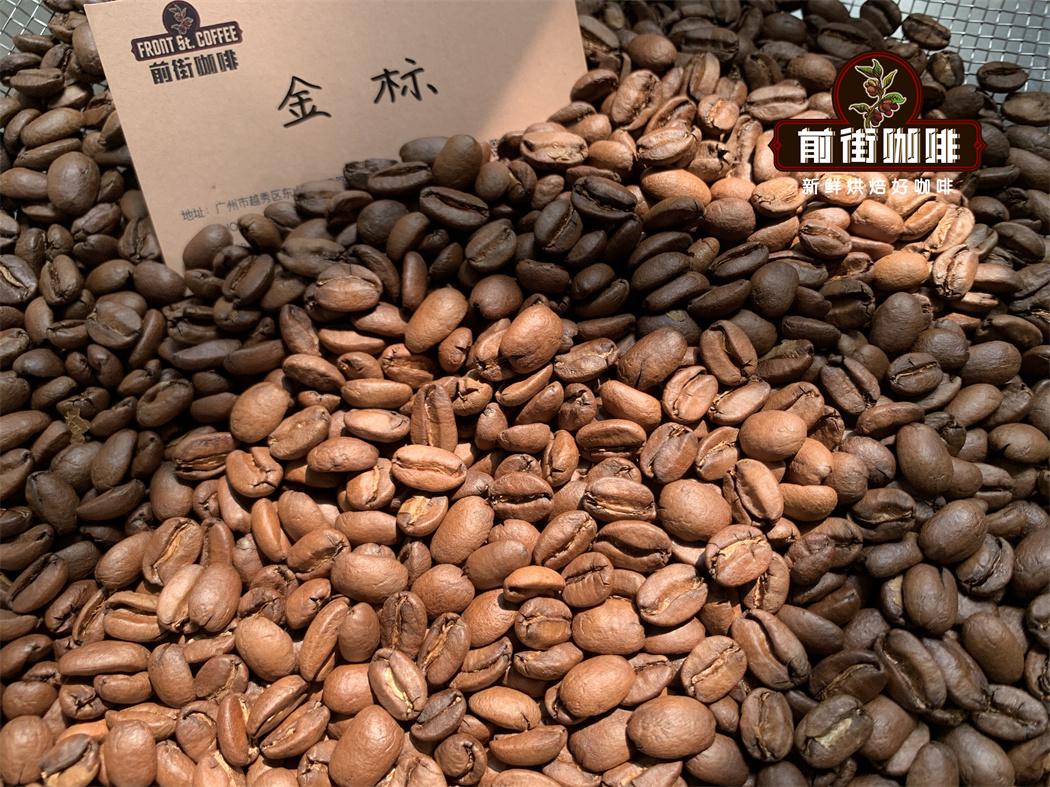
For home brewers looking to prepare Geisha coffee, here are professional-grade pour-over recommendations: It is advised to set the water temperature at 90–91°C, use a grind size around BG#6M (similar to granulated sugar), and maintain a brew ratio of 1:15, with about 15 grams of coffee. For the brewing steps, start by pouring 30 grams of water for a 30-second bloom, followed by 95 grams of water (totaling about 125 grams) within approximately 1 minute. When the water level drops to two-thirds of the coffee bed, pour another 100 grams of water (totaling about 225 grams) within about 1 minute and 40 seconds. Finally, allow the coffee to drip through between 1 minute 55 seconds and 2 minutes, then remove the filter and enjoy.
Mastering these details will not only fully highlight the unique flavors of Geisha but also allow you to experience the subtlety and depth of this top-tier coffee with every brew.
The above content is compiled by CoffeeHunters, a coffee news website.


