







Introduction:Want to understand why Yirgacheffe has become a representative of Ethiopia’s specialty coffee? This article delves into the history of this renowned coffee-growing region, the operational models of its coffee cooperatives, and how washed processing techniques shape its distinctive fruity acidity and floral flavor notes. It also provides practical V60 pour over parameters, allowing you to brew clean, bright, citrusy Yirgacheffe at home.
Ethiopia is often regarded as the birthplace of coffee. The country not only boasts a long-standing coffee culture but is also a major global supplier of specialty coffee. Locals hold deep affection for coffee, and cafes can be found on every street corner, as if reminding the world that this is where the coffee story began.
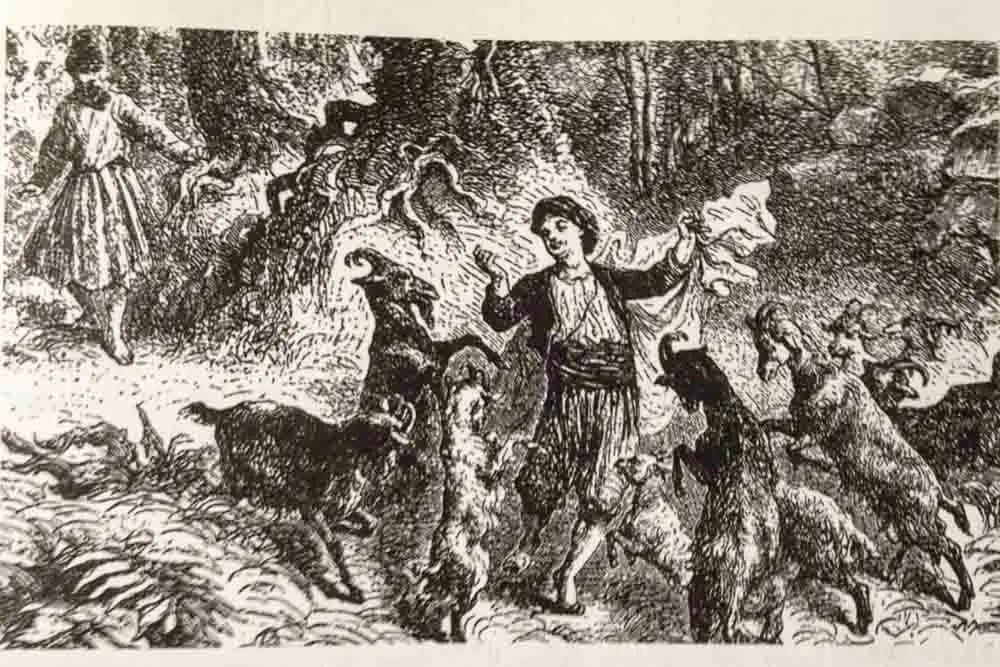
Regarding the origin of coffee, there's a widely circulated legend about a shepherd. It is said that in the Ethiopian highlands, a shepherd named Kaldi noticed that his goats became unusually energetic and lively after eating red berries from a certain tree. Curious, he tried the fruit himself and experienced a refreshing and energizing effect. He then told the villagers about it, spreading the secret of coffee locally before it eventually reached the Arab world, initiating coffee’s global journey.
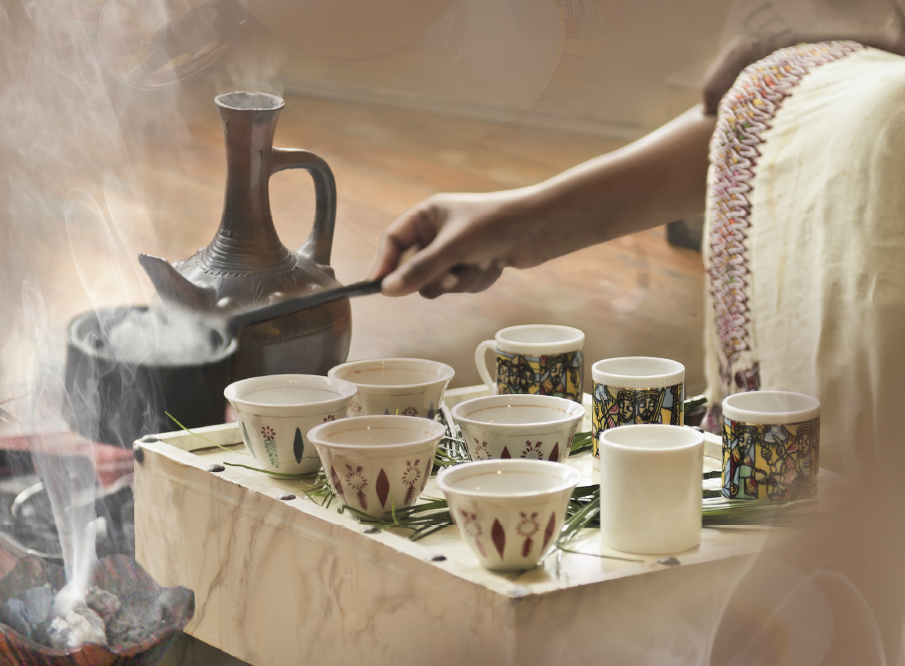
In the local Ethiopian language, coffee is called “bunn” or “buna,” and the region where coffee originated, Kaffa, is believed to be the possible linguistic root of the word “coffee.” For Ethiopians, coffee is more than just a beverage—it’s a life ritual and a cultural belief. Traditional coffee preparation usually involves hand-roasting beans, pounding them with a stone mortar, and brewing them with simple tools to showcase the most authentic coffee flavors.
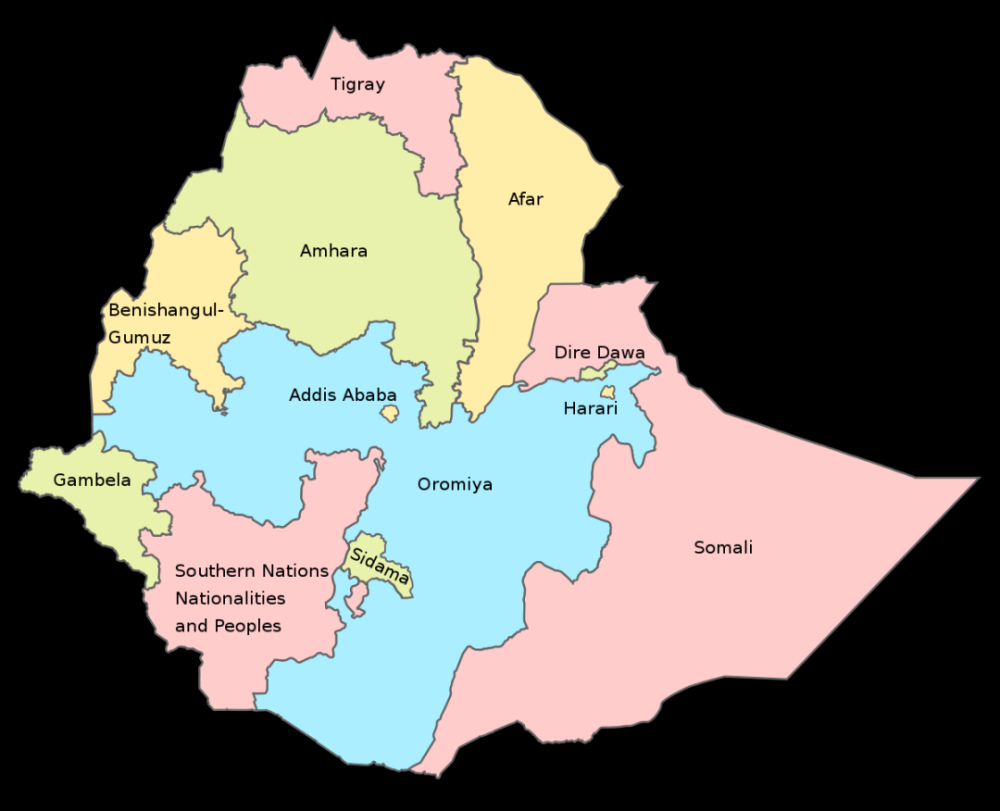
Although Yirgacheffe is just a small town, it is one of the symbols of Ethiopia’s specialty coffee. Across the country, approximately 1.2 million smallholder farming families rely on coffee cultivation for their livelihoods, and over 90% of these are small-scale family farms. Most of these farmers are located in the western and southern regions, and Yirgacheffe alone exports thousands of tons of coffee each year, underscoring its pivotal role in the industry.
Coffee cultivation in Ethiopia can be divided into four main types: forest coffee, semi-forest coffee, garden coffee, and plantation coffee. Among these, garden coffee is the most common, typically with each household cultivating at least four hectares. Due to the limited production capacity of smallholders, many areas have developed networks of cooperatives and processing facilities to help farmers process and sell their green coffee beans collectively.
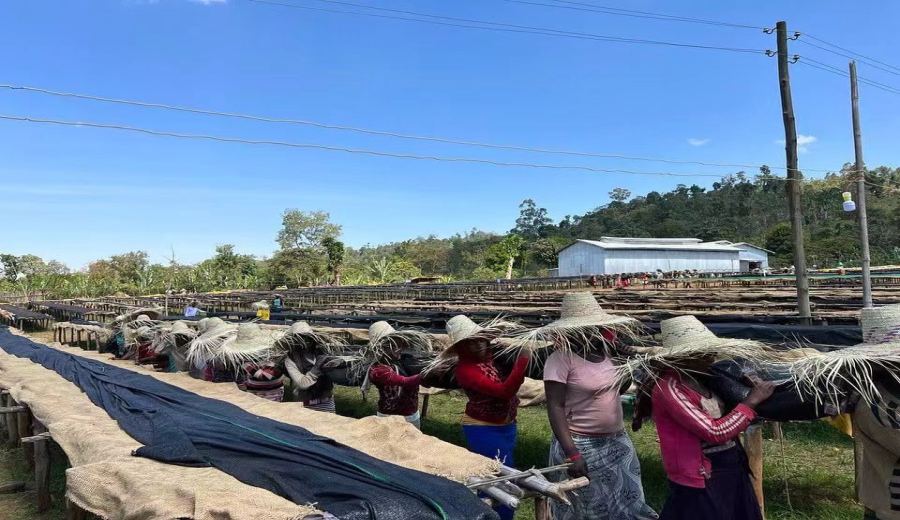
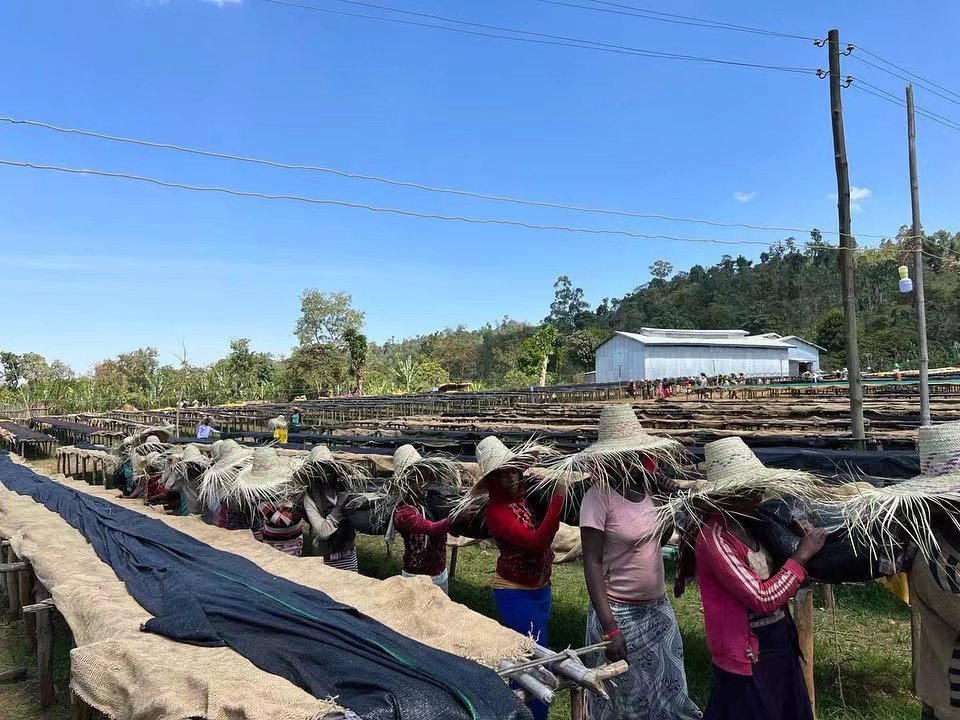
The former precursor of the Guji Dingding Cooperative was part of the Worka Cooperative under the Yirgacheffe Coffee Farmers Cooperative Union (YCFCU). As the global specialty coffee market began emphasizing “single-origin” and “traceability,” the team broke away from the original organization in 2012 and established the independent Guji Dingding Cooperative. Today, this team of around 300 farmers is known for its washed coffee beans, which are celebrated for their clean, bright profiles, vibrant acidity, and layered notes of citrus, lemon, and jasmine—qualities that have won the hearts of coffee enthusiasts.
In the early days, Ethiopia commonly used the traditional natural (sun-dried) processing method, where harvested coffee cherries were directly sun-dried until their moisture content dropped to around 12%, after which the beans were hulled. However, this method often resulted in earthy flavors, overripe fruitiness, or even undesirable fermentation characteristics. To enhance quality and consistency, Ethiopia introduced washed processing techniques from Central and South America. These methods involve soaking, fermenting, and washing the beans with clean water to effectively remove the mucilage and defective beans, resulting in a cleaner, brighter, and more transparent cup profile.
Yirgacheffe coffee beans are generally best enjoyed with a light roast, which highlights their bright acidity and complex aromatic layers. Freshly roasted Yirgacheffe typically exhibits dry aromas of passionfruit, citrus, and berries, while the wet aroma reveals rich scents of citrus and berries. Upon tasting, the pronounced citrus acidity interplays with berry sweetness, accompanied by soft notes of almond and tea. The finish leaves a honey-like sweetness, resulting in an overall clean, refreshing cup with medium-low body.
To achieve optimal flavor, it’s recommended to brew the coffee within 4 to 7 days after roasting, when the beans’ degassing stabilizes and the aroma and flavors are at their peak. Over time, the aroma will gradually dissipate, and the flavor profile will decline. Therefore, it’s best to use freshly roasted beans within five days of roasting to fully experience their prime condition.
Since Yirgacheffe is grown at high altitudes and the beans are dense, pairing them with a light roast helps preserve more of their inherent flavors. To effectively extract its delicate aromas and balanced acidity and sweetness, it is recommended to use a V60 filter cone with slightly higher water temperature and a finer grind. The V60’s unique structure—including its large center hole and spiral ridges—prolongs the contact time between water and coffee grounds while promoting even extraction, resulting in a more nuanced and layered cup.
Below are the recommended V60 pour over parameters, suitable for washed Yirgacheffe from the Guji Dingding Cooperative:
Filter Cone:V60
Water Temperature:92-93°C
Coffee Dose:15 grams
Coffee-to-Water Ratio:1:15
Grind Size:Granulated Sugar Size (approximately 78% passing through a #20 sieve)
Step Recommendations:
1. First, pour 30 grams of water for a 30-second bloom;
2. Then pour 95 grams of water (total around 125 grams), aiming for a brew time of about 1 minute;
3. When the water level drops to two-thirds of the coffee bed, pour the remaining 100 grams of water (total around 225 grams), finishing the pour at approximately 1 minute and 35 seconds;
4. The total dripping time should be about 2 minutes and 10 seconds, after which you can remove the filter cone to complete the extraction.
The final brewed Yirgacheffe delivers prominent jasmine floral notes, along with lemon and citrus tones. As the cup cools, lingering undertones of berries, cream, and sugarcane gradually emerge, resulting in a clear and refreshing aftertaste with a crisp yet layered mouthfeel—an unforgettable specialty coffee experience.
The above content is compiled by CoffeeHunters, a coffee news website.


