







Introduction:The Diamond Mountain series from Panama’s Finca Emerald is a classic choice for many specialty coffee enthusiasts seeking distinctive flavors. This article delves into the growing region of Diamond Mountain coffee, the characteristics of the Caturra and Catuai varieties, the natural processing method, and how to use suitable pour over techniques to highlight its bright acidity and rich complexity. We’ve also compiled practical roasting and brewing parameters to help you more precisely appreciate the unique charm of this high-altitude coffee.
Among the many specialty coffees from Panama, the Diamond Mountain series from Finca Emerald may not be as famous as Geisha, but it enjoys equally high acclaim and recognition. This series is primarily grown at elevations of 1400 to 1700 meters across two main plots—Jaramillo and Canas Verdes—situated in volcanic soil conditions. With surrounding primary forests providing ample shade, these factors contribute to its bright fruity acidity and rich sweetness.
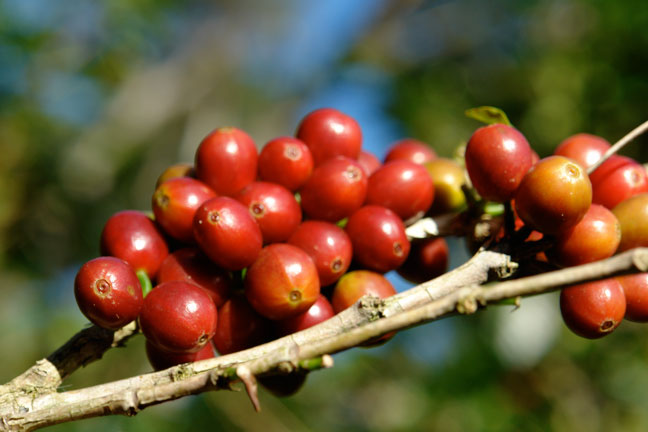
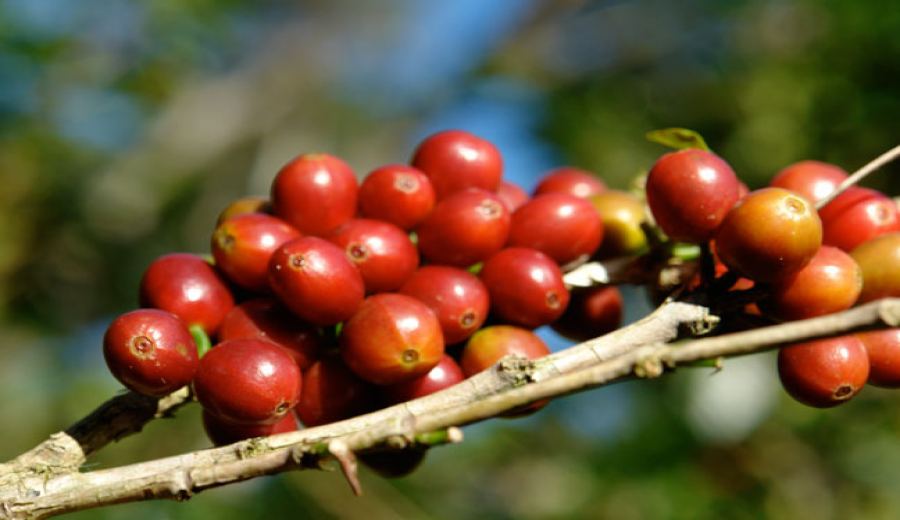
The main cultivars used in Diamond Mountain coffee are Caturra and Catuai. Caturra is a natural mutation of the Bourbon variety, originating in Brazil in the 1930s. It is known for its ability to thrive at high altitudes and its compact tree size, which makes harvesting easier. While adaptable to various environments, it generally exhibits more delicate and nuanced flavors at higher elevations. In contrast, Catuai is a hybrid variety, resulting from a cross between Yellow Caturra and the Mundo Novo variety. It also grows to a relatively short height, facilitating dense planting and management, and offers certain resistance to wind and rain, though it is more prone to leaf rust.
In the Diamond Mountain series, these two varieties are further enhanced through a refined natural processing method, amplifying their fruity notes and sugar content. During the drying process, freshly harvested coffee cherries are directly spread out in the courtyard for sun exposure, typically for 3 to 5 days with about 8 hours of sunlight per day, adjusted according to weather conditions. Once the fruit reaches an appropriate level of dryness, it is then transferred to a Guardiola dryer for 72 hours of processing to ensure uniform and stable drying, while also preventing over-fermentation and preserving the pure fruity aroma.
Another standout feature of the Diamond Mountain series is its Rainforest Alliance Certified and Eco-friendly labels. These indicate that its cultivation adheres to strict sustainability and ecological protection standards, including limitations on pesticide use, optimized resource management, and biodiversity conservation. This allows consumers to enjoy delicious coffee while supporting environmentally friendly agricultural practices.
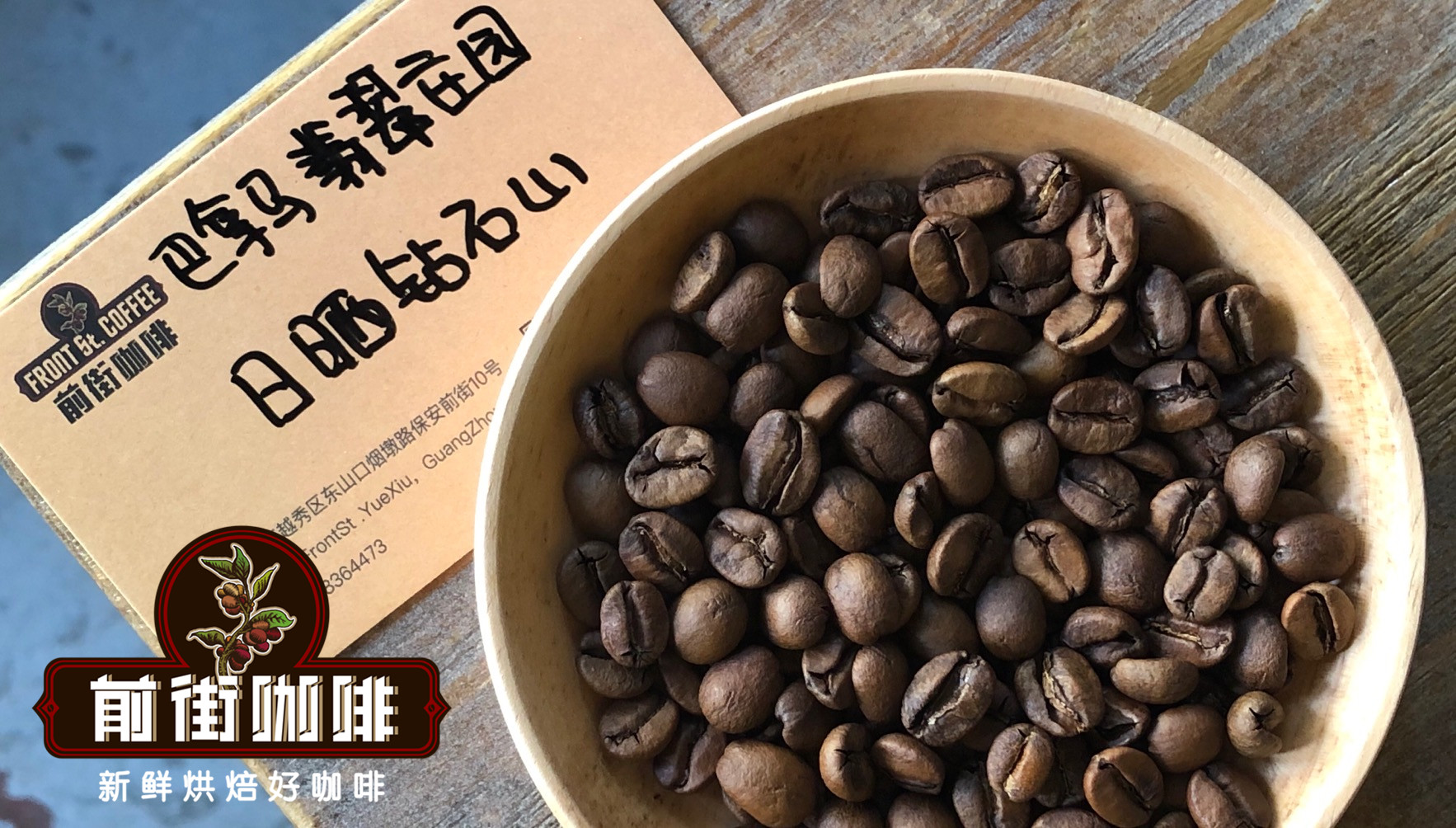
In terms of green bean appearance, Diamond Mountain coffee beans processed naturally tend to have a yellowish hue with more silver skin remaining. Among them, Caturra beans are slightly elongated with a slightly curved tail, while Catuai beans are flatter with a slender tip—these characteristics help with preliminary identification during sorting and roasting.
For roasting, it is recommended to use a medium-light roast to preserve the inherent fruity aromas and acidity. Taking the Yangjia 800N semi-direct-fire roaster as an example, the charge temperature is set to around 165°C, with an initial flame power of 130 and an air damper setting of 3. After the turn-around point, continue adjusting the flame and air damper. During the drying phase, pay attention to the dissipation of grassy notes and changes in bean color. First crack typically begins around 10 minutes and 48 seconds, at which point the air damper is fully opened, with the development time maintained for about 1 minute and 20 seconds after first crack. The final discharge temperature is around 191°C, helping to bring out bright citrus tones and honey-like sweetness.
For cupping, it is recommended to proceed within 8 to 24 hours post-roast. Use a 200ml ceramic cupping bowl, with water temperature controlled at 94°C. The grind size should pass through a #20 sieve at 70%-75%, with a brew ratio of approximately 1:18.18—that is, 11.1 grams of coffee to 200 milliliters of water, steeped for about 4 minutes. During cupping, distinct citrus and dried berry aromas are often detected, while the brewed cup reveals clear notes of citrus, honey, cocoa, and subtle wine-like flavors. The overall profile is balanced with well-defined layers.
If choosing the pour over method, it is recommended to use a V60 #01 filter cone, paired with a medium-fine grind (approximately 80% passing through a #20 sieve), using 15 grams of coffee with a brew ratio of 1:15. Water temperature is suggested to be 90–91°C. The pouring technique can follow a three-pour method: the first pour adds 30 grams of water for a 30-second bloom, followed by a slow circular pour to reach 125 grams for the first break. After the water level drops slightly, continue pouring to 225 grams before stopping, with total extraction time kept around 2 minutes. This parameter setup helps to highlight the coffee’s citrus acidity, nutty character, and honey sweetness, with a lingering finish that carries a soft cocoa sensation and subtle fermentation notes. The mouthfeel is smooth and layered.
The above content is compiled by CoffeeHunters, a coffee news website.


