








Introduction:Sidamo is one of Ethiopia’s key specialty coffee regions, renowned for its rich floral and fruity aromas and full-bodied flavor. Compared to the bright acidity of Yirgacheffe, Sidamo coffee offers a softer and more rounded drinking experience. This article will delve into Sidamo’s geographical environment, main varieties, details of the natural processing method, and focus on explaining the origin and flavor characteristics of the famous “Hua Kui” coffee, while also providing practical pour over parameters to help you fully master the brewing essence of this classic region.
As the birthplace of coffee, Ethiopia’s many regions each have their own unique characteristics. Yirgacheffe is known for its bright and citrusy acidity, but this acidity is not to everyone’s taste. If you prefer a gentler acidity paired with intense fruitiness, then coffee from the Sidamo region would be a better choice. These coffees not only retain Ethiopia’s typical floral and fruity notes, but also offer a richer juiciness and fuller body, making them highly favored in the global specialty coffee market.
Geographical and Terroir Conditions of the Sidamo Coffee Region
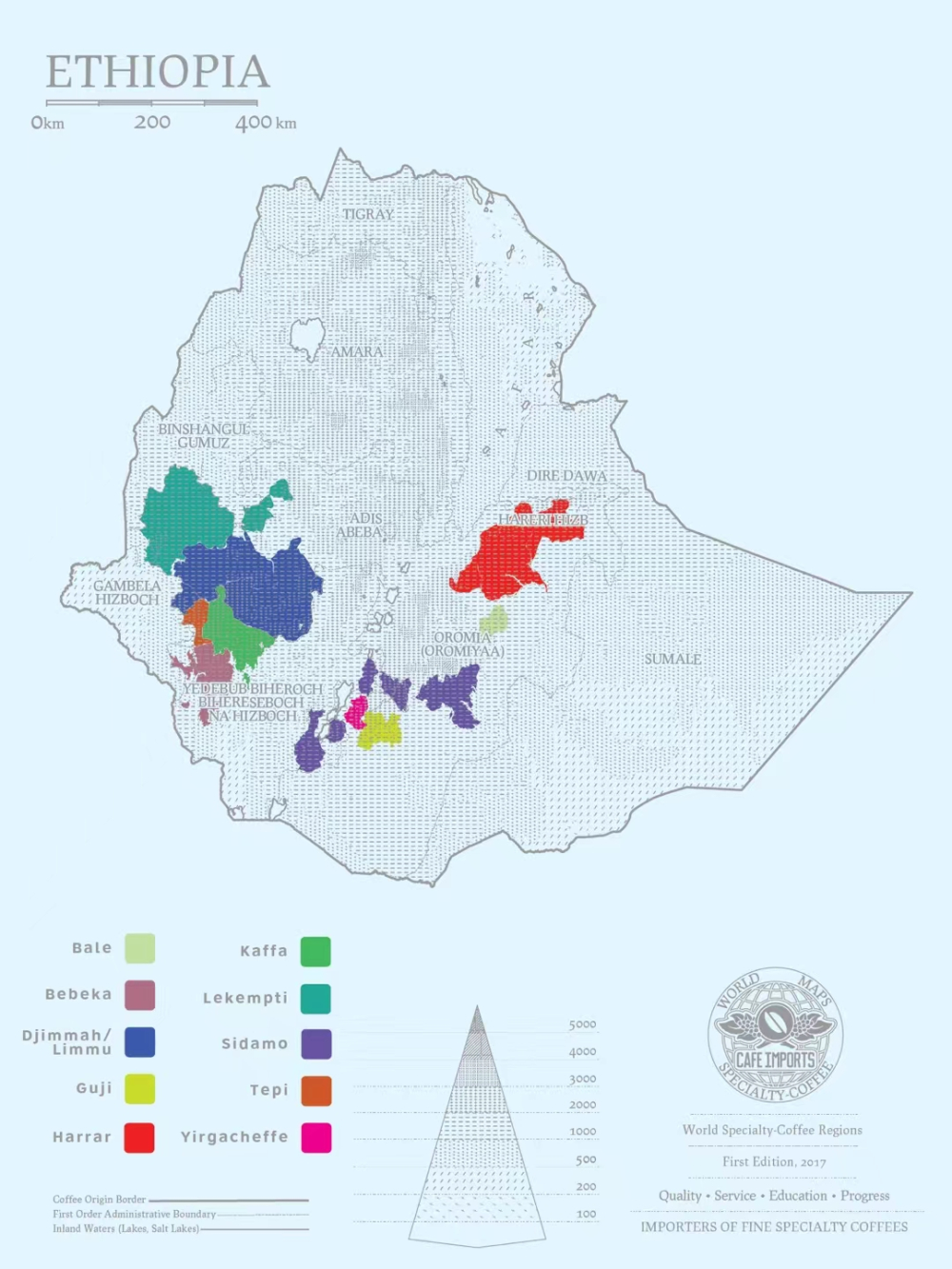
Sidamo is located in southern Ethiopia, bordering Kenya, with altitudes ranging between 1400 and 2200 meters. The region features diverse terrain, including high mountains, plateaus, valleys, and plains, providing a variety of microclimates ideal for coffee cultivation. The soil is volcanic, rich in organic matter and well-drained, with a dark brown surface layer. In some areas, there are fertile soils nearly two meters deep, supplemented by nutrients from naturally decomposed fallen leaves and plant residues, all contributing to the unique flavor foundation of Sidamo coffee.
Between 2010 and 2012, this region received high scores of 92 to 94 on the international authoritative coffee rating website CR multiple times, proving the exceptional quality of its green beans. Especially under high-altitude conditions, the slower ripening of coffee cherries helps accumulate flavor compounds, giving Sidamo coffee intense floral and fruity notes along with a rich body.

Hambella Region: The Birthplace of Hua Kui Coffee
When talking about Sidamo, one cannot overlook the famous “Hua Kui” coffee, which originates from Hambella within this region. Hambella is situated in a high-altitude mountainous area, with an average elevation exceeding 2000 meters. It neighbors Kochore in Yirgacheffe, featuring rugged geography where residents mostly rely on traditional farming for their livelihoods. The region has over 20 processing facilities of varying sizes, among which the Buku washing station is the most renowned and the primary source of “Hua Kui” coffee.
The Buku washing station is located in Buku Abel village at an altitude of 2200 meters. The soil here is rich in humus and reddish-brown in color, with Enset trees providing natural shade. This allows the coffee trees to receive sufficient sunlight without over-consuming nutrients during growth, aiding the accumulation of internal flavor compounds in the cherries. The main harvest season is from December to January, during which climatic conditions are crucial to the final flavor profile of the coffee.
Varietal Background of Hua Kui Coffee
Ethiopia possesses the world’s richest coffee gene pool, but due to the vast number of varieties, lack of a unified classification system, and the government’s conservation policies that typically do not disclose specific varietal information, coffees produced in the Sidamo region are often categorized as “Heirloom” — a group of locally evolved, long-standing natural varieties. These varieties contribute to the unique regional character of Sidamo coffee.
Characteristics of the Natural Processing Method in Sidamo
Many people, familiar with washed Yirgacheffe, mistakenly assume that Ethiopian coffee is primarily washed. In reality, natural processing is the mainstream method in Ethiopia, accounting for about 70% of the country’s total coffee production. While washed processing can yield a cleaner and brighter flavor profile, natural processing better preserves the coffee’s original fruity aroma and sweetness, making it especially suitable for a diverse region like Sidamo.
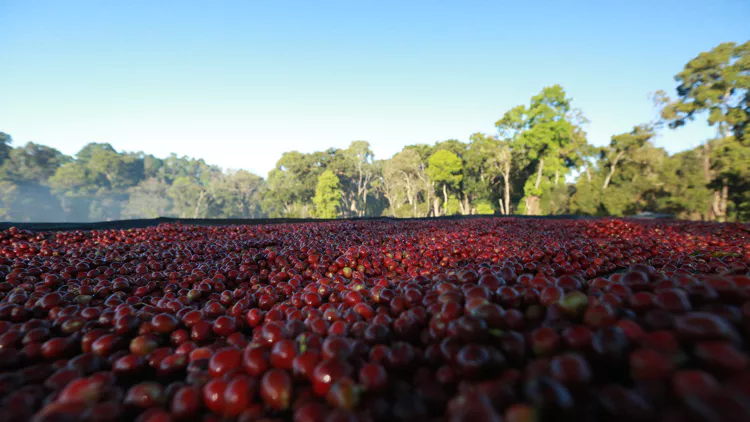
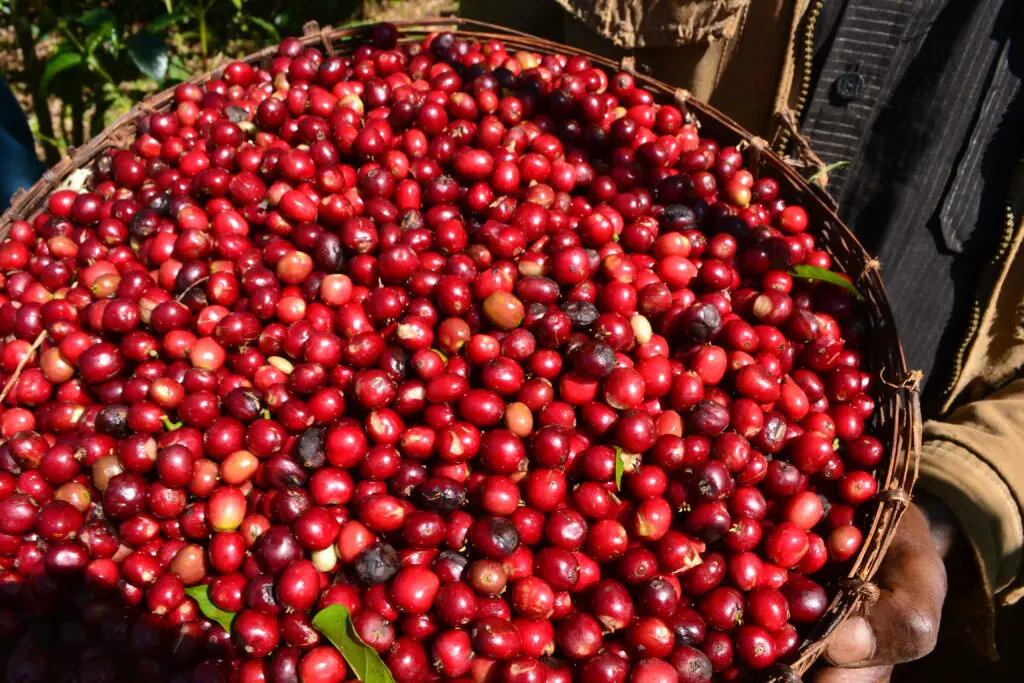
In Sidamo, the natural processing procedure is quite meticulous: only fully ripe coffee cherries are selected during harvest, and strict hand sorting is conducted before processing to remove defective beans. The red cherries are then evenly spread on elevated wooden drying beds to avoid ground contamination. During sun drying, they are turned multiple times daily to ensure even heat exposure, and regularly inspected to remove moldy or substandard beans. After about two weeks, when the skins are completely dry and hardened, a pulper is used to remove the pulp and parchment, followed by a final sorting to ensure it meets the G1 top-grade standard.
Evolution of the Hua Kui Series Coffee
Since the fame of Hua Kui coffee, the Buku washing station has continued to release versions such as Hua Kui 2.0, 3.0, 3.1, 4.0, 5.0, and even 6.0. Each year, even if the variety remains unchanged, slight adjustments in flavor details occur due to changes in climate, processing conditions, and microclimates. This naming approach not only serves market differentiation but also helps consumers more clearly identify the flavor trends of each harvest season.
Recommended Pour Over Parameters
To fully experience the rich layers of Sidamo coffee, freshness is key. It is generally recommended to choose beans roasted within 5 days for optimal flavor performance. The coffee beans’ resting period is about 4 to 7 days, during which the flavors are most balanced. If purchasing pre-ground coffee, although it can be brewed immediately, note that ground coffee oxidizes quickly, so it is best consumed as soon as possible to preserve the best aroma and taste.
Below are the recommendedV60 dripper pour over parameters: water temperature 90°C, coffee-to-water ratio 1:15, 15 grams of coffee, grind size passing 80% through a Chinese No. 20 standard sieve. Start with a 30-second bloom using double the coffee weight (about 30 grams) of water to release CO₂ from the grounds; then pour in a small circular motion until reaching 125 grams for the first pour, continue pouring up to 225 grams, then stop. Total brew time is approximately 2 minutes. Once dripping is complete, gently swirl the coffee before tasting.
Flavor Profile Snapshot
Hua Kui 5.0: Primarily exhibits floral, berry, and citrus notes, accompanied by the sweet-tartness of plum and the juicy flavor of mango, with a honey aroma and soft black tea sweetness in the aftertaste.
Natural Abyssinia: At high temperatures, it shows intense berry juice flavors, gradually shifting to sweet notes of plum, nectarine, and mango as it cools, with a long-lasting finish and honey-like undertones.
The above content is compiled by CoffeeHunters, a coffee news website.


