







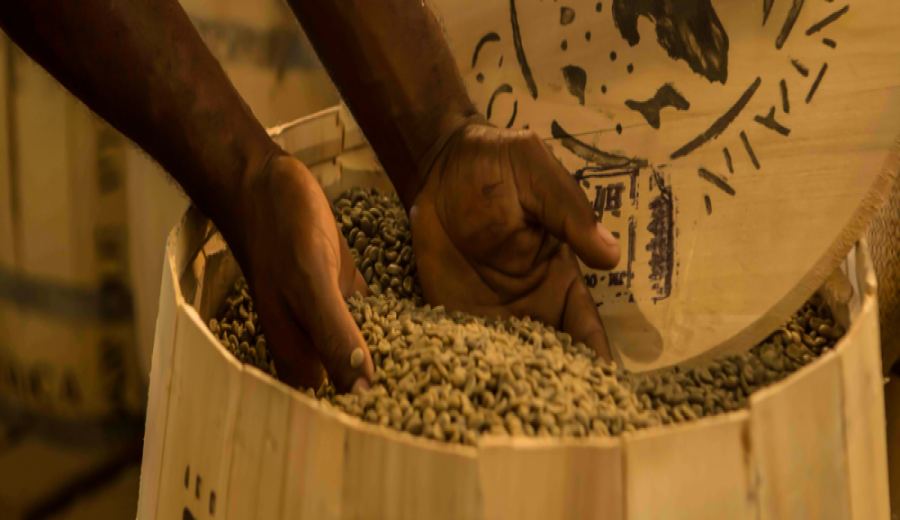
Introduction:Blue Mountain coffee is renowned for its rarity and high quality, but the market is flooded with counterfeit or blended products, making it difficult to discern the real deal. This article delves into the history, grading system, and official certification standards of Jamaican Blue Mountain coffee, and explains in detail how to distinguish genuine beans from fakes. It also provides brewing recommendations and actual flavor profiles for the popular Blue Mountain No.1 from a well-known café, helping you find truly top-tier Blue Mountain coffee beans.
Blue Mountain coffee is hailed as the pinnacle of the coffee world. Even before specialty coffee became mainstream, it held the throne of global premium coffee thanks to its delicate, rich flavor and extremely limited production. However, today’s market offers a wide array of Blue Mountain-related products—from “Blue Mountain-flavored” to various blends—that often confuse consumers. What exactly is true Blue Mountain coffee? What are its grades? How can you identify the authentic product? This article will take you through a comprehensive understanding of Jamaican Blue Mountain coffee, and analyze the brewing essentials and flavor characteristics of its classic offering, Blue Mountain No.1.
As early as before the 20th century, Jamaican Blue Mountain coffee had already gained some international recognition. However, in 1969, a major hurricane devastated the local agriculture, putting the Jamaican coffee industry in crisis. At this time, Japan’s UCC company stepped in to provide assistance, offering funds and advanced eco-friendly cultivation techniques to help revive Blue Mountain coffee farming. To show gratitude for Japan’s support, the Jamaican government signed a 30-year agreement with the Japanese side, allocating 90% of annual Blue Mountain coffee production exclusively to the Japanese market, leaving only about 245 tons (roughly 10%) for other global markets. Due to its scarcity and market monopoly, Blue Mountain coffee quickly became a legend in the coffee world, and its price soared.
During the validity of that agreement, Blue Mountain coffee enjoyed immense popularity in the Japanese market. Some Blue Mountain beans were even resold by Japanese buyers at high prices to countries such as Singapore, South Korea, and Hong Kong and Taiwan of China, accompanied by large-scale marketing campaigns that rapidly spread the Blue Mountain craze. Entering the 2000s, this “Blue Mountain fever” reached mainland China, becoming the dream coffee for many coffee enthusiasts. It wasn’t until the 2008 global financial crisis, along with the expiration of the agreement, that Jamaica gradually began distributing Blue Mountain coffee export quotas to more countries. Today, consumers in Taiwan and mainland China can also purchase authentic Jamaican Blue Mountain No.1 through official channels.
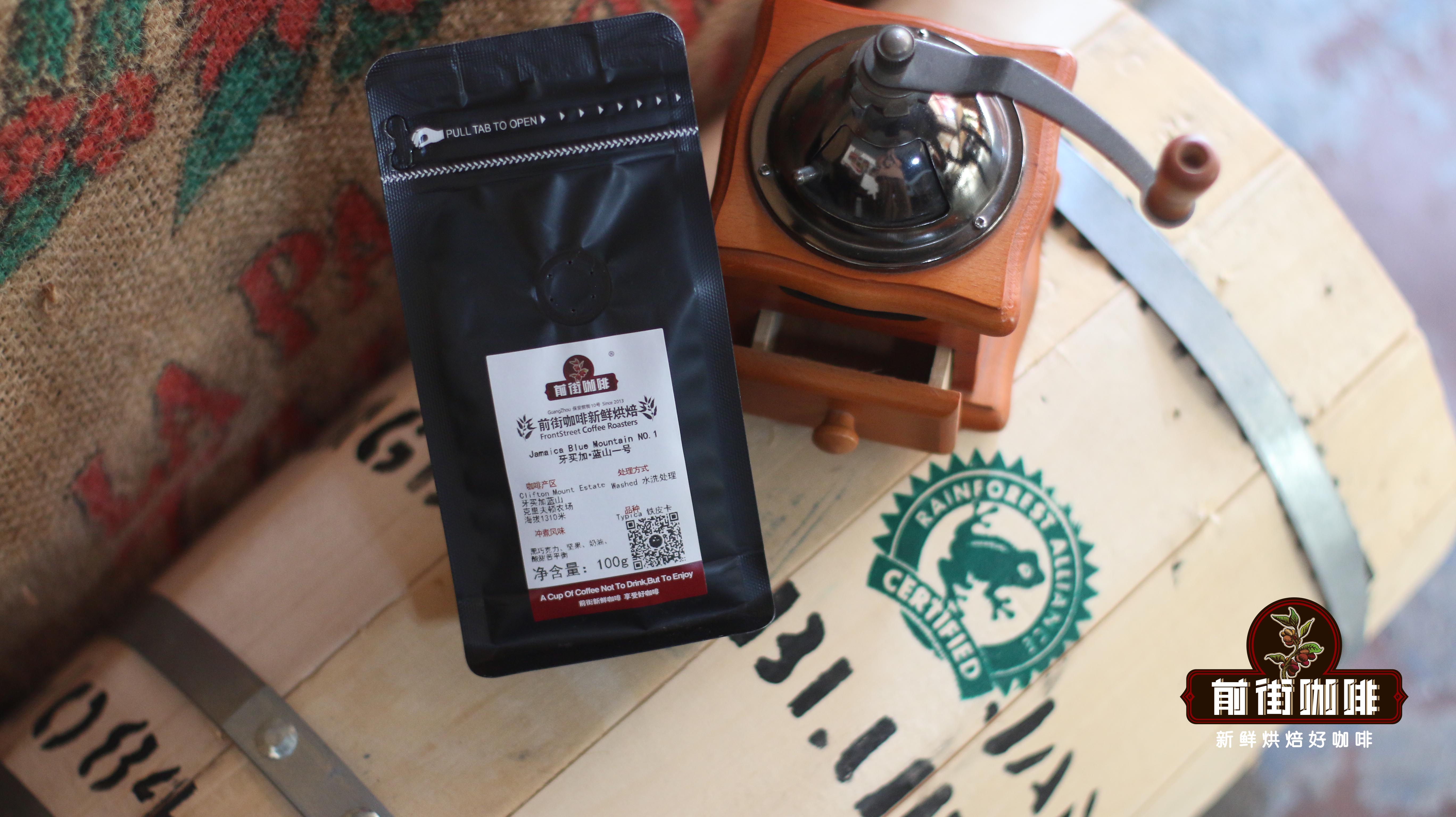
It is worth noting that commonly seen products labeled as “Blue Mountain flavor,” “Blue Mountain blend,” or “Blue Mountain mix” are mostly just commercial marketing terms and have no relation to authentic Blue Mountain coffee. True Blue Mountain coffee must come from specific areas of the Blue Mountains in Jamaica and pass the strict certification of the Jamaica Coffee Industry Board (CIB). In addition, Jamaica is the only producing region in the world that uses handcrafted oak barrels to transport green coffee beans—a practice that effectively controls moisture loss and aroma dissipation, and is also one of the key identifiers of authentic Blue Mountain coffee. Therefore, if a seller cannot provide Blue Mountain certification or use oak barrels for shipping, the product is very likely an imitation with little substance.
The Jamaica Coffee Industry Board (CIB) is responsible for setting and enforcing the grading standards of Blue Mountain coffee, ensuring that every batch exported meets high-quality requirements. The CIB has strict regulations for every stage, from planting and harvesting to processing and exporting, and conducts multi-dimensional evaluations of green bean appearance and cupping performance, including bean size, defect rate, color, uniformity, as well as the aroma, acidity, body, and sweetness after roasting. These rigorous standards ensure that only the finest Blue Mountain coffee earns official certification.
According to the CIB’s grading system, Jamaican Blue Mountain coffee is divided into four grades, from highest to lowest: NO.1 (Blue Mountain No.1), NO.2 (Blue Mountain No.2), NO.3 (Blue Mountain No.3), and PB (Blue Mountain Peaberry). Among them,Blue Mountain No.1 is the highest grade, requiring green beans with a size of 17 mesh or larger, a defect rate below 3%, a moisture content of around 13%, and exhibiting an ultimate balance in cupping—smooth mouthfeel, low acidity, pronounced sweetness, and delicate yet long-lasting aroma.
If you’d like to personally experience the charm of Blue Mountain No.1, it is recommended to use the pour over method to fully showcase its nuanced layers. The KONO filter is recommended for its unique rib structure that slows airflow and extends extraction time, resulting in a more concentrated coffee flavor. Here are the tested reference parameters: use 15 grams of coffee grounds, a 1:15 coffee-to-water ratio, grind size around EK43s setting 10.5 (about 75% passing rate through a 20-mesh Chinese sieve), and water temperature controlled between 87–88°C. Brewing can be done in stages: start with a 30-second bloom using 30 grams of water, then slowly pour up to 125 grams, wait for the water level to drop, and then add water up to 225 grams. The total extraction time is approximately 2 minutes.
The brewed Blue Mountain No.1 pour over coffee delivers a bold entrance of dark chocolate and nutty tones, with a full-bodied, rich mouthfeel and a distinct almond aftertaste. As the temperature lowers, hazelnut and creamy sweet layers gradually unfold, accompanied by a hint of gentle acidity and caramel sweetness. The overall aroma lingers in the mouth for a long time, with a delicate and enduring finish—this is a complete representation of the classic Blue Mountain coffee flavor.
The above content is compiled by CoffeeHunters, a coffee news website.


