







Introduction:Gain an in-depth understanding of Ethiopia's coffee grading system—from cupping standards to green bean defect rates—and explore the origins of the Huacai (Huākuí) G1 grade. This article details the meaning behind the Hambella 7063 batch code, introduces the terroir and natural processing details of the Hambella region, and provides V60 three-stage pour over parameters and flavor notes to help you comprehensively understand this classic coffee from origin to cup.
Ethiopia’s coffee grading system is based on two key factors: cupping quality and the ratio of green bean defects. Especially after the reform of the ECX (Ethiopia Commodity Exchange) system, natural processed beans first achieved the high-grade G1 classification, among which 'Huacai' became one of the most representative batches. This article will systematically dissect Ethiopia’s coffee grading logic, decode the information behind the Hambella 7063 code, introduce the growing region background, processing details, and naming origins of Huacai, and also share practical light roast and V60 pour over parameters—analyzing this highly acclaimed natural coffee fully from origin to brewing.
Ethiopian coffee grading is primarily evaluated from two main aspects: first is cupping performance, including cleanliness, regional characteristics, flavor expression, and overall personality; second is the green bean defect rate, that is, the number of defects found through sampling inspection. In terms of cupping scores, according to SCAA standards, batches with cupping scores of 85 points or above, whether G1 or G2, are classified as Q1 specialty grade; those scoring between 80 and 85, including G1, G2, and G3, fall under Q2; while all batches scoring below 80 are uniformly classified as G3 grade.
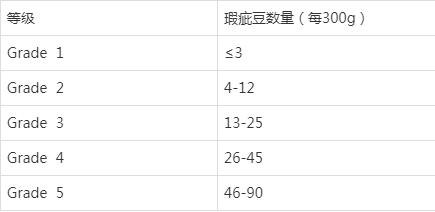
The assessment of green bean defect rates is equally crucial, with a 300g sample taken for inspection. For washed beans, for example, 0 to 3 defective beans qualify as Grade 1; 4 to 12 defective beans classify as Grade 2, and so on, divided into nine grades in total. Among these, G1 and G2 are considered specialty grades, whereas G3 to G9 are generally commercial grades, with G6 and below mainly for domestic consumption in Ethiopia. Before the establishment of ECX, the highest grade for natural processed beans was only G3, G4, or G5. After the reforms, natural beans could also be graded as G1 and G2, leading to the emergence of high-quality natural G1 and G2 batches in the market, while the G3 grade has gradually become rarer.
In the scoring mechanism for natural processed coffees, physical characteristics account for 40%, including defect count (30%) and aroma (10%); cupping quality accounts for 60%, broken down into cleanliness (15%), acidity (15%), mouthfeel (15%), and flavor characteristics (15%). Each batch of coffee has a unique code, such as ‘Hambella 7063’, which represents the growing region and processing information of that batch. Natural beans are graded as G1, G2, and G3, with G1 having the lowest defect rate and the highest quality—Huacai is a representative of the G1 grade.
It is worth noting that G1 and G2 often show little difference in flavor performance, with the primary distinction being the number of defective beans. Therefore, one should not judge a coffee’s absolute quality solely by grade, but in terms of green bean defect rate, G1 indeed stands out.
Ethiopian coffee can generally be divided into three categories based on processing method and quality: A Specialty (premium grade, with few defects and good cupping performance), B Commercial (commercial grade, not reaching specialty level but higher than general domestic consumption standards), C Local/Domestic (local grade, with more defects or flavors compromised due to improper storage). Grades A and B are mainly for export, while C is primarily for the domestic market.
Huacai coffee is produced in the Hambella sub-region of the Guji zone within Ethiopia’s Sidamo region. This area is part of Ethiopia’s largest coffee-growing zone—Guji, administratively located in the Oromia state. Hambella borders Kochore of Yirgacheffe to the west, separated by a highland mountain range about 30 kilometers wide and reaching elevations of up to 3,200 meters; it neighbors other sub-regions of Guji such as Shakiso, Uraga, and Kercha to the east, south, and north. It is Ethiopia’s highest-altitude coffee sub-region (with Harrar being the highest-altitude main production zone).
The Hambella farm where Huacai is grown spans 200 hectares, normally employs 28 full-time staff, and increases to over 700 workers during harvest season—with female employees making up 70% of the workforce. The farm promotes collaboration with local farmers, agronomists, and processing experts to improve overall coffee quality. In addition to coffee from its own fields, some beans are purchased from local smallholders and then marketed by the farm.
The natural processing of Huacai follows traditional craftsmanship. To avoid mold or unwanted absorption of odors, coffee cherries are placed on raised beds for up to 21 days of sun drying. They are turned daily to ensure even dehydration, and defective or moldy beans are removed every three to five days. Once the fruit skin is completely dry and hardened, a hulling machine is used to remove the outer layer, followed by a final screening process to ensure green bean quality.
The name Huacai originates from the TOH (the Taste Of Harvest) competition hosted by the African Fine Coffees Association in 2017. The natural processed batch submitted by DW Coffee Company won the championship, defeating several Geisha varieties. It was then introduced to the market by Beijing-based green bean trader Hongshun International, who named it 'Huacai' (Flower Consort) in honor of its winning title—a name that continues to be used today. Due to annual climate variations affecting flavor, Hongshun specifically classifies coffee beans from the Buku Abel washing station in Hambella. Only beans from this station may bear the Huacai name, which is why versions such as Huacai 2.0 through Huacai 7.0 have been released.
To fully highlight the rich floral and fruity aromas of Huacai coffee—such as floral notes, mango, jackfruit, citrus, and honey—the brand opts for a light roast and uses the V60 dripper with a high water temperature of 91°C for pour over brewing. The V60 dripper, designed with flow-guiding ribs and a central large hole, accelerates water flow, while the spiral venting grooves extend the contact time between water and coffee grounds to enhance extraction layers. Recommended parameters are: 15g coffee, 1:15 brew ratio, grind size at 80% passing through a Chinese No. 20 sieve, with water temperature controlled at 91°C.
The three-stage extraction process used by the brand is as follows: the first stage involves pouring 30g of water for a 30-second bloom, allowing the coffee grounds to expand into a ‘hamburger’ shape; the second stage adds water up to 125g at the 1-minute mark, then, once the water level drops to two-thirds of the coffee bed, the third stage begins at 1 minute 40 seconds, adding water up to 225g. The total brew time is approximately 1 minute 59 seconds, keeping the entire process around 2 minutes. After extraction, gently swirl the server to ensure even flavor distribution before drinking.
Huacai natural coffee presents a distinctive flavor profile with fermentation wine notes, floral tones, citrus, mango, and other tropical fruit characteristics. It has a rich and layered mouthfeel, with a sweet taste interwoven like honey and cocoa, accompanied by subtle spicy hints. The body is full, and the aftertaste is long-lasting. It is recommended to use freshly roasted beans (within 5 days post-roast) to fully experience the optimal flavor. The brand insists on providing beans roasted shortly before shipping and suggests proper resting for 4 to 7 days to allow the coffee to reach its peak flavor before enjoyment.
The above content is compiled by CoffeeHunters, a coffee news website.


