








Introduction:Explore the birthplace of coffee—Ethiopia—and dive deep into its two most iconic specialty coffee regions: Yirgacheffe and Sidamo. This article details the area’s unique smallholder farming culture, traditional coffee ceremonies, and the differences between the two regions in terms of altitude, processing methods, and flavor profiles. It also provides practical pour-over brewing tips for the Sidamo Santa Vini 74158 coffee beans, helping coffee enthusiasts fully grasp the charm of Ethiopian beans from flavor to technique.
As the birthplace of coffee, Ethiopia’s unique highland terrain, diverse microclimates, and rich smallholder farming culture have given rise to some of the world’s most layered and distinctive coffees. Whether it’s bright acidity, rich floral notes, or bold sweetness, Ethiopia has it all. This piece will take you into this coffee kingdom, offering a comprehensive exploration of Ethiopian coffee’s allure through cultural background, regional characteristics, and pour-over brewing parameters.
The legend of Ethiopian coffee dates back to an ancient story about a shepherd. It is said that on the highlands, a shepherd named Kaldi noticed his goats becoming unusually energetic after eating red berries from a certain tree. Upon trying them himself, he also felt invigorated, leading to coffee’s introduction into human life. Though it's a legend, the area still maintains a strong coffee culture today, with locals brewing coffee in traditional ways daily and expressing their reverence and emotional connection to coffee through the three-stage “Abol, Tona, Beraka” ceremony. This cultural foundation has established coffee’s unique social status and spiritual symbolism in Ethiopia.

Coffee cultivation in Ethiopia is mainly concentrated in the southwestern and southern highlands, with over half of the production coming from smallholder garden-style farms. These farmers typically intercrop coffee trees with other plants like bananas in their backyards, with each household managing around four hectares. Due to the small scale, farmers deliver their harvested coffee cherries to nearby processing facilities or cooperatives for unified processing, then sell the output under the name of the processing station. For example, the well-known Guji Dandi Cooperative aggregates cherries from smallholders around the town of Yirgacheffe, processes them via washed methods, and produces specialty coffees with clear and representative flavor profiles.
When it comes to Ethiopia’s two most iconic specialty coffee regions, none are more prominent than Yirgacheffe and Sidamo. Yirgacheffe, located in the northwest of the Sidamo region, was once part of Sidamo but has long been recognized as a distinct region due to its unique flavors. In the 1970s, Yirgacheffe introduced washed coffee techniques and equipment from Latin America and built its first washing station, allowing the area’s coffee to showcase bright aromatic notes such as citrus, lemon, and jasmine, with delicate acidity and a clean, refreshing taste. It quickly gained a foothold in the global specialty coffee market. Notably, the Ethiopian government registered the “Yirgacheffe flavor” as a trademark in 2004, covering coffees produced in surrounding areas such as Wenago, Gedeb, and Kochere, which share similar flavor characteristics.
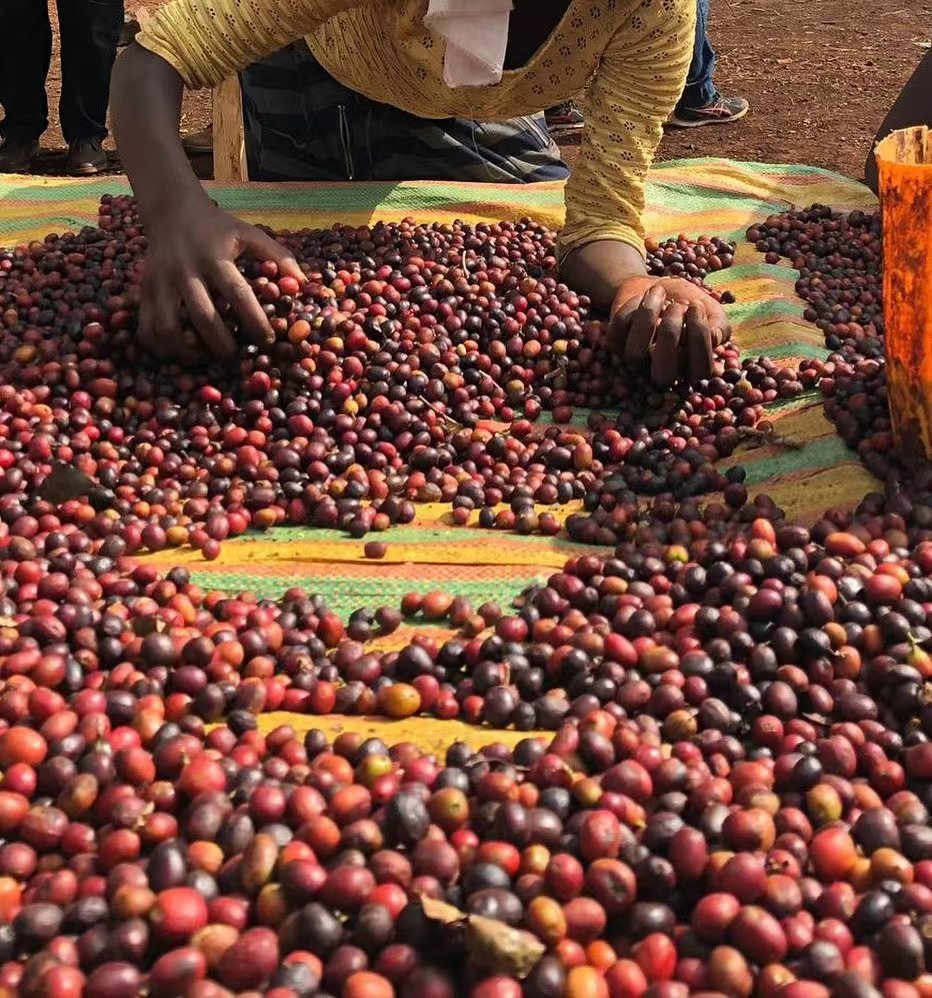
Sidamo, whose name originates from the local Sidama ethnic group (formerly mispronounced as Sidamo in foreign languages, a term still commonly used by many consumers), primarily utilizes the natural (sun-dried) processing method. Through extended natural fermentation, this approach imparts richer floral notes, tropical fruit aromas, and sweetness to the coffee. Compared to Yirgacheffe’s bright and crisp profile, Sidamo offers a more full-bodied taste, with softer acidity and a longer, lingering aftertaste—making it a classic favorite among many serious coffee enthusiasts. The region’s generally high altitudes, along with diverse microclimates, contribute to its complex and layered flavor profiles.
When speaking of Sidamo, one cannot overlook the Santa Vini 74158 coffee beans. Produced at the DWD Santa Vini processing station at an altitude of approximately 2050 meters, these beans undergo a 96-hour anaerobic natural (sun-dried) process using 100% red cherries of the 74158 variety. With pronounced citrus, pineapple, and guava aromas paired with a captivating red wine-like finish, this coffee has become a top choice for many pour-over enthusiasts. Its flavor profile not only showcases the typical characteristics of the Sidamo region but also boasts high recognizability and complexity due to its unique processing method.
For pour-over enthusiasts, it is recommended to use a V60 dripper with water at 92–93°C. Suggested coffee dosage is 15 grams, with a brew ratio of 1:15, and grind size roughly equivalent to granulated sugar (or EK43s grind setting 10, 20-mesh sieve yielding about 78% fines). Employ a three-stage pouring method: start with a 30-gram bloom for 30 seconds, then add 95 grams (total around 125 grams) at around 1 minute, followed by the remaining 100 grams (total around 225 grams), achieving a total brew time of approximately 1 minute and 35 seconds. These parameters effectively highlight the aroma and complexity of the Santa Vini 74158, making it a great challenge for coffee lovers seeking nuanced flavors.

In summary, what makes Ethiopian coffee so captivating lies in its deep cultural roots, diverse growing environments, and refined processing craftsmanship. From the citrusy floral notes of Yirgacheffe to the rich sweetness of Sidamo, each bean tells the story of the land and its people. By understanding regional characteristics and employing proper brewing techniques, you’ll be able to savor the refined essence of coffee from its place of origin even more deeply.
The above content is compiled by CoffeeHunters, a coffee news website.


