








Introduction:This article provides an in-depth analysis of a popular SOE Yirgacheffe “Little Black Cup” from a certain brand in 2021, taking you on a journey to explore how Ethiopia’s Yirgacheffe region, with its distinctive washed processing and light roasting techniques, crafts a classic flavor profile full of citrus, berries, and floral notes. It also recommends three representative Yirgacheffe beans, including those from the Gedeo Cooperative, Sun-Dried Red Cherry, and Washed Everyday Bean, complete with detailed brewing parameters and cupping notes. This is a great introductory piece for understanding high-altitude specialty beans from Africa.
In 2021, the chain coffee brand Luckin launched an SOE Yirgacheffe coffee called the “Little Black Cup,” instantly sparking a wave of enthusiasm for Ethiopian coffee. This single-origin espresso, with its bright acidity and pleasant floral aroma, attracted countless coffee enthusiasts who specifically sought it out. What is the charm of Yirgacheffe that allows it to stand out in the global coffee market? This article will comprehensively dissect the secrets of this “fruity coffee” from its origin, processing methods, roasting style, to actual cupping.
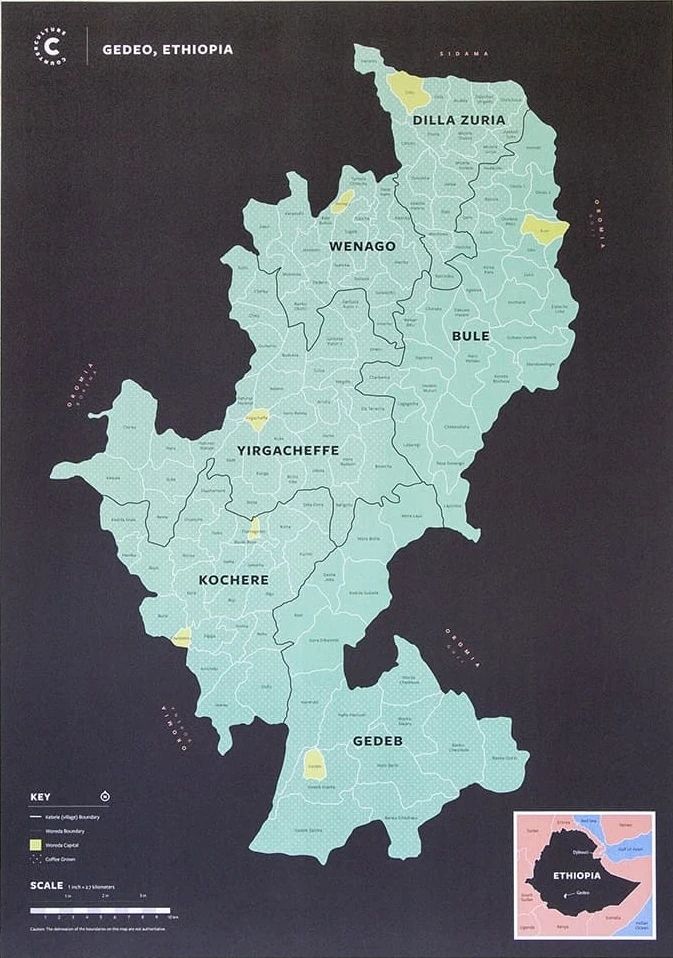
The name Yirgacheffe originates from a small town in southern Ethiopia, situated at an altitude between 1,700 and 2,100 meters. Although it was once administratively part of the Sidamo region, the coffee produced here, known for its distinctive citrus character and delicate floral notes, eventually earned independent status as a coffee-producing region. The area enjoys a cool, foggy climate, fertile soil, and most of the coffee is grown in household gardens, all of which contribute to its unique terroir expression.

When people mention Ethiopia, many think of it as the birthplace of coffee. Indeed, this East African country boasts the world’s richest coffee genetic diversity, with Sidamo, Yirgacheffe, Harrar, and Guji being among the most renowned regions. In 2004, to protect these iconic regional names, the Ethiopian government registered them as trademarks, and Yirgacheffe (Yirgacheffe®) was one of them. Therefore, the term “Yirgacheffe” today refers not only to a geographical location but also to a certified flavor profile.
The essence of Yirgacheffe’s flavor lies in its distinct and refreshing layers of citrus, lemon, and berry aromas, paired with subtle floral notes and a tea-like aftertaste, leaving a memorable impression. Achieving such a delicate taste relies on three key factors: a high-quality growing environment, traditional washed processing, and an appropriately light roast. Among these, washed processing is particularly crucial to the flavor expression of this region.
Traditionally, many African regions favored sun-dried processing, but this method is susceptible to weather conditions, leading to inconsistent quality. Starting in 1972, Ethiopia introduced washed processing technology from Central and South America, which thrived especially in moisture-rich regions like Yirgacheffe. The washed process includes: bean selection (using buoyancy to remove unripe cherries), removal of pulp and skin, fermentation (typically 18 to 36 hours), washing off mucilage, and finally drying on raised beds. This meticulous process effectively reduces defect rates, resulting in a cleaner cup with clearer and brighter aromas.
In the past, the mainstream market favored dark-roasted coffee for its bold bitterness and richness. However, with the rise of specialty coffee, consumers began to pursue bright acidity and fruity profiles found in light-roasted beans. Yirgacheffe is a representative of this trend, with its balanced acidity and sweetness, as well as refreshing taste, perfectly suiting the preferences of those who enjoy sweetness but dislike bitterness. This also helped establish its status in the third wave of coffee.
Luckin’s “Little Black Cup” was born during this SOE (Single-Origin Espresso) trend. Starting in 2021, the brand signed a three-year procurement agreement with Ethiopia, importing 1,000 to 2,000 tons of premium beans from the Yirgacheffe region annually to produce this limited-edition espresso. Consumer feedback indicates that its bright citrus and berry notes allow one to immediately experience the unique charm of Ethiopia’s high-altitude coffee.
Besides the aforementioned Little Black Cup, another coffee brand has also released several highly praised Yirgacheffe beans, including the “Gedeo Cooperative” washed beans, “Sun-Dried Red Cherry,” and the classic “Washed Everyday Bean.” These beans each have their own characteristics and are suited to different brewing methods and flavor preferences. For example, the Gedeo Cooperative uses traditional washed processing, offering clear acidity with a subtle tea-like quality, and is hailed as “the last pure land of Yirgacheffe.” Meanwhile, the Sun-Dried Red Cherry excels with its sweet fruitiness and layered fermentation, making it ideal for those who prefer intense flavors.
If you’re new to coffee, it’s recommended to start with the Washed Everyday Bean from a certain brand. This bean, roasted to a medium-light level, showcases the classic Yirgacheffe flavor profile and is suitable for various brewing methods such as pour over, French press, and cold brew. Its small packaging design also helps avoid waste. Experts suggest using 92–93°C water temperature and a fine sugar-like grind (approximately 78% passing through a #20 sieve) when brewing this type of bean, and follow these parameters:
- Filter dripper:V60
- Water temperature:92-93°C
- Coffee dose:15g
- Coffee-to-water ratio:1:15
- Grind size:Fine sugar size (sift coffee through a #20 sieve until 78% passes through)
The specific steps are as follows: First, pour 30 grams of water for a 30-second bloom. Then pour 95 grams of water (totaling about 125 grams) within approximately one minute. When the water level drops to two-thirds of the coffee bed, pour another 100 grams of water (totaling about 225 grams) within about 1 minute and 35 seconds. Finally, wait for the dripping to finish (about 2 minutes and 10 seconds), then remove the dripper and enjoy.
It’s important to note that coffee beans require a 4 to 7-day degassing period after roasting. Only after the carbon dioxide is released will the flavors reach their peak. Therefore, it’s recommended to use freshly roasted beans (within 5 days) to achieve the best extraction results and flavor expression.
The above content is compiled by CoffeeHunters, a coffee news website.


