







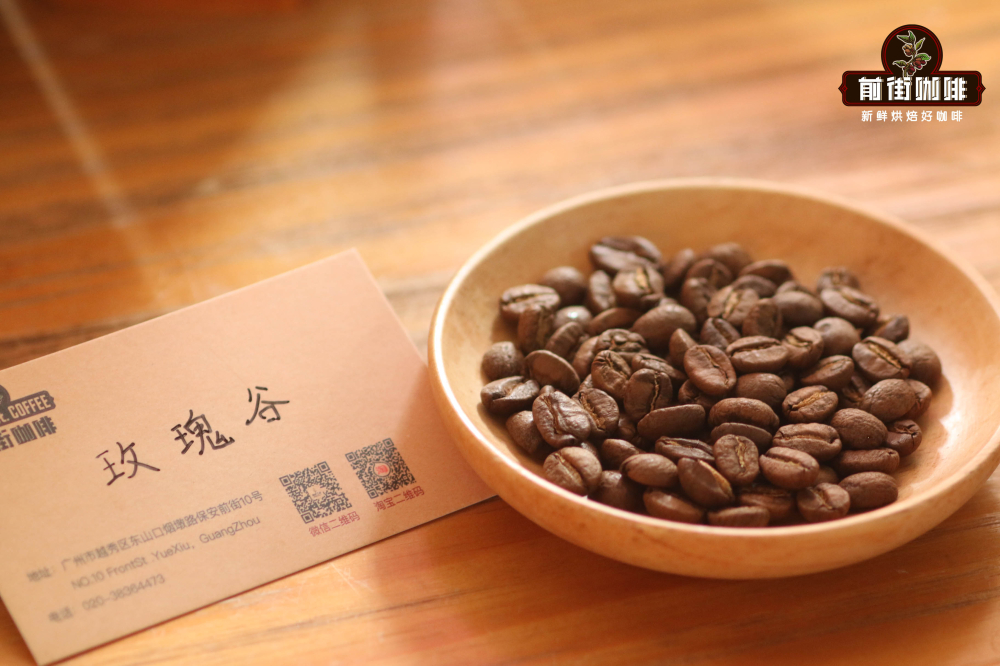
Introduction:Want to explore a coffee with flavors of peach, rose, and liqueur-filled chocolate? This anaerobic double enzyme-washed bean from La Granja Estate in the Santander region of Colombia, crafted from the Caturra variety, employs a special fermentation process to deliver layered aromas and taste. This article delves into the regional background, processing techniques, roasting profile, and provides practical pour-over brewing tips to help you perfectly showcase its sweet fruity notes and rich aftertaste.
In recent years, coffees with fruity flavor profiles have become increasingly popular, especially those with notes of peach, which often serve as a top choice for coffee enthusiasts seeking new experiences. The Colombian Rose Valley coffee is a standout example of this trend. Produced at La Granja Estate in Santander Province, Colombia, this coffee is processed using an anaerobic double enzyme-washed method with the Caturra variety. It not only boasts intense fruity aromas but also features captivating layers of rose and liqueur-filled chocolate, making it an excellent choice for those looking for a unique flavor experience.
Santander Province in northern Colombia may not be as prominent on the international market as other well-known coffee regions, but it is one of the country’s earliest coffee-growing areas. With elevations mostly ranging between 1400 and 1600 meters and covering a total area of 30,537 square kilometers, it accounts for about 5% of the nation’s total coffee production. The region enjoys a cool and stable climate with significant day-night temperature variations, which help coffee cherries accumulate sugars and develop a unique herbal freshness and bold flavor. Industry teams have consistently noted during cupping sessions that coffees from this region possess deep and lingering flavor characteristics.
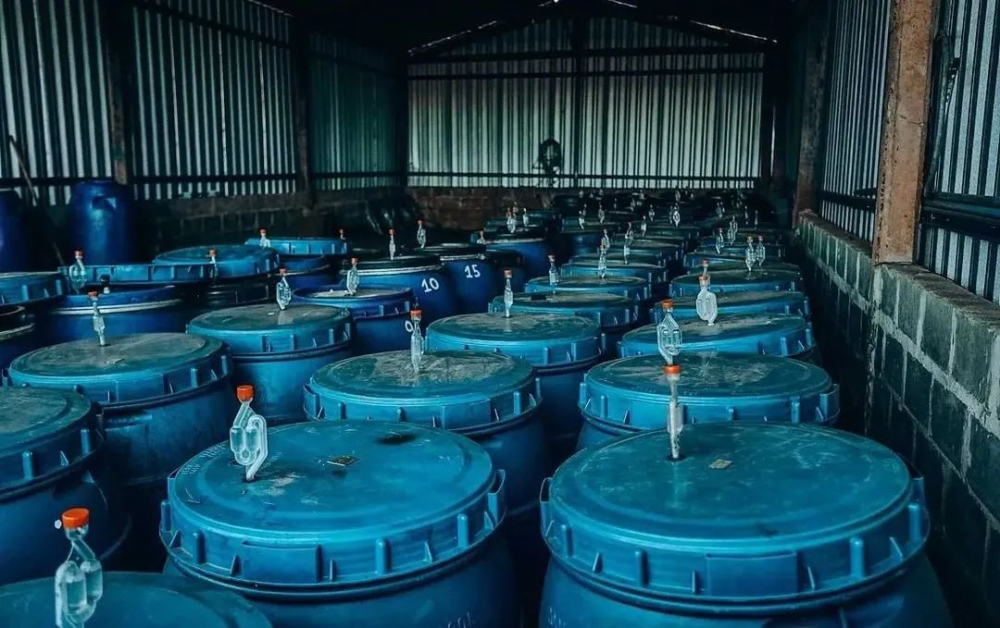
La Granja Estate has been managed by the Vargas family for over twenty years, maintaining extremely rigorous quality standards. Only fully ripe red coffee cherries are harvested on the farm. These are first processed via the washed method to remove defective beans and floaters, followed by anaerobic double enzyme-washed processing. This method features two rounds of anaerobic fermentation, during which specific enzyme groups are introduced. These enzymes slow down the rate of sugar breakdown, reduce pH fluctuations, and thereby enhance sweetness and flavor balance. At the same time, the estate places particular emphasis on the drying process, using slow low-temperature methods to avoid high temperatures compromising delicate flavor details.
The so-called anaerobic double enzyme-washed process is actually an upgraded version of anaerobic washing. The principle of anaerobic fermentation originates from winemaking. By placing coffee cherries in a sealed, oxygen-free environment and injecting carbon dioxide to displace oxygen, the natural breakdown of sugars in the mucilage is slowed, resulting in a more gradual and stable fermentation process that fosters richer and smoother aromas and sweetness. In the double anaerobic enzyme-washed method, beyond the initial anaerobic fermentation, a second fermentation is carried out in a sealed container after the mucilage is removed, along with the addition of special enzymes to further enhance flavor complexity.
This coffee uses the Caturra variety, a natural mutation of the Bourbon variety, first discovered in Minas Gerais, Brazil between 1915 and 1918. Due to a genetic mutation, the plant is shorter than typical Bourbon plants, somewhat dwarf-like, but it is highly adaptable and can be grown at altitudes ranging from 700 to 1700 meters. Generally, the higher the altitude, the better the flavor profile, though yields per unit may slightly decrease. Caturra is known for its bright acidity and clear fruitiness, making it a popular choice among many specialty coffee farms.
To highlight the peach aroma and sweetness of this Rose Valley coffee, the roaster opted for a medium-light roast. Using a Yangjia 800N roaster, the charge weight was 500 grams, with an inlet temperature set at 180°C, initial flame at 130, and air damper at 3. When the temperature reached 140°C, the flame remained unchanged, but the air damper was adjusted to 4. During this stage, the beans turned from green to yellow, and grassy notes gradually dissipated as they entered the dehydration phase. Around 6 minutes and 25 seconds, when the beans showed a dehydrated yellow color and emitted a toasted bread aroma, the inlet temperature was slightly adjusted to 180°C, the flame reduced to 100, and the air damper maintained at 4.
At 9 minutes and 38 seconds, wrinkles and dark spots appeared on the bean surface, signs of impending first crack. The coffee aroma gradually replaced the bread-like smell. First crack began at 10 minutes and 20 seconds, with the air damper set to 4, and development continued for approximately 1 minute and 50 seconds. The roast was finally dropped at 196°C. Given the characteristics of anaerobically processed beans, the roast extended the dehydration time to 9 to 9.5 minutes to ensure even core maturation and avoid underdevelopment, resulting in a final flavor that is round and full-bodied.
During the cupping phase, samples were evaluated within 8 to 24 hours post-roast, using 200ml ceramic cupping bowls. Water temperature was controlled at 94°C, with grind size standardized to a 70%-75% extraction through a 20-mesh sieve (0.85mm), and a brew ratio of 1:18.18 (11.1g of coffee to 200ml of water). The steeping time was about 4 minutes. Cupping results showed dry aromas of distinct rose and peach, while wet aromas were dominated by peach. Flavor layers included winey chocolate, rose petals, cranberry, peach, and cream, with a long-lasting aftertaste and pronounced sweetness.
For this anaerobically processed coffee bean, special attention is advised when adjusting grind size. Because anaerobically fermented beans differ in density and structure from traditional washed beans, using your usual grind setting may result in too coarse a grind, negatively affecting extraction efficiency. It’s recommended to use a sieve to test actual filtration rates, aiming for around 80% to achieve optimal extraction performance. Additionally, due to the bean's loose texture and good water absorption, it is suggested to keep the water temperature between 90–91°C; too high may cause over-extraction and bitterness, while too low may lead to muted flavors.
The brewing method recommended is a three-stage pour. Use a dose of 15 grams with a 1:15 brew ratio. Begin with a bloom phase by pouring 30ml of hot water. Anaerobic beans expand rapidly, so observe the “hamburger effect” of the coffee bed. Wait about 25–30 seconds after expansion stops before continuing to pour. Pour 120ml in the second stage and 75ml in the final stage, keeping total brew time around 1 minute and 40 seconds. Be careful not to bloom for too long to avoid excessive degassing and loss of flavor.
This Colombian Rose Valley coffee ultimately presents an astonishing peach-centric profile in the cup, complemented by floral rose notes and a liqueur-filled chocolate aftertaste. The entry is as fresh as peach juice, with bright acidity that is not sharp, balanced elegantly like black grapes, and paired with the smooth texture of cream and toffee. It is a specialty coffee worthy of savoring.
The above content is compiled by CoffeeHunters, a coffee news website.


