







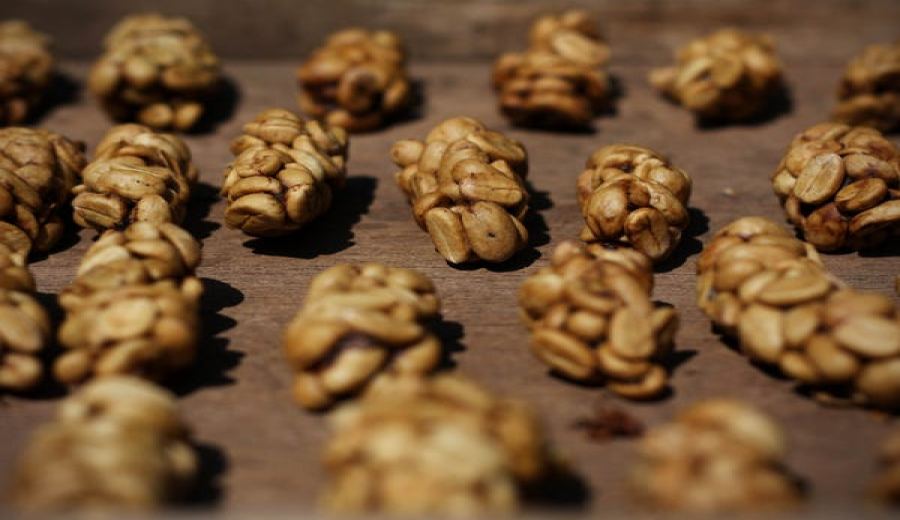
Introduction:Indonesian civet coffee (also known as cat poop coffee) is famous for its high price and unique origin, often sparking curiosity among consumers about its true flavor and value. This article delves into the production process, market positioning, and animal ethics controversies surrounding Kopi Luwak, exploring its flavor characteristics and reasons for its premium pricing. It also compares it with hand-selected fully red cherry processing methods to help you understand whether this special coffee is worth trying.
Indonesian civet coffee, commonly known as "cat poop coffee," is hailed as one of the world’s most peculiar and expensive types of coffee, with prices that often leave many coffee enthusiasts astonished. For example, past market records show that a 100-gram pack of civet coffee beans was once sold for as much as NT$260, even surpassing the renowned Green Label series from Hacienda La Esmeralda. What exactly makes this coffee, derived from animal excrement, command such a high price? In truth, it’s not just about rarity—its unique production method and market supply and demand also play significant roles.
The so-called "cat poop coffee" is formally known as Kopi Luwak, where "Kopi" means coffee in Indonesian, and "Luwak" refers to a civet cat—a small, cat-like animal belonging to the viverrid family. It’s important to note that civet cats are often confused with palm civets, although both belong to the same family, they inhabit different regions: civet cats are primarily found in the Indonesian archipelago, while palm civets are more common in China. Due to the limited number of wild civet cats, some merchants substitute them with palm civets to produce the coffee, but this practice is controversial in terms of both quality and ethics.
The production process of this coffee is quite unique: civet cats selectively eat ripe coffee cherries. As the coffee beans pass through the civet cat’s digestive tract, digestive enzymes alter the protein structure, significantly reducing the bitterness and acidity of the beans, resulting in a smoother final taste. Additionally, although the beans pass through the intestines, some pulp may remain attached to the outer layer, adding a touch of sweetness. This natural fermentation and selection process gives civet coffee its distinctive flavor profile.
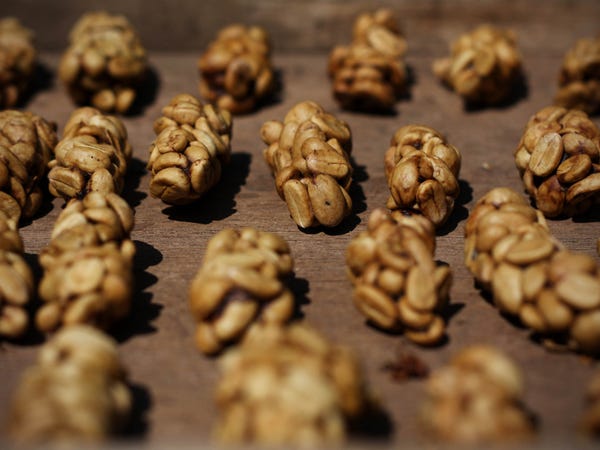
So why is civet coffee so expensive? The primary reason lies in its extremely limited production. Relying on wild civet cats to forage coffee cherries, coupled with the manual collection and processing involved, makes the process time-consuming and labor-intensive, and thus difficult to scale up. Moreover, the civet cats’ behavior of selecting coffee cherries mirrors the "fully red cherry harvesting" philosophy championed in today’s specialty coffee industry—only picking fully ripe coffee cherries. This natural selection mechanism enhances the inherent quality of the final coffee beans.
However, some industry experts point out that modern manual selection techniques can already accurately pick high-quality fully red cherries, meaning that in terms of quality, it’s not necessarily essential to rely on the civet cat’s "selection." Take Ethiopia’s Natural Red Cherry coffee beans, for example. These beans, produced under the "Red Cherry Project," are handpicked by local farmers, selecting 100% ripe red cherries and processed professionally to create high-quality specialty coffee. This project was launched in 2007 by Dutch trader Trabocca, aiming to encourage coffee farmers to produce top-tier coffee through funding and technical support, rewarding them with favorable prices to improve the livelihoods and competitiveness of smallholder farmers.
Looking back at the early days of the civet coffee industry, its emergence had a somewhat positive impact on the conservation of local civet cats. In Indonesia, wild civet cats were often regarded as pests for raiding orchards, but with the rise of Kopi Luwak, some regions began protecting these animals to harvest the coffee beans from their feces. However, as market demand skyrocketed, many civet cats were illegally captured and confined to cramped cages, living in poor conditions without the opportunity to forage naturally. This led to deteriorating health and nutritional imbalances. Some producers even fed the animals low-quality coffee fruits, further affecting the final flavor of the coffee.
To address this, international animal welfare organizations and sustainable agriculture certification bodies have stepped in, requiring that wild animal capture be prohibited during production and strictly limiting caged farming practices. Currently, some producers have introduced "cage-free civet coffee," allowing civet cats to forage freely in semi-wild environments. Although this approach greatly increases collection difficulty and cost, it ensures animal welfare while maintaining the coffee’s natural flavor characteristics.
Regarding the common consumer concern about whether "cat poop coffee is hygienic," the fact is that these coffee beans are thoroughly cleaned after collection and completely sterilized during the high-temperature roasting process, making them safe to drink. Many roasters enhance their unique flavors by opting for dark roasting to highlight notes of dark chocolate and herbal tones. Generally speaking, coffee beans processed through the civet cat’s digestive system often exhibit smooth mouthfeel, fermentation notes, herbal aromas, and a rich dark chocolate aftertaste—traits that give them an irreplaceable position in coffee evaluations.
In summary, civet coffee is not only a highly intriguing coffee variety but also represents a complex intersection of traditional processing methods, market economics, and animal ethics. For coffee enthusiasts looking to try something new, understanding its production background and flavor characteristics can help make a more informed choice. If you’re drawn to unique flavors and the stories behind your coffee, take the time to explore this legendary Indonesian civet coffee.
The above content is compiled by CoffeeHunters, a coffee news website.


