








Introduction:As the world's largest exporter of green coffee beans, Brazil's diverse coffee varieties and flavor profiles are often overlooked. This article will take you on a deep dive into Brazil’s main coffee varieties—including Red Bourbon, Yellow Bourbon, Catuai, and Slender Bourbon—exploring their historical backgrounds, growing conditions, and unique flavor expressions. We’ll also share practical cupping experiences and purchasing advice to help you find the Brazilian coffee that best suits your taste.
Brazil is the world’s top exporter of green coffee beans, accounting for about one-third of global production. However, when it comes to single-origin Brazilian coffee beans, many people can only think of Fazenda Rainha. In fact, Brazil has a wide range of coffee varieties; it’s just that the flavor differences within its producing regions are relatively uniform, making single-variety Brazilian beans less common in the market. This article will provide a detailed introduction to the historical development of Brazilian coffee, and offer an in-depth look at major varieties such as Red Bourbon, Yellow Bourbon, Pink Bourbon, Caturra, Catuai, Mundo Novo, and Slender Bourbon. We’ll analyze their origins, characteristics, and flavor profiles to help readers build a comprehensive understanding of Brazilian coffee varieties.
The history of coffee cultivation in Brazil dates back to the late 18th century. In 1727, coffee was introduced to the port of Belém in Brazil from Guyana, and it quickly spread along the southeastern coastal regions, including the states of São Paulo, Paraná, Espírito Santo, and Minas Gerais. From the late 18th century to the 1920s, as a Portuguese colony, Brazil implemented a monoculture policy, vigorously cultivating coffee to meet the demands of the European market. This made coffee the pillar of the national economy, once accounting for 75% of global coffee production and earning Brazil the title of “Coffee Kingdom.” However, after the Great Depression of 1929, coffee demand plummeted, severely impacting Brazil’s coffee industry, and its share in export economics gradually declined. Nevertheless, Brazil remains the world’s largest coffee producer and exporter to this day.
The main coffee varieties in Brazil include Red Bourbon, Yellow Bourbon, Mundo Novo (also known as Mondeño), Catuai, as well as Caturra and Slender Bourbon. Among these, the Campinas Agricultural Research Institute in São Paulo is a key institution for variety development. The widely planted Catimor variety around the world was jointly cultivated by scientists from Portugal and Brazil. Below, we’ll introduce the origins and characteristics of these varieties one by one.
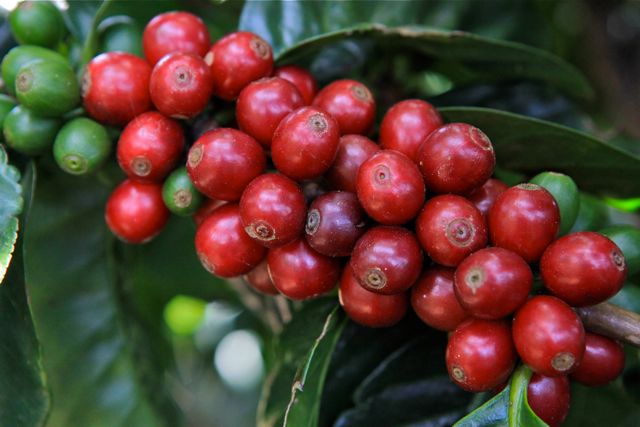
Red Bourbon is a historic mutation within the Arabica species, derived from Typica, with fruits turning red upon ripening. Compared to Typica, Red Bourbon has broader leaves and slightly higher yields, though it still falls into the low-yield category. Its flavor performance is outstanding, often featuring wine-like acidity and a sweet aftertaste. The fruit color of Red Bourbon transitions from green to yellow, orange, then red, and finally dark red as it ripens—hence the name. This variety boasts prominent aroma and bright acidity, and is one of the most widely planted varieties in Brazil, as well as a representative choice for many Brazilian commercial beans.
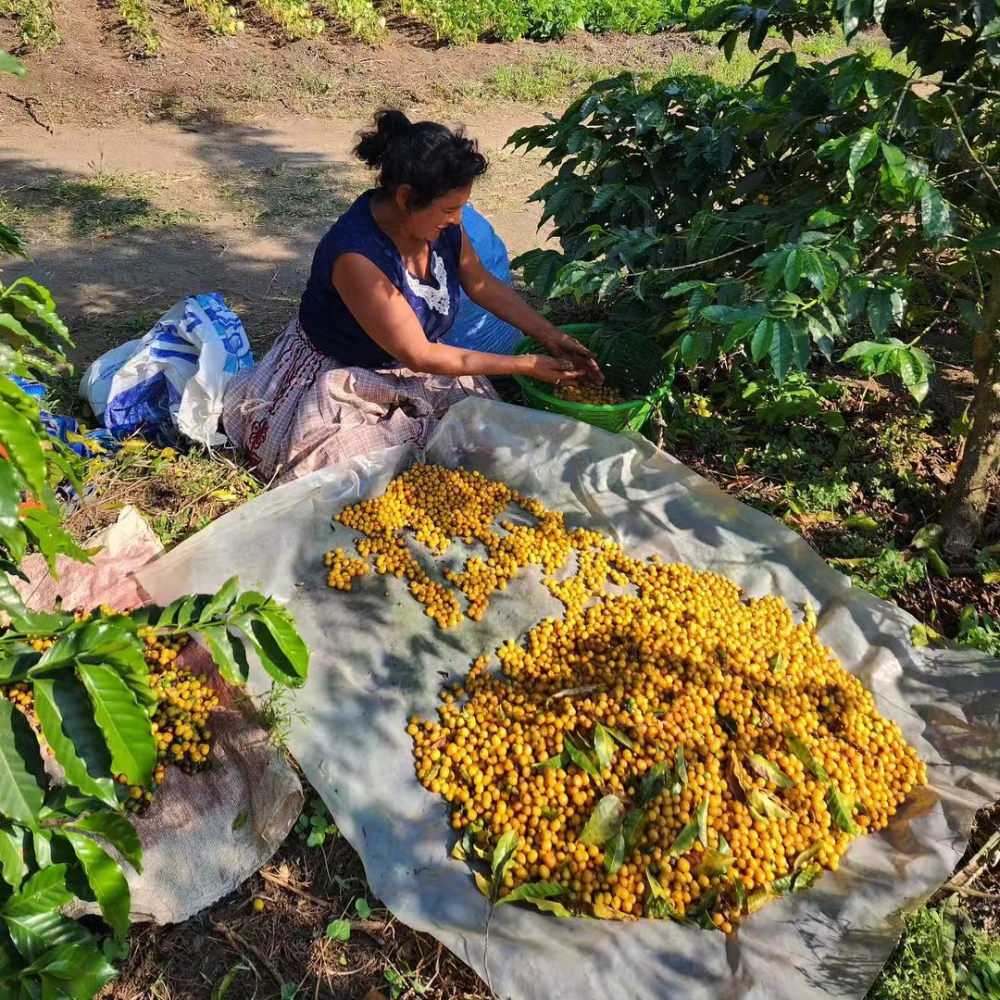
Yellow Bourbon also originates from a genetic mutation of Bourbon, characterized by its orange-yellow fruit color upon ripening, rather than red. This variety is mainly found in the high-altitude regions of São Paulo state in Brazil. Due to its unique growing environment, it often exhibits richer flavor layers. Cupping results show that Yellow Bourbon typically presents notes of nuts and chocolate, with soft and clean acidity, light bitterness, and an overall bright and refreshing profile. Yellow Bourbon has ranked highly multiple times in Brazil’s Cup of Excellence competition, making it an important variety in the specialty coffee scene. The Yellow Bourbon coffee beans produced by Fazenda Rainha are a classic representation of this variety.
Pink Bourbon is a relatively rare variety, with mature fruits showcasing an attractive pink color. Although not originally from Brazil, this variety was first recorded in the Huila department of Colombia and is primarily grown there today. Pink Bourbon is believed to be a natural hybrid of Yellow Bourbon and Red Bourbon, but due to its recessive gene expression, it has low stability and is prone to trait segregation, leading to inconsistent fruit colors. This makes it rare and relatively expensive. Maintaining its pink hue is extremely challenging; sometimes artificial hybrids may produce Orange Bourbon, which is also due to interference among recessive genes in the pollen. Pink Bourbon usually features pronounced berry and cherry tomato flavors, with rich layers of sweet and sour notes, and a honey and dark chocolate aroma in the aftertaste.
Caturra is a single-gene mutation of Bourbon, discovered in Brazil in 1937. Compared to Bourbon, Caturra has stronger disease resistance and yield potential, with shorter plants that are easier to harvest. However, it also has the issue of a two-year yield cycle. Its flavor profile is similar to or slightly inferior to that of Bourbon, but it is highly adaptable, capable of growing in high-temperature and high-sunlight environments without the need for shade, hence referred to as “sun-grown coffee.” Caturra requires high-density planting and frequent fertilization, and was not widely accepted by coffee farmers initially, but it has now become one of the common varieties in Latin America.
Catuai is an Arabica hybrid variety, resulting from a cross between Caturra and Mundo Novo (also known as New World, a Robusta subspecies). This variety offers good resistance to wind and rain, with firm fruits that are less prone to dropping, addressing the traditional weakness of Arabica fruits being fragile and easily detached. At the same time, Catuai inherits Caturra’s short plant characteristic, making it suitable for high-density planting. However, its flavor profile is relatively simpler, with less body compared to Caturra or Mundo Novo, and its fruit lifespan is only about ten years, which is a notable drawback.
Mundo Novo (Mondeño) is a naturally occurring hybrid variety discovered in Brazil, originating from a cross between Bourbon and a Sumatra-type variety. This variety has been planted in Brazil since the 1950s, demonstrating strong adaptability to the environment and good resistance to pests and diseases. Although it is high-yielding, its tree height often exceeds 3 meters, beyond the reach of standard harvesting machinery, necessitating regular pruning; otherwise, it is not conducive to mechanized operations. Mundo Novo offers a good balance of acidity and bitterness, and is a common choice for many Brazilian coffee farms.
Finally,Slender Bourbon can be regarded as one of the rarest coffee varieties in the world. It was first discovered in 1810 on the island of Réunion (formerly known as Bourbon Island). This variety is uniquely slender in shape, and most notably, it possesses a natural low-caffeine trait, containing only 0.6% caffeine—far lower than the 1.2% in typical Arabica and 2.8% in Robusta. Despite its low caffeine content, Slender Bourbon retains intense fruity aromas and a rich body, making it a prized gem among coffee enthusiasts.
In summary, Brazil is not only the global leader in coffee production, but its variety diversity and flavor potential are equally worthy of in-depth exploration. From classic Red Bourbon and Yellow Bourbon to rare Pink Bourbon and Slender Bourbon, each variety showcases different flavor characteristics and growing challenges. Whether you’re a pour over coffee enthusiast or a coffee newcomer seeking specific regional flavors, understanding the background and traits of these varieties can help you make more precise choices and savor the Brazilian coffee that best suits your palate.
The above content is compiled by CoffeeHunters, a coffee news website.


