







Introduction:The Bourbon coffee variety is a cornerstone of specialty coffee, standing alongside Typica as one of the two original Arabica varieties. This article delves into the historical origins, physical characteristics, and flavor differences of Red Bourbon, Yellow Bourbon, and the rare Pink Bourbon, with a special focus on Brazil’s unique conditions as the primary growing region for Yellow Bourbon. Understanding the traits of these varieties helps coffee enthusiasts make more precise choices when selecting beans based on brewing preferences and flavor expectations.
In the world of specialty coffee, variety selection is one of the core factors influencing a coffee’s flavor profile and cultivation adaptability. As one of the oldest Arabica varieties, Bourbon, along with Typica, forms the foundation of modern coffee lineages. This article will systematically analyze the evolutionary trajectory of Bourbon coffee beans and provide a detailed comparison of the key differences between Red Bourbon, Yellow Bourbon, and the rare Pink Bourbon, taking you from the roots of the variety to an understanding of coffee’s diversity.
The third wave of coffee has driven consumers’ deep interest in regional characteristics, processing methods, and varietal genetics. Varieties not only determine the basic flavor tendencies of coffee but are also directly linked to yield stability and disease resistance. Take the Bourbon family, for example: the variation in fruit color (red, yellow, pink) is not just a visual difference but reflects different ripening speeds and sugar accumulation mechanisms, which in turn affect the layered complexity of the final extracted flavors.
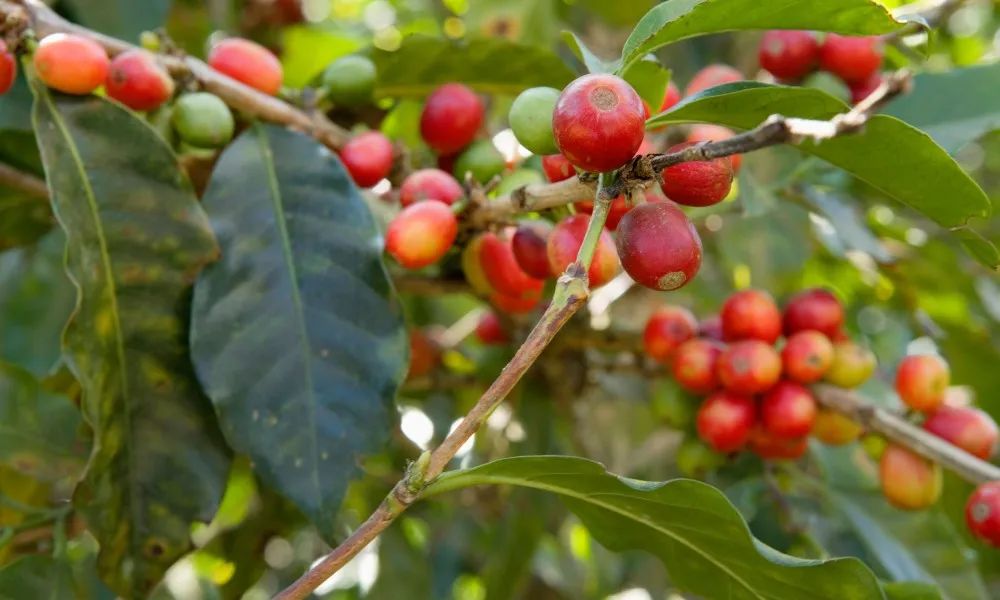
Red Bourbon is the most well-known variety, named for the bright red color of its ripe fruit. This variety typically features bright acidity and a wine-like finish, making it ideal for pour over enthusiasts who prefer fruity flavor profiles. It’s worth noting that Red Bourbon has a longer color transition period, requiring precise control over harvest timing to avoid unripe beans being mixed in.
Yellow Bourbon is characterized by its ripe fruit turning into a warm amber color, and it was first discovered in the high-altitude regions of São Paulo State, Brazil. Due to its yield being only 70%-80% that of Red Bourbon and its weaker resistance to wind and rain, it is currently mainly grown in specific microclimatic areas of Brazil. The flavor profile of Yellow Bourbon often carries caramel sweetness and a soft citrus note, making it suitable for extraction methods that aim for balanced taste. A slightly finer grind is recommended to enhance the sweetness.
Pink Bourbon can be considered the “hidden gem” of the Bourbon family. Its unique fruit color stems from the expression of recessive genes and requires specific environmental conditions to appear stably. The occurrence of this variation is extremely low, and the fruit color can fade due to light intensity and nutrient supply. The flavor of Pink Bourbon usually blends the berry notes of Red Bourbon with the honey-like sweetness of Yellow Bourbon, but due to its extremely high cultivation difficulty, its market availability is very limited.
From a cultivation technology perspective, the Bourbon family generally has moderate tree vigor and a medium height of 1.8–2.2 meters, making it suitable for dense planting systems. Brazilian farmers often adopt a composite management strategy of shade trees combined with rain shelters when growing Yellow Bourbon to mitigate the variety’s sensitivity to climate changes. For home growers, it is recommended to prioritize disease-resistant Red Bourbon varieties and pay attention to controlling planting density per unit area to ensure proper ventilation.
In terms of extraction parameter settings, due to the relatively high density value of Bourbon coffee (approximately 0.85–0.9 g/ml), it is recommended to use water at 92–94°C with a medium-coarse grind. For pour over, a coffee-to-water ratio of 2:15 to 1:16 can be used, and a staged pouring method can bring out its rich aromatic compounds. Special attention should be paid to the fact that Yellow Bourbon and Pink Bourbon require a longer blooming time (recommended 30–45 seconds) to fully activate the sugar substances in the mucilage layer for optimal sweetness release.
The above content is compiled by CoffeeHunters, a coffee news website.


