







Introduction:As the world’s largest coffee-producing country, Brazil not only supplies stable commercial blends but also nurtures specialty coffees with distinct terroir characteristics. This article delves into Brazil’s four major producing regions, the differences in the classic Bourbon variety, the features of mainstream processing methods, and its three-tiered rigorous grading system, offering a comprehensive understanding of Brazilian beans from green to cup flavor. It also provides tested roast curves and pour over parameters, ensuring both beginners and advanced enthusiasts can find their ideal Brazilian bean selection.
As the world’s leading coffee producer, Brazil boasts both a large volume of commercial beans and highly potential specialty coffees. For instance, the Red Bourbon and Yellow Bourbon offered by a well-known café are representative works showcasing regional characteristics. This article will systematically break down the development trajectory, geographical environment, cultivation status, main varieties, common processing methods, core producing region distribution, and official grading system of Brazilian coffee, supplemented by analyses of two commercially available Brazilian green beans, roast strategies, cupping records, and pour over insights—taking you deep into the diverse landscape of this coffee kingdom.
If you’re sensitive to acidity or prefer rich, full-bodied flavors, Brazilian beans are often a great entry choice. However, there is significant variation among Brazil’s producing regions. Coffee grown at low altitudes often matures too quickly, resulting in thin flavors, whereas high-altitude areas such as Cerrado and Mogiana can produce competitive specialty-grade coffee, even frequently winning international competitions. Understanding this background will help you more accurately select Brazilian beans that suit your taste.
The history of coffee cultivation in Brazil dates back to 1729 when the first coffee trees were introduced from French Guiana. Although some Brazilian regions have improved quality through technological advancements, the overall natural conditions—limited by terrain and altitude—are hard to compare with renowned high-altitude origins like Yemen or Ethiopia. Nonetheless, Brazil has cultivated internationally recognized varieties like Bourbon Santos, which offer mild and smooth flavors, low acidity, medium body, and gentle sweetness, suiting the palates of most consumers.
Such coffees are generally recommended to be medium roasted to fully showcase their bold flavors, making them ideal bases for espresso and milk-based drinks. Notably, Brazil’s diverse regions include high-altitude areas where specialty-grade coffee occasionally stands out in international competitions like COE (Cup of Excellence), revealing unique regional profiles—an essential key to appreciating the charm of Brazilian coffee.
Brazil is predominantly characterized by vast plains, with most coffee grown in low-altitude areas. To adapt to this environment, local farmers developed modified Arabica varieties decades ago that do not require shading and can be directly sun-dried—vastly different from traditional high-altitude growing methods. Due to the lack of elevation and shade, such coffees usually mature quickly, with incomplete flavor development, lower bean density, and generally unremarkable fruit acidity, resulting in relatively simple overall flavors.
Some coastal regions, like Rio, even exhibit unique microbial effects that impart iodine-like or salty undertones to the coffee—a flavor not widely appreciated, preferred only by a minority of Middle Eastern consumers. It is advised that if you favor bright and vibrant acidity, Brazilian low-altitude beans may not be your first choice. However, if you’re seeking balanced, full-bodied everyday drinking beans, Brazilian coffee still offers good value for money.
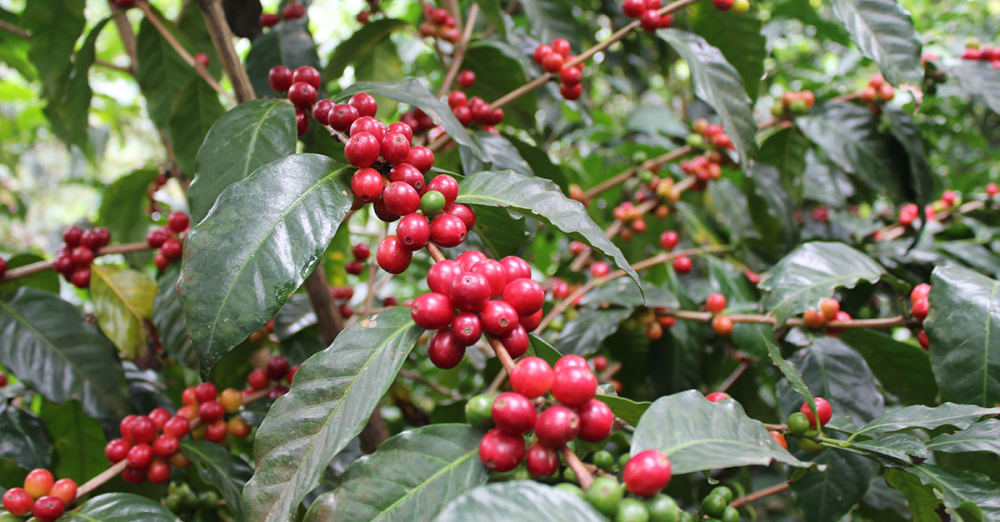
When it comes to Brazilian coffee varieties, Bourbon is undoubtedly a classic. Originating from Réunion Island (formerly known as Bourbon Island), this variety mutated from Typica and belongs to one of the oldest Arabica lineages. As the green fruits of Bourbon mature, they sequentially turn from green, light yellow, light orange, to finally red or deep red—hence also referred to as “Red Bourbon” (in fact, what is commonly called Red Bourbon is the standard Bourbon variety). There are also variants like Yellow Bourbon and Orange Bourbon, with Yellow Bourbon having lower yields but typically superior flavor performance.
Bourbon grown at high altitudes often exhibits richer aromatic layers, brighter acidity, and even complex notes akin to red wine. Simply put, Bourbon is an important branch of the Arabica family, with fruits mostly red, along with yellow and orange variants—different colored fruits usually correspond to distinct flavor tendencies and suitable processing methods.
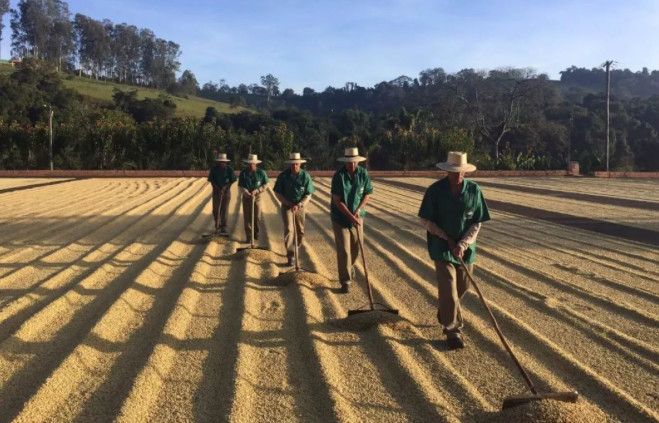
Among the processing methods commonly used in Brazil, the semi-washed method, though a more traditional technique, still has its unique characteristics. After removing the pulp and skin, this method further eliminates the mucilage on the surface of the green beans but skips the fermentation stage and dries directly—thus requiring extremely high operational skill. When done properly, it can deliver a full-bodied texture and high sweetness, whereas improper handling may easily lead to flavor imbalance. Compared to traditional washed or natural processes, the semi-washed method exhibits more restrained acidity and aroma but offers good overall balance, suiting consumers who prefer mild profiles.
Another common method, the semi-natural (pulped natural) process, involves drying the beans directly after removing the pulp and skin without soaking in water tanks, allowing for more precise control over mucilage fermentation. This method combines characteristics of both natural and washed processes, enhancing coffee cleanliness and consistency in ripeness, reducing interference from underripe beans, and ultimately delivering a more uniform flavor profile—a popular choice across many Brazilian producing regions.
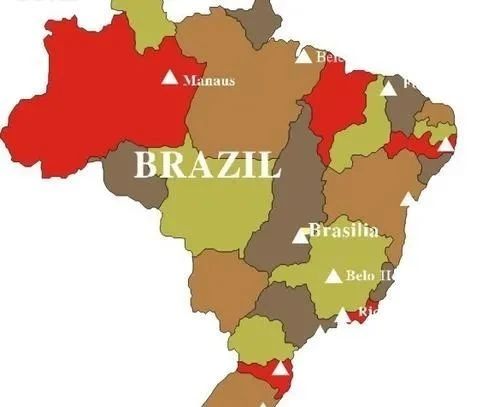
Brazil’s main coffee producing regions are concentrated in four key areas: Minas Gerais, São Paulo, Bahia, and Espírito Santo, collectively accounting for 90% of the country’s exports. Among these, Minas Gerais’ Cerrado and South Minas, due to their higher altitudes, are major sources of specialty coffee, while São Paulo’s Mogiana is known for its blend of traditional and modern cultivation techniques.
Cerrado is located on the Brazilian inland plateau, with most areas exceeding 1,000 meters in altitude. The fertile soil and stable climate make it one of Brazil’s representative specialty coffee regions. The Red Bourbon grown here, under medium-to-dark roasting, reveals intense cream, nut, and pastry aromas, with low acidity and a full-bodied mouthfeel—perfect for those who dislike pronounced acidity. Mogiana, on the other hand, features lush vegetation and diverse growing environments. Some high-altitude farms, such as Fazenda Rainha, use Yellow Bourbon paired with refined processing to present delicate aromatics and layered sweetness, suitable for various brewing methods including pour over and espresso.
Brazil’s coffee bean grading system is uniquely structured, using a three-part labeling format, such as “Brazil NY.2 SC ——17/18 FC.” This grading approach stems from the country’s massive output and diverse bean sources, necessitating cupping to ensure consistent quality. First, beans are classified by defect rates into seven grades from No.2 to No.8, with No.2 being the highest (fewer than 4 defects per 300 grams). No.1 is extremely rare and supply is unstable, so No.2 is the market mainstay. Second, beans are screened by size, with 17/18 mesh being optimal (based on 1/64-inch screen sizes). Third, flavor levels are assessed via cupping, with common classifications including Strictly Soft (very mild), Soft (mild), Softish (slightly mild), Hardish (harsh), and Rioy (iodine-like off-flavor).
Many exporters also label additional information such as processing method (e.g., natural, washed, honey) and farm details, helping consumers better understand the beans’ background. For example, coffee from the Cerrado region is often rated Strictly Soft Fine Cup, symbolizing extremely mild flavors and outstanding cup performance—hallmarks of high-quality Brazilian beans.
Finally, through practical roasting and cupping comparisons, we further analyze the flavor profiles of two popular Brazilian beans. Fazenda Rainha Yellow Bourbon, grown at 1,400–1,950 meters in the Mogiana region and processed semi-naturally, delivers flavors of roasted nuts, peanut butter, and fermented fruit, with notable sweetness and suitability for multiple brewing methods. Cerrado Red Bourbon hails from the 1,000-meter-high Cerrado region, where the Red Bourbon variety undergoes semi-natural processing, highlighting creamy nuts and chocolate as primary notes, with soft acidity and a full, rounded body.
For roasting, Yellow Bourbon is recommended to undergo fast moisture removal with medium-high heat, extending development time after first crack to enhance sweetness. For Red Bourbon, careful heat control is needed to avoid over-development that may lead to flavor loss. For pour over, the Kono dripper is suggested with medium-fine grind (20-mesh sieve, 70–75% extraction) and 88°C water temperature, using a three-stage extraction method to fully express the richness and layering of Brazilian beans—delivering a satisfying experience for both daily drinking and deeper appreciation.
The above content is compiled by CoffeeHunters, a coffee news website.


