







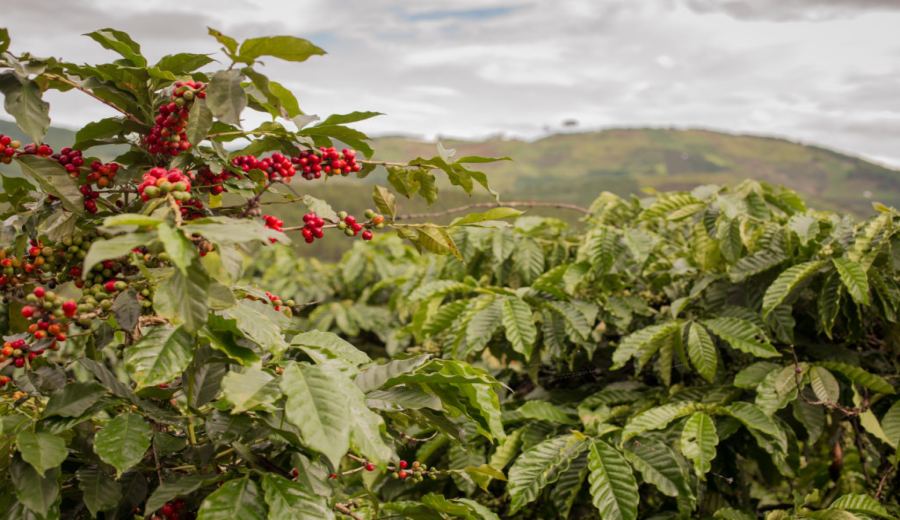
Introduction:Colombia and Brazil are two of the world’s largest coffee-producing countries. While both excel in medium to dark roasting profiles, they each offer unique flavor characteristics and production backgrounds. This article delves into the differences between Colombian and Brazilian coffees in terms of growing environments, variety selection, roasting applications, and flavor profiles. It also provides practical brewing parameters and sensory evaluations to help you more accurately choose the beans that suit your taste.
Both Colombia and Brazil are major coffee-producing regions in South America. Their beans are frequently chosen as the base for espresso blends, and when roasted to medium or medium-dark levels, they exhibit low acidity, rich mouthfeel, pronounced nutty tones, and distinct caramel sweetness, with relatively high body. However, there are significant differences between them in terms of geographical environment, varietal distribution, production scale, and historical development. This article will compare the coffee characteristics of these two major regions across multiple dimensions and guide you through their flavor profiles through actual brewing tests.
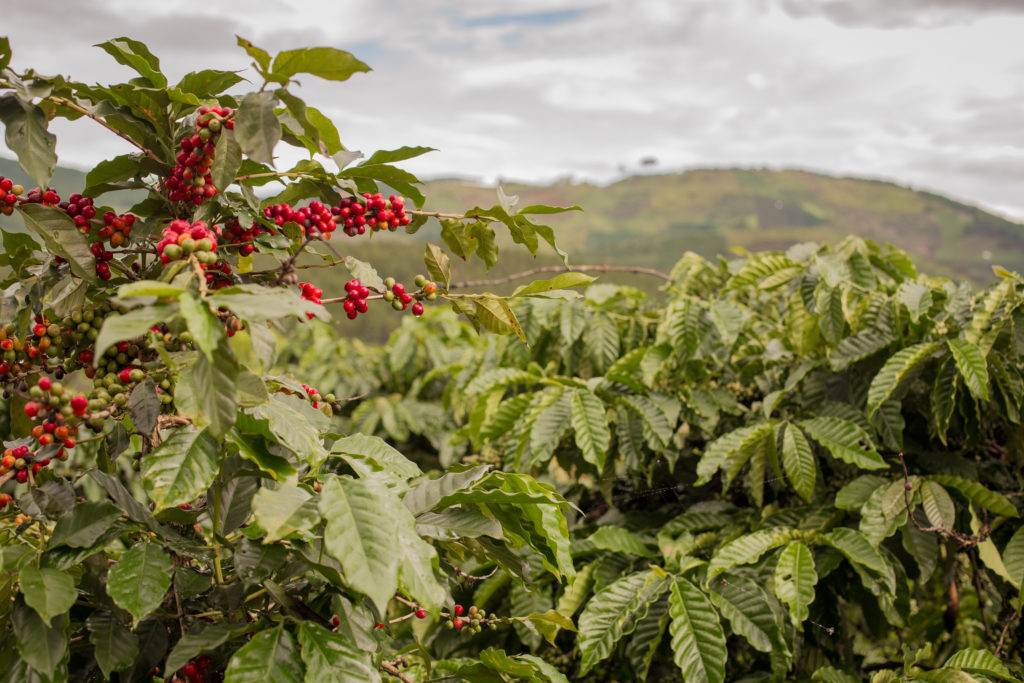
In the landscape of specialty coffee in South America, Colombia and Brazil are the two most representative producing countries. In the menu of one well-known coffee shop, while the Central and South American offerings include Peru, Ecuador, Bolivia, and others, when it comes to traditional flavor benchmarks, these two countries remain the top choices. If you wish to explore other South American coffees further, stay tuned for future content updates.
From the perspectives of flavor performance and historical background, Brazilian and Colombian coffees share many similarities. Both are suitable for espresso blends and, even as single origins, are traditionally processed with medium to medium-dark roasts. This is due to their inherent flavor characteristics: low acidity, rich mouthfeel, prominent nutty notes, and caramel-like sweetness. A slightly darker roast can further enhance these traits, resulting in a smoother and more rounded coffee profile.
As an example of practical application, a specialty blend launched by a certain brand combines beans from Brazil and Colombia, roasted to a medium-dark level. The overall flavor is balanced, with strong nutty aromas, and becomes even smoother and richer when milk is added. For single-origin coffees, Colombian beans are mostly roasted to medium-light levels, adjusted according to the characteristics of each bean lot. For instance, beans from the San Jose region, in order to highlight the rum-barrel fermentation-derived winey notes, benefit from a medium-light roast that more fully releases aromatic compounds, giving the beans a more distinctive personality.

Looking back at history, the spread of coffee in Brazil and Colombia followed similar paths, originating in France and then crossing the Atlantic to reach each country respectively. The coffee plant varieties in Brazil were first introduced from French Guiana (now part of the French Caribbean), reportedly linked to King Louis XV of France’s passion for coffee. At that time, the royal family sent specialists overseas to cultivate coffee, and one legendary tale tells of a patriotic officer named De Clieu who stole a coffee mother plant from the Royal Botanical Garden in Paris. He even employed a “beauty trick,” using a woman to seduce the guard, and ultimately succeeded in bringing the coffee tree to the Caribbean in 1723.
Another account mentions that in 1727, Major Francisco de Melo Palheta was tasked with mediating a land dispute between French Guiana and Dutch Guiana. During his time in Cayenne, through interactions with the wife of the Governor-General, Madame de Oviedo, he obtained a bouquet containing coffee seedlings. It is believed that these seedlings became the origin of Brazil’s coffee industry. Although the authenticity of these stories is hard to verify, Brazil indeed gradually developed into a global coffee powerhouse starting in the 18th century.

In contrast, Colombia’s coffee-growing environment is considered even more naturally advantageous. It is said that coffee was first introduced in the early 18th century by Spanish settlers accompanied by Jesuit priests. The first seeds landed in the northeastern part of the country and were subsequently promoted by small family farms across various regions, gradually becoming an important cash crop. The first commercial export of coffee did not occur until the early 1800s, marked by the shipment of approximately 100 bags (each weighing about 60 kilograms) of green beans, signifying the start of the industry.
By the mid-1800s, with surging coffee demand from the United States, Germany, and France, Colombia’s coffee production grew rapidly. However, the Thousand Days’ War in the late 1800s caused a temporary decline in the industry. Warfare and low international coffee prices forced many plantations to divide land, giving farmers more autonomy. It wasn’t until 1927 that Colombian coffee growers established the National Federation of Coffee Growers (FNC), which has since become one of the largest rural non-governmental organizations in the world and handles the vast majority of coffee exports.
When discussing the differences between the two countries’ coffees, we can examine three main aspects: growing environment, flavor characteristics, and production volume. Since the 1840s, Brazil has been the world’s largest coffee producer, with current annual output ranging from 40 to 60 million bags, accounting for about one-third of the global total. Its main producing regions are concentrated in the central and southern parts of the country, and it is also the world’s largest exporter of instant coffee. In 2020, Brazil exported a record-high 36.8 million bags of green coffee, but in 2021, the harvest was expected to decline significantly due to drought and frost.
Colombia, on the other hand, ranks as the world’s third-largest producer, contributing about 15% of global output but focusing primarily on high-quality Arabica. Its coffee is exported uniformly by the National Federation of Coffee Growers. Though the total volume is less than that of Brazil and Vietnam, Colombia is renowned for its stable quality and unique flavors. In recent years, Colombia has also faced challenges from natural disasters, such as a sharp decline in production caused by heavy rains in September 2021.
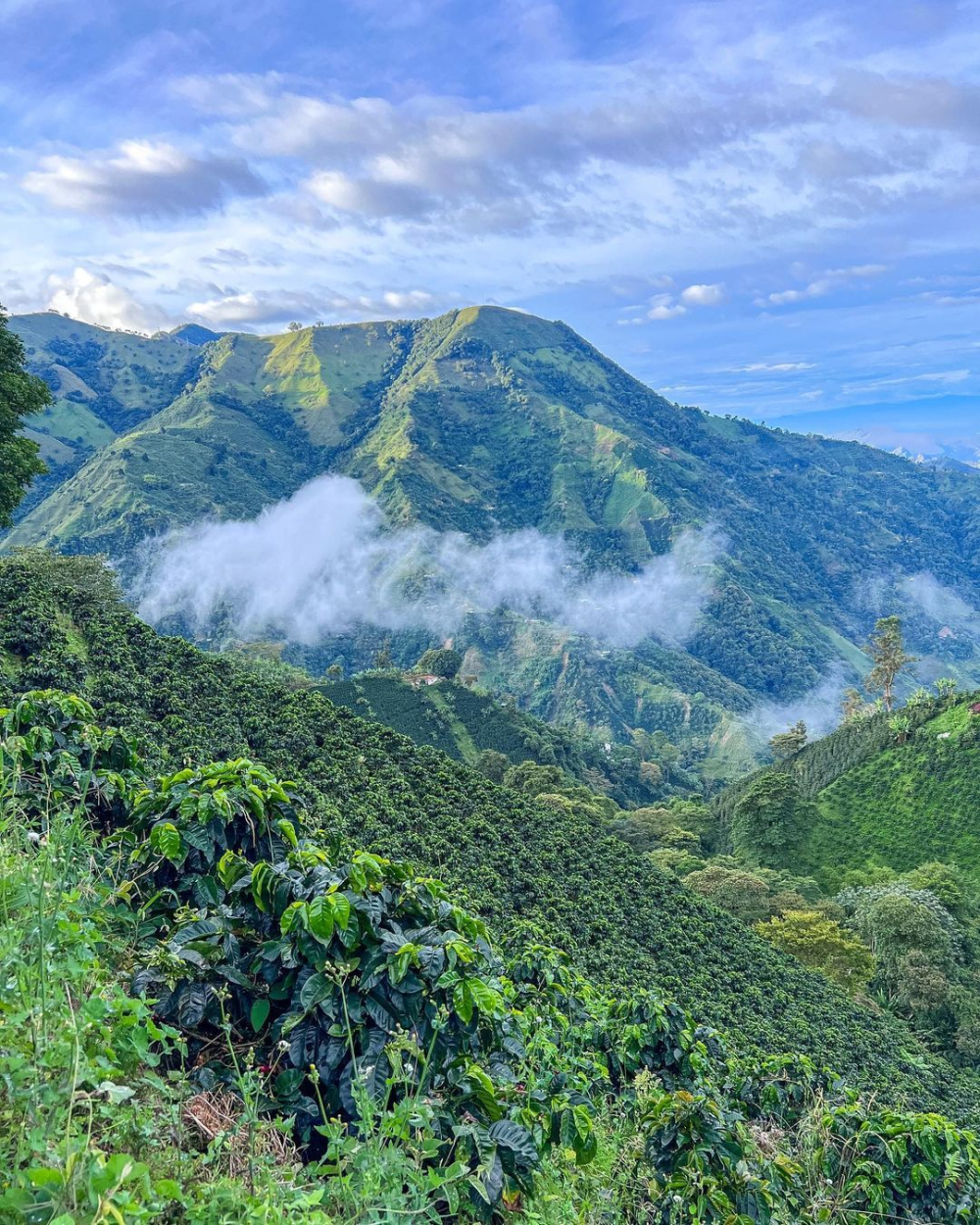
In terms of growing environment, Colombia boasts the famous “Coffee Triangle,” formed by the Andes Mountains in the departments of Caldas, Quindío, Risaralda, and the Valle del Cauca. This region includes 47 municipalities and 411 villages, generally at higher altitudes, featuring diverse microclimates and fertile volcanic soils—ideal conditions for Arabica cultivation. One coffee shop’s menu features a “Cherry Blossom” lot from the Cauca department, grown at 2,050 meters altitude and processed with double anaerobic washed method. It delivers a clean profile with bright berry notes and a rich, strawberry jam-like mouthfeel.
Colombia’s coffee-growing areas stretch along the Cordillera mountain range from north to south. The high altitudes and unique geographical conditions have given rise to numerous small farms, currently numbering around 24,000. In contrast, Brazil’s growing environment is relatively uniform, mostly flat terrain with coffee farms generally situated below 1,200 meters altitude. The climate is drier and the soil is less fertile, requiring reliance on varietal improvement and high-tech management. These conditions result in Brazilian coffee with low acidity, making it highly suitable as a base for blended coffee.
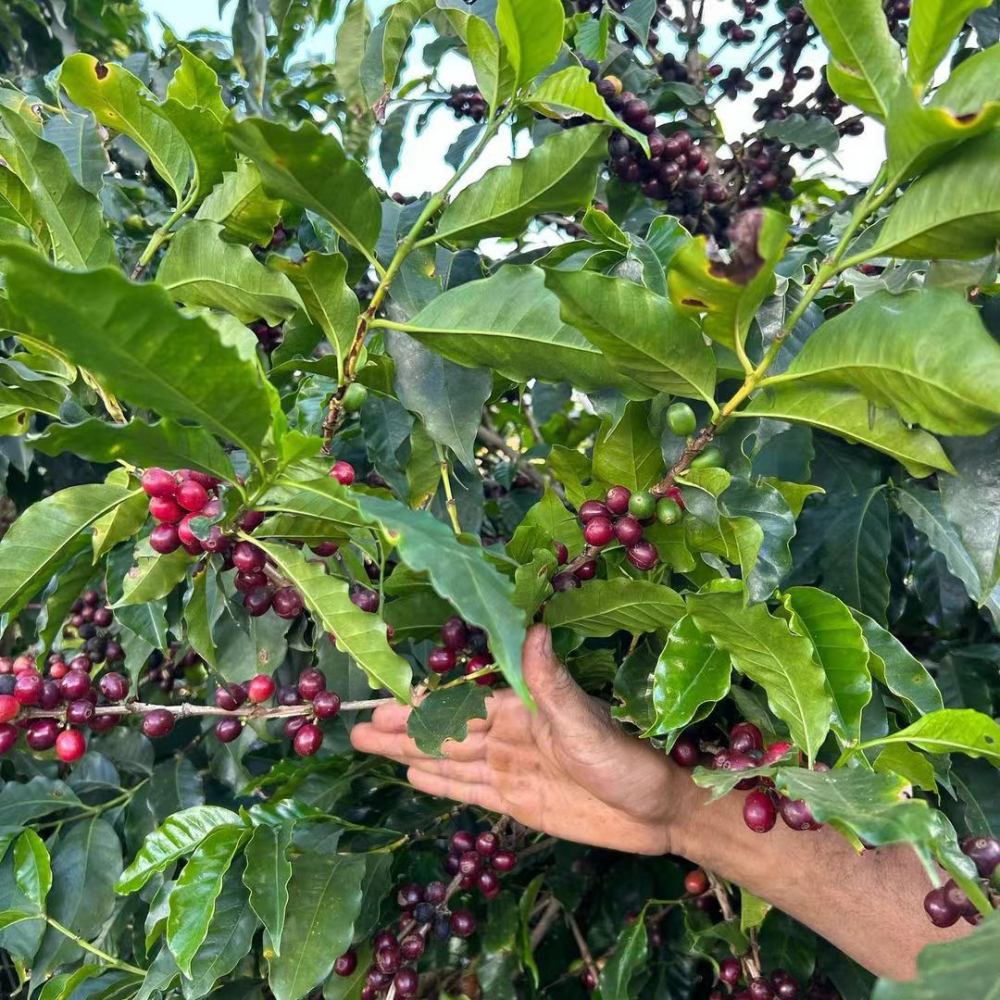
Brazil mainly cultivates the Bourbon variety, related to its historical introduction path. It is said that the coffee beans initially brought by De Clieu were of the Typica variety, which later became widely planted in Brazil. Bourbon, a Typica derivative with rounder beans, was introduced to Brazil in 1927 and quickly spread across Central and South America. The Bourbon variety has stronger resistance to rust and produces delicate, aromatic flavors with smooth acidity when grown at high altitudes. Commonly, Bourbon cherries transition in color from green to yellow, orange-yellow, and finally dark red, categorized as Yellow Bourbon and Red Bourbon based on ripeness.
A certain coffee brand’s Brazilian offerings often select the Bourbon variety, including Yellow Bourbon from Fazenda Rainha and Red Bourbon from Cerrado. Red Bourbon offers intense flavors, prominent aromas, and soft acidity, making it a typical representative of Brazilian coffee.
To provide a direct comparison of the differences between the two countries’ coffees, a certain coffee shop conducted a practical brewing test. They used Brazilian Yellow Bourbon from Fazenda Rainha and Colombian Castillo from the Cauca department, applying identical parameters: V60 filter, water temperature 91°C, brew ratio 1:15, 15g coffee, grind size fine sugar (80% passing rate through a Chinese No. 20 sieve). The brewing technique involved a 30-second bloom with 30g water, followed by slow circular pouring to 125g, then continued pouring until reaching 225g, with a total extraction time of about 2 minutes.
The results showed that the Brazilian beans exhibited distinct nutty flavors, leaning toward a peanut-like tone, with high body and a long-lasting black chocolate aftertaste, along with a slight acidity at lower temperatures. The Colombian beans, on the other hand, highlighted berry flavors, with dry aroma carrying herbal and spicy notes like mugwort, a refreshing mouthfeel, and a hint of mild fermentation.

In summary, Brazilian coffee excels in sweetness and caramel flavors, with occasional subtle acidity at lower temperatures, making it ideal for those who prefer rich and full-bodied profiles. Colombian coffee, meanwhile, offers a complex flavor structure with acidity balanced by sweetness and moderate bitterness, performing well both as a single origin and in blends. Compared to the boldness of Brazilian beans, Colombian beans have a more understated and elegant profile, with outstanding sweet and mellow aromas. They are often used to enhance the sweetness and balance of blended coffees. For example, a classic espresso blend might combine 30% Colombian washed beans with 70% Brazilian semi-washed beans, delivering a deep chocolate flavor, full-bodied roast aroma, and pronounced caramel sweetness.
The above content is compiled by CoffeeHunters, a coffee news website.


