







Introduction:Kenyan coffee is renowned for its bright acidity and vibrant fruitiness, making it a flagship single origin for many pour over enthusiasts. This article delves into the historical trajectory of Kenyan coffee from its introduction in the late 19th century to the present day, details the distinctive terroirs of its six major growing regions, analyzes the bean size–based grading system, and offers practical pour over brewing parameters—providing a comprehensive guide to mastering the essence of Kenyan coffee.
The reason Kenyan coffee enjoys widespread acclaim among specialty coffee lovers lies in its lively and bright acidity, rich berry notes, and juice-like mouthfeel. This unique flavor profile sets it apart within the African continent, especially appealing to those who seek refreshing, sweet-and-sour profiles. From the late 19th century when French missionaries introduced coffee seedlings to Kenya, to the now well-established Nairobi Coffee Exchange, the evolution of Kenya’s coffee industry is filled with distinctive characteristics.

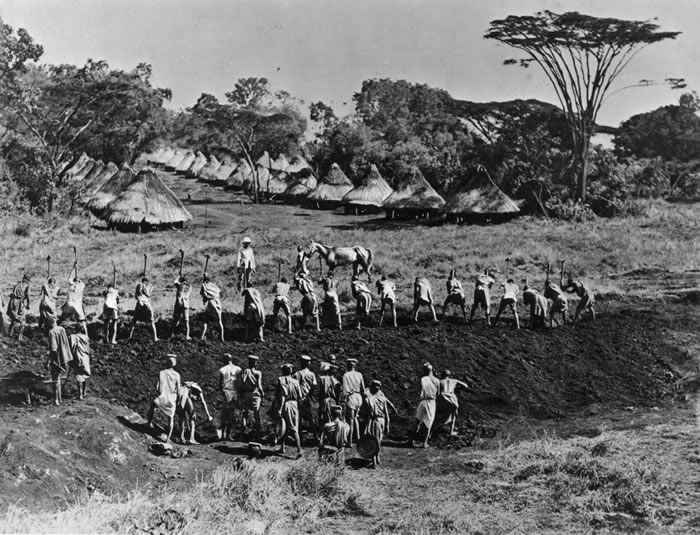
Kenya is geographically close to Ethiopia, the birthplace of coffee, yet its coffee cultivation history began much later. According to reliable historical records, in 1893, French missionaries brought coffee trees to Kenya from Réunion Island, with the first harvest recorded only in 1896. At that time, the entire region was under British colonial rule as the "East Africa Protectorate," where ordinary citizens were not allowed to grow coffee independently—only large estates operated by the British were permitted to cultivate the crop, and most harvested beans were shipped back to Britain for auction.
The localization of Kenya’s coffee industry began with the establishment of the Kenya Coffee Board in 1933, followed by the creation of an auction system the next year. The first official auction was held in the capital, Nairobi, in 1935, a tradition that continues to this day. By the early 1950s, government agricultural reform policies enabled more local families to legally own farmland, which could be used not only for subsistence but also for cash crop cultivation to boost income—laying the foundation for the popularization of Kenyan coffee.
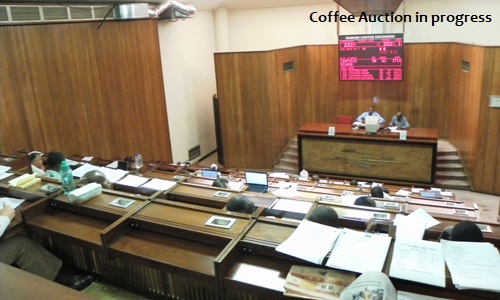
Currently, almost all Kenyan coffee is sold through the Nairobi Coffee Exchange. The weekly auctions held during the harvest season on Tuesdays are a focal point of the industry. Only qualified traders can obtain green coffee samples in advance, evaluate them through professional cupping sessions, and then bid for their preferred lots in open auctions. This system is widely regarded as transparent and efficient, while also incentivizing farmers to continually improve cultivation and processing standards.
Kenya has several renowned coffee-growing regions, among which Kirinyaga and Nyeri are the most famous. Overall, Kenya’s coffee regions can be divided into the following six main areas:
Kiambu: Located in central Kenya, this area is dominated by large estates. With urban expansion, the number of estates has been decreasing year by year. Coffees from this region generally exhibit bright acidity and a full body. For instance, Kenyan AA from Thika often presents sour notes reminiscent of black plum and cherry tomato, a clear mid-palate sweetness of yellow sugar, and a berry-forward finish.
Kirinyaga: Known for its fertile volcanic soils and excellent washed processing techniques, this region produces layered, structured coffees and is considered one of Kenya’s top-tier coffee regions.
Nyeri: Adjacent to Kirinyaga and nestled at the foot of Mount Kenya, Nyeri features rich, volcanic red soils. The area is largely composed of cooperatives formed by smallholder farmers, and its coffee is celebrated for its pronounced blackberry acidity, full body, and bright citrus and floral notes.
Embu: Near the Mount Kenya region, where about 70% of the population is engaged in smallholder farming, tea and coffee are the primary cash crops. Production is limited but quality remains consistently high.
Mount Kenya West: Comprising Kisii and Bungoma districts, this area's coffee is mostly produced by small cooperatives, with flavors leaning toward roasted nuts and soft fruit acids—ideal for drinkers who prefer milder acidity.
Murang’a: Situated in the Central Province, this historic region benefits from volcanic soils that impart bright acidity and a juicy mouthfeel to its coffee.
Kenya’s coffee grading system is primarily based on bean size and quality, managed uniformly by the Kenya Coffee Directorate. The commonly seen 'AA' grade represents the largest and highest-quality beans, typically showcasing the richest flavor profiles, while 'PB' refers to peaberry—a rare, round-shaped bean where only one seed develops inside the coffee cherry—often exhibiting more concentrated flavors. This grading framework serves as a key reference for quality assessment.
For pour over enthusiasts, the medium-to-light roast level of Kenyan coffee is where its charm truly shines. It is recommended to brew with water at 93°C using a Hario V60 filter, which effectively highlights its vibrant acidity and clear layers. Specific parameters can be set as follows: 15 grams of coffee, a 1:15 coffee-to-water ratio, and a grind size roughly equivalent to EK43s#10 (80% passing through a 20-mesh sieve). The brewing steps involve a 30-second bloom with 30 grams of water, followed by pulsed pours up to 125 grams, then waiting for the liquid level to drop before pouring up to 225 grams. The total brew time should be kept around 2 minutes to fully express the unique flavor profile of Kenyan coffee.
The above content is compiled by CoffeeHunters, a coffee news website.


