








Introduction:As China's primary coffee-producing region, Yunnan accounts for over 99% of the country's output, yet has long been constrained by international futures prices, leaving coffee farmers with meager profits. In recent years, the rise of specialty coffee has allowed Yunnan beans to gradually break through with their unique flavors. This article delves into Yunnan coffee’s pricing challenges, production decline, government and industry support measures, and analyzes its planting history, main varieties, and regional characteristics—helping you understand how this coffee that is “rich yet not bitter, aromatic yet not overpowering” is evolving toward specialty quality.
Yunnan is China’s coffee production hub, with over 99% of the country’s coffee grown here. For a long time, however, pricing power has rested in the hands of the international market, particularly referencing New York futures prices, leaving coffee farmers with little bargaining power. When international coffee prices dropped, green bean prices once fell below the production cost of 15 yuan per kilogram, plunging many farmers into operational difficulties.
Faced with income insufficient to sustain production, some farmers opted to cut down coffee trees and switch to other crops or livelihoods. Statistics show that Yunnan’s coffee cultivation area shrank from its 2014 peak of 1.831 million mu to 1.497 million mu in 2020—a nearly 20% reduction—while output also declined from a high of 150,000 tons to 80,000–90,000 tons, nearly halved.
Despite the challenges, Yunnan coffee is gradually seeking a breakthrough through the specialty route. Take Pu’er as an example: the region accounts for more than half of the province’s coffee output and is home to over 300,000 coffee farmers. Driven by the specialty coffee trend, consumer acceptance of Yunnan beans has gradually increased. In Kunming, the number of coffee shops has grown rapidly, and in 2020, Yunnan coffee sales on the Tmall platform reached 245 million yuan—an increase of 135% year-on-year—with the number of brands rising by 80%.
However, coffee farmers have long harbored resentment over persistently low prices. Numerous complaint letters from producing regions point out that for 30 years, Yunnan coffee prices have remained depressed, with international buyers purchasing at rates below futures prices, depriving farmers of rightful profits. Some farmers stated that if conditions continue to worsen, this year might be their last harvest. They are calling for legal action, even public interest lawsuits, demanding that international coffee companies raise purchase prices.
Facing the industry crisis, the Yunnan provincial government and various departments have stepped in proactively. Since 2013, the government has invested hundreds of millions of yuan annually to build national-level modern coffee industrial parks, promote the “one county, one industry” policy, and support processing technology innovation. Coffee has been included in Yunnan’s “Green Food Brand” and among the eight major plateau specialty industries—these supportive policies have played a key role in stabilizing industry development.
Meanwhile, domestic e-commerce platforms such as Alibaba, JD.com, and Pinduoduo have also increased their promotion of Yunnan coffee, helping to expand the market. In early 2021, domestic coffee companies’ purchase prices were already about 2,000 yuan per ton higher than those of international giants, signaling a resurgence in market confidence in Yunnan coffee.
Looking back at history, Yunnan’s coffee cultivation originated in 1892 when a French missionary planted the first coffee tree in the Zhukula area. In the 1930s, overseas Chinese leader Liang Jinshan introduced coffee to the Puliang and Luoming areas and continued planting after the founding of New China. Starting in 1952, under expert guidance, large-scale planting began in the Luguang region, which has now been ongoing for nearly 60 years. By 1997, the province’s coffee planting area had reached 7,800 hectares. Currently, Yunnan’s coffee output and planting area both account for over 80% of the national total, firmly holding a dominant position.
Yunnan coffee is predominantly of the “small-bean variety,” mainly including Typica and Bourbon—both Arabica types known for their elegant flavor profiles. In 1991, Yunnan also introduced the Catimor variety, which is highly disease-resistant and high-yielding, and is now often intercropped with traditional varieties. These varieties, under suitable altitude and climate conditions, can exhibit rich layers of flavor.
Yunnan’s coffee-growing regions are primarily located between 15°N and the Tropic of Cancer, covering areas such as Lincang, Baoshan, Pu’er, and Dehong. These regions mostly sit at altitudes of 1,000 to 2,000 meters, with mountainous and hilly terrain, fertile soil, abundant sunlight, and significant day-night temperature differences—all of which contribute to Yunnan’s small-bean coffee’s unique flavor profile: “rich yet not bitter, aromatic yet not overpowering, with a hint of fruitiness”—making it highly suitable for coffee lovers who enjoy fruity acidity and balanced taste profiles.

In terms of quality grading, Yunnan coffee follows international standards, classifying beans based on the number of defective beans and impurities detected in a 300-gram sample to ensure consistency. However, due to the long-standing lack of proprietary brands and bargaining power, Yunnan coffee of the same quality is sold at around 3,000 yuan per ton less than beans from other regions, resulting in cumulative losses of billions of yuan over 30 years—an unfortunate reality.
Today, as consumers place greater emphasis on origin and flavor, more and more domestic coffee enthusiasts are choosing to support Yunnan coffee, actively driving industry transformation. The trend toward specialty coffee not only boosts farmers’ incomes but also allows Yunnan’s small-bean coffee to gradually emerge on the international stage, showcasing its unique flavor charm and potential.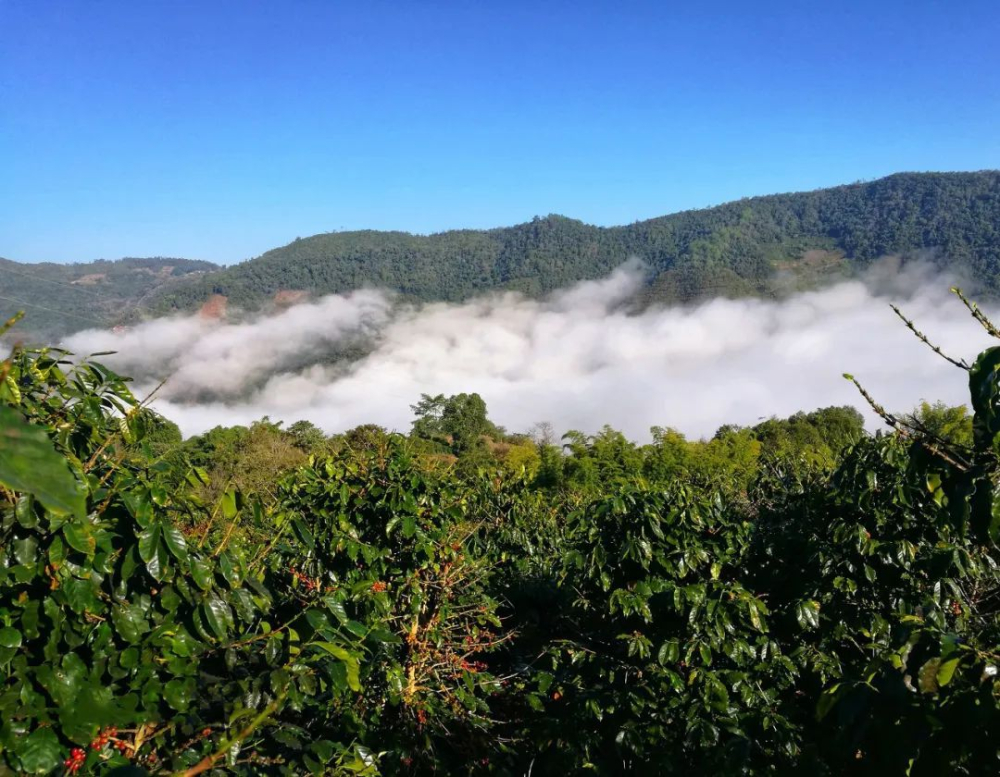
The above content is compiled by CoffeeHunters, a coffee news website.


