








Introduction:El Salvador was once the world’s fourth-largest coffee exporter. Despite a decline in production due to civil war, its specialty coffee remains renowned for its mild acidity and sweet, layered profiles. This article takes you deep into the geographic features and flavor profiles of six major high-altitude specialty coffee regions in the country, analyzes the official SHG and CS altitude classification system, and shares insights on the processing methods, roast curves, and hands-on pour over results of two representative estate beans—Bourbon and Pacamara—helping you grasp the essence of Salvadoran coffee.
Though small in land area, El Salvador boasts unique volcanic terrain and high-altitude environments that nurture delicately flavored specialty coffee. This Central American nation once ranked among the top four coffee producers globally. Although the civil war once dealt a heavy blow to the industry, with the rise of the specialty coffee wave, its premium bean varieties have once again garnered attention. Whether you’re a coffee enthusiast exploring emerging regions or aiming to understand the flavor characteristics of Central American beans, the information on the six major regions and practical brewing parameters compiled here will serve as important references.

Specialty coffee in El Salvador is primarily grown on volcanic slopes at altitudes above 1,200 meters. These areas feature soils rich in organic matter and minerals, along with significant day-night temperature variations, which contribute to the slow maturation of coffee cherries, thereby accumulating rich sugars and flavor compounds. Among the country’s eight coffee-growing regions, six are considered specialty-grade, each showcasing distinct terroir characteristics.
The top-recommended Chalatenango is located in the central-northern volcanic mountain range. Though transportation is somewhat inconvenient, its fertile soil and high altitude (mostly SHB Strictly Hard Bean, planted above 1,400 meters) give its coffee a delicate fruit acidity and nutty tonality. Santa Ana is known for its diverse microclimates and volcanic gravel soils, with altitudes ranging from 1,000 to 2,000 meters, and has shown impressive quality in recent years. The Tecapa-Chinameca mountain region spans multiple river basins, offering complex flavor layers, often featuring notes of chocolate, ripe fruit, and cantaloupe, with altitudes between 1,000 and 2,139 meters.
The Cacahuatique mountain region, located east of Barrios city and spanning the borders of two provinces, is characterized by its refined juiciness and pronounced almond aroma, with altitudes ranging from 1,000 to 1,663 meters. The Alotepec-Metapan mountain region, bordering Honduras, showcases a delicate balance of floral, citrus, and caramel sweetness, making it an ideal choice for floral aroma enthusiasts, also at altitudes between 1,000 and 2,000 meters. Finally, the El Balsamo-Quezaltepec mountain region, near the southern side of San Salvador city, produces coffee with excellent balance, creamy texture, and bright acidity, with vanilla notes running through the overall flavor profile, at altitudes ranging from 1,000 to 1,960 meters.
El Salvador’s coffee grading system is clear and straightforward, primarily based on altitude: beans grown above 1,200 meters are classified as SHG (Strictly High Grown, highland beans), considered specialty-grade; those produced at 500 to 900 meters are categorized as CS (Center Standard, lowland beans). Among the six specialty regions mentioned, Chalatenango and Santa Ana stand out in the market due to their representative estates and consistent quality.
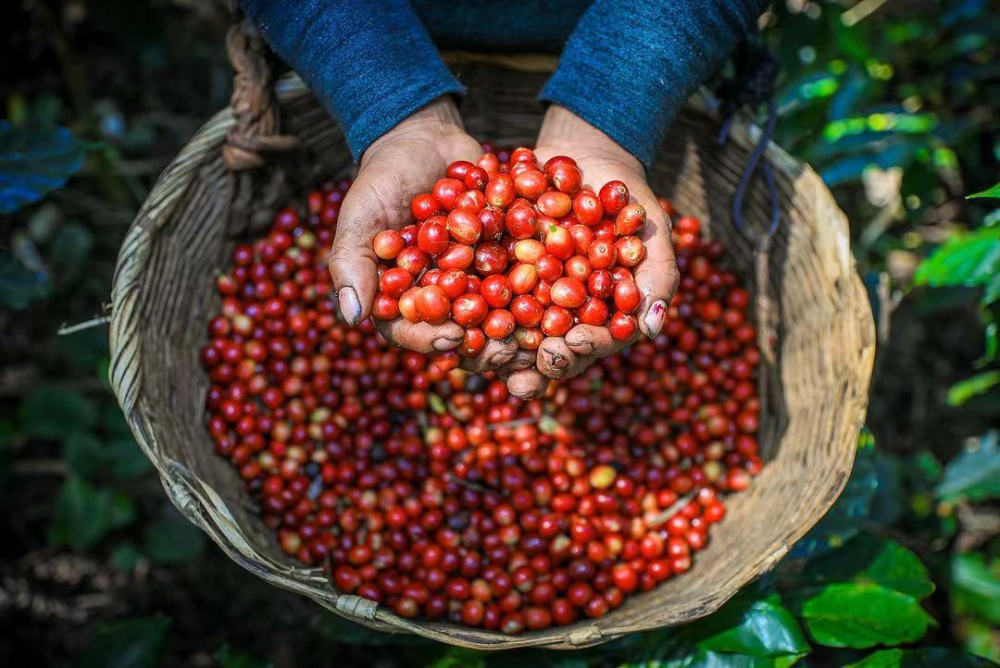
The Chocolate Amor Estate (El Guayabo) from Santa Ana grows the Bourbon variety at an altitude of 1,450 meters, using a hybrid process of 50% washed and 50% honey. The washed process leverages the region’s abundant water supply to deliver a clean and bright base; the honey process is carried out on raised beds at around 800 meters altitude, where intense sunlight and ultraviolet rays enhance aroma intensity while shortening drying time, resulting in more concentrated flavors. This combination allows a single-estate bean to present a complex profile of chocolate, cocoa, and nutty creaminess, suitable for drinkers who prefer balanced flavors.
Another highlight is the Black Honey Pacamara from the Bosco Estate in Chalatenango province, grown at 1,500 meters. The Pacamara variety is known for its intense aroma and distinctive acidity, and this bean is processed using the black honey method—only the outer skin of the coffee cherry is removed, leaving the flesh and mucilage intact, followed by 18 to 25 days of elevated sun drying with strict monitoring of humidity and fermentation conditions until the moisture content drops to 11%. This process enhances sweetness and aroma complexity, making it an unmissable choice for coffee lovers seeking intense flavors. The estate owner, Ignacio Gutierrez, is a three-time COE (Cup of Excellence) competition champion in El Salvador.
In terms of roasting recommendations, when using the Yangjia 800N roaster for 480 grams of green beans, both beans follow similar roast curves: the charge temperature is 175°C, initial flame power 130, air vent 3; the turning point occurs at around 1 minute 42 seconds, and when the roaster temperature drops to 130°C, the air vent is adjusted to 4; when the bean surface turns yellow (around 152°C), marking the start of the dehydration phase, the air vent is increased to 5; at approximately 8 minutes, when the bean surface shows tiger stripes and black speckles and the coffee aroma replaces the toastiness, it is about to enter the first crack. The first crack begins at 8 minutes 50 seconds, continues developing for 2 minutes, and the beans are dropped at 195.6°C to ensure full flavor expression without over-extraction.
Cupping results show that the Chocolate Amor Estate presents caramel and cocoa hints in the dry aroma, transitioning to dark chocolate and nutty tonality in the wet aroma, with a clear flavor profile showcasing cocoa as the main body, soft fruit acidity, and caramel sweetness; the Bosco Estate leads with caramel in the dry aroma, followed by berry notes in the wet aroma, offering a mouthfeel of citrus, grape, and honey interplay upon entry, with a berry-acidic and sweet aftertaste, highlighting the distinct personality of the Pacamara variety.
Practical pour over recommendations use the V60 #01 filter, 15 grams of coffee, a 1:15 brew ratio, with grind size set to fine sugar (80% extraction through a #20 sieve), and water temperature controlled at 90–91°C. A classic three-stage extraction is applied: the first stage injects 30 grams of water for a 30-second bloom, followed by small circular pouring to 125 grams for the first pour, then continuing to 225 grams just before the coffee bed is exposed, with total extraction time around 1 minute 55 seconds to 2 minutes. This parameter balances acidity and sweetness, highlighting the unique flavor characteristics of each region.
The Chocolate Amor Estate, after brewing, offers cocoa aromas paired with caramel sweetness, a creamy mouthfeel like butter, soft fruit acidity, and a berry-toned aftertaste; the Bosco Estate leads with refreshing citrus and orange acidity, complemented by grape sweetness and honey smoothness, finishing clean. These practical data and flavor descriptions will help you recreate a professional-grade Salvadoran coffee experience at home.
The above content is compiled by CoffeeHunters, a coffee news website.


