








Introduction:Kenyan coffee is renowned for its vibrant acidity and rich juice-like body. Its distinctive K72 washed processing method and rigorous grading system have made it one of the most highly acclaimed specialty beans on the market. This article delves into the unique characteristics of Kenyan coffee-growing regions, the standards of the AA+ grade, and explores how the K72 washed process shapes its distinctive flavors. It also provides pour over parameters and brewing tips for light-roast Kenyan beans to help you master the essentials of brewing this African star coffee.
In the world of specialty coffee, Kenya and Ethiopia are often mentioned in the same breath. Both are celebrated for their pronounced acidity, yet their flavor profiles differ significantly. The reason Kenyan coffee stands out in the international market is deeply tied to its colonial history under British rule. While colonialism brought many social issues, it also inadvertently led to the meticulous management of the coffee industry—from variety selection and breeding to auction systems, and even scientific grading—which laid the foundation for Kenya’s competitive edge in coffee.
Located in East Africa, Kenya borders Ethiopia—the birthplace of coffee—but its coffee industry developed relatively late. Coffee was introduced to the region around the early 20th century, making it something of a round trip back to Africa. However, thanks to the scientifically grounded planting and grading systems established during British colonial rule, Kenya quickly secured a place in the specialty coffee market. Its success can be attributed to four key factors: varietal development, government support, strict grading, and the unique K72 washed processing method.

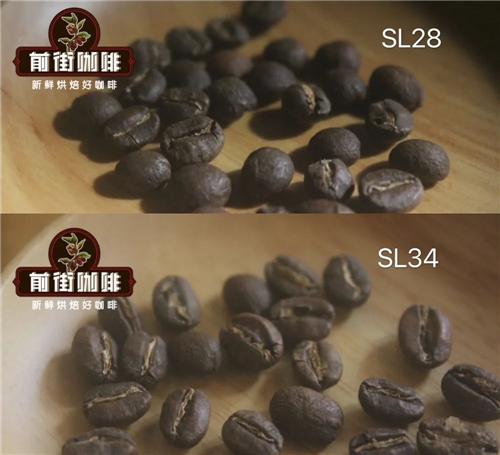
The varietal foundation of Kenyan coffee originates from the Scott Agricultural Laboratories (Scott Labs), established in 1922. From 42 coffee varieties, the lab identified SL28 and SL34 as the most suitable for local cultivation. These two varieties are not only highly resistant to disease but are also celebrated for their outstanding acidity and complex flavor profiles, forming the soul of Kenyan coffee. Additionally, since 1931, the Kenyan government has gradually built a complete system from production to sales by establishing grower cooperatives and the National Coffee Board. The Nairobi Coffee Exchange, launched in 1937, further ensures that high-quality coffee receives fair compensation through an open auction system, boosting producer enthusiasm. In recent years, the Kenyan Ministry of Agriculture has invested 1.5 billion shillings in a coffee revitalization plan to continuously strengthen the industry’s competitiveness.
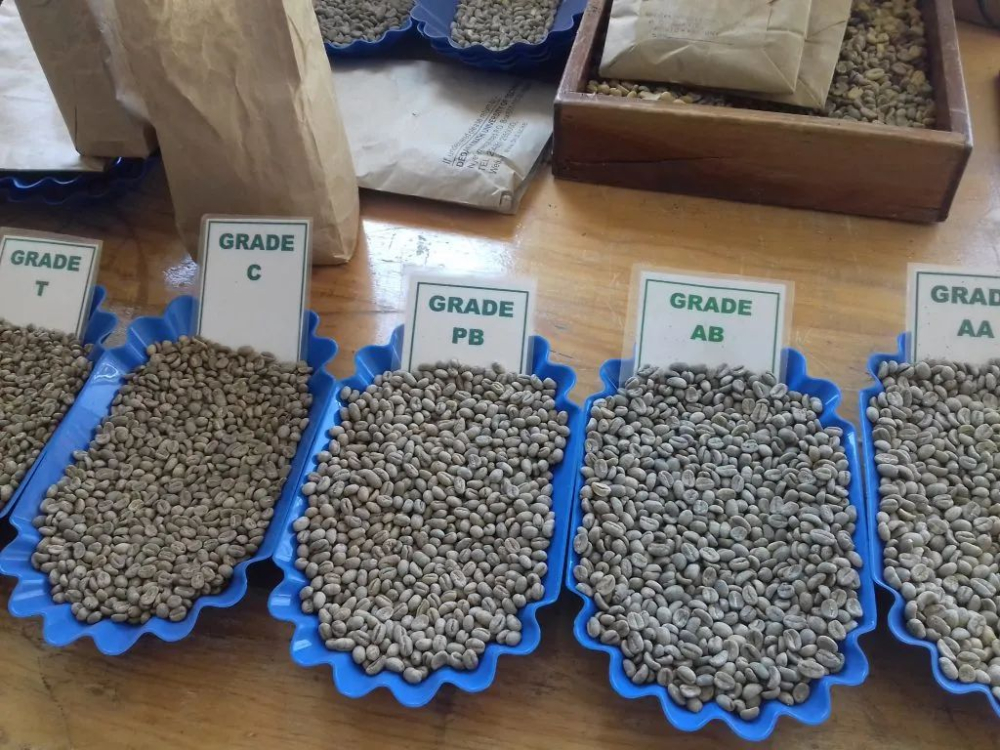
The grading system of Kenyan coffee is primarily based on bean size and cupping performance. From highest to lowest, the grades are AA or AA+, AB, PB, C, E, TT, and T. Among these, AA and AA+ beans, with a size of 17–18 mesh, are the most sought-after grades on the market; AB beans, sized 15–16 mesh, make up the bulk of production. Notably, for AA and AB grades, the industry also applies an unofficial flavor-based grading system based on cupping results, including TOP, PLUS (+), and FAQ, where TOP represents the highest-performing batches. For example, the “Little Tomato” coffee from the Asali factory in the Thika region, as shown in the image, belongs to the high-flavor TOP grade.
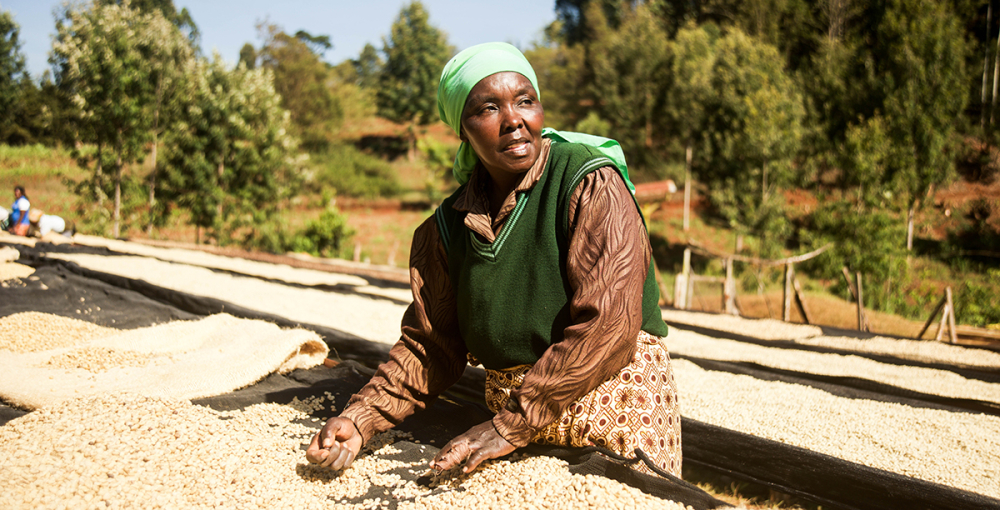
What makes Kenyan coffee most memorable is its bright and full-bodied acidity, which is closely linked to the unique K72 washed processing method. Compared to standard washed processing, which typically involves just 36 hours of fermentation, Kenya employs a 72-hour fermentation process, allowing the beans to fully develop layered acidic and fruity aromas. After fermentation, the beans are thoroughly washed and then sun-dried on African raised beds until they reach a moisture content of about 12%. This processing method not only extends fermentation time but also imparts a bright, lively acidity and a juice-like, full-bodied mouthfeel to the coffee.
Take the “Little Tomato” from the Asali factory in the Thika region as an example. This coffee, grown at altitudes of 1,550 to 1,750 meters using the SL28 and SL34 varieties and processed via the K72 method, exhibits a complex flavor profile of black plum, cherry tomato, Asian pear, brown sugar, and plum. Its acidity is bright yet not overly sharp, paired with a solid body and fruity sweetness, making it a classic representation of light-roast Kenyan beans.
When brewing light-roast Kenyan coffee, pay special attention to the following three key details. First, it is recommended to use a fast-flowing filter, such as the V60. Since light-roast beans have less expansion and are harder in texture, grinding can easily produce very fine particles. If the filter’s flow rate is insufficient, it may lead to clogging in the later stages, affecting aroma and taste. The V60’s spiral ridges effectively promote gas release, accelerate water flow, and enhance the release of acidic compounds.
Second, water temperature control is crucial. It is generally recommended to maintain a temperature between 90°C and 93°C: if you prefer a bright, uplifting acidity with a tea-like aftertaste, opt for 90°C to 91°C; if you want to enhance the fruit acidity’s richness and body, you can increase the temperature to 92°C to 93°C. Lastly, grind size should be adjusted based on extraction time. For example, using 15 grams of coffee and a three-pour method, if the total extraction time is less than 1 minute and 40 seconds, the grind is too coarse and should be adjusted finer; if it exceeds 2 minutes and 20 seconds, it may be over-extracted, requiring a coarser grind. A recommended coffee-to-water ratio is between 1:15 and 1:16. Those who prefer intense berry flavors can go with 1:15, while those seeking clear floral and citrus notes may opt for 1:16.
Here are the specific brewing steps: For the first pour, add 30 grams of water and let it bloom for 30 seconds, using a small stream and circling from the center outward to ensure even saturation of the coffee bed. For the second pour, use a slightly larger stream to add 95 grams of water, lifting the coffee bed, and aim for a cumulative water volume of 125 grams by around 55 seconds. For the third pour, once the liquid level drops to halfway, use a small stream and circle narrowly to add 100 grams of water, totaling 225 grams of water with an overall extraction time of around 2 minutes. Another common method is: after the first 30-gram bloom for 30 seconds, pour to 125 grams in the second step, and when the water level is about to expose the coffee bed, pour the final 100 grams in the third step, with a total time of about 2 minutes, then remove the filter once dripping stops.

The above content is compiled by CoffeeHunters, a coffee news website.


