








Introduction:Gesha Village Estate is a flagship of Ethiopian specialty coffee, and its diverse batch classifications often puzzle many coffee enthusiasts. This article delves into the differences between the auction, gold, red, green, and Chaka batches—covering everything from origin background, variety characteristics, processing methods, to flavor profiles—to help you understand the uniqueness of each Gesha offering. It also includes practical pour over recommendations to guide you in selecting and brewing these coffees.
Gesha Village Estate is regarded as a model of Ethiopian specialty coffee, yet its complex internal batch grading system often leaves coffee lovers scratching their heads. What do the terms auction, gold, red, green, and Chaka actually mean? How do their flavors differ? And how should you choose? This article will break down everything—from the estate’s origins, growing environment, variety distribution, to the grading criteria for each batch—and includes hands-on pour over suggestions to give you a better understanding of the unique features of each Gesha Village coffee.

The story begins in 2011, when founder Adam, together with consultant Willem Boot, ventured deep into the pristine forests near Gesha Village for exploration. In this jungle surrounded by towering trees, they unexpectedly discovered some wild coffee trees, among which the most surprising find was wild Gesha. It was later confirmed that this forest was none other than the renowned Gori Gesha forest—the original discovery site of the Gesha variety.
They collected seeds from these native Gesha mother trees and, after rigorous screening and genetic testing, confirmed that this area was indeed the original source of the Panamanian Gesha variety. The team then selected the variety most similar to today’s Panamanian Gesha based on morphological traits, bean size, and cupping performance, and began nursery work. From then on, the coffee story of Gesha Village unfolded on this land full of potential.
Gesha Village is located in a region with high altitude and abundant rainfall, featuring a temperate climate with all the natural conditions necessary for cultivating high-quality coffee. However, unlike many Panamanian estates, Gesha Village grows three main Gesha varieties: Gori Gesha, Gesha 1931, and Illubabor Forest. To maintain consistency in coffee quality and uniqueness in flavor, estate owner Adam designed a strict grading system, categorizing the coffee into five tiers: auction, gold, red, green, and Chaka.
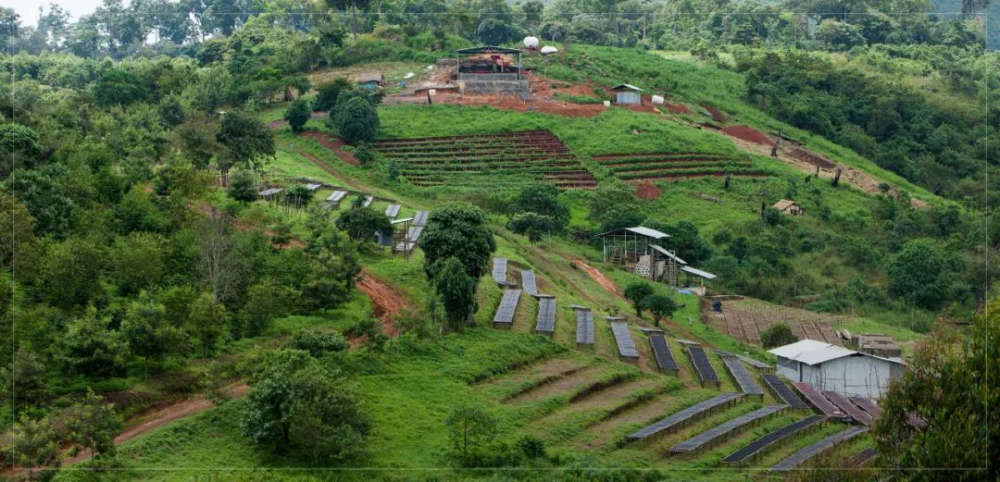
The geographical environment of Gesha Village has also been meticulously planned. The western area generally has higher altitudes, especially the OMA, SURMA, and SHEWA-JIBABU plots, which range from 1900 to 2069 meters above sea level, with SHEWA-JIBABU being the highest-altitude plot in the entire estate. Additionally, the southern plots have more shade, while the northern ones receive more sunlight. Adam matched the most suitable varieties to each plot according to altitude, soil, and microclimate, allowing each to showcase its unique flavor characteristics.
Among all the batches, the auction lot (BID) is the most premium, accounting for only 3.7% of the annual production. These coffees come with complete traceability information, boast complex and outstanding flavor profiles, and are released in extremely limited quantities through the official Gesha Village auction channel, making them highly collectible and ideal for tasting.
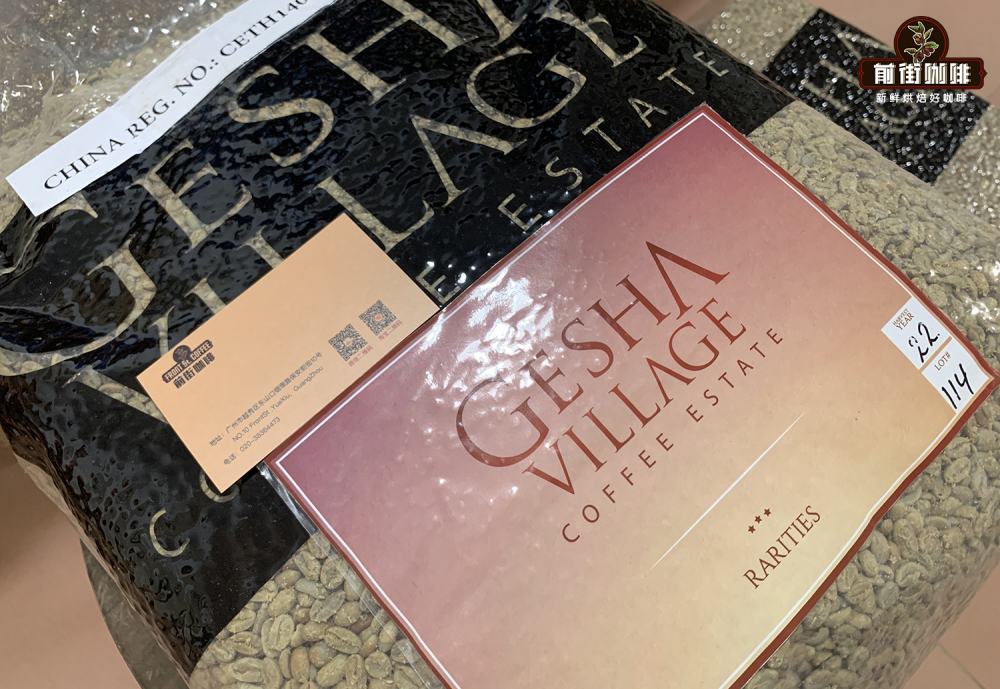
The gold label Gesha (RARITIES) is favored by many coffee competition participants and discerning roasters, making up about 10% of the annual output. These coffees come with detailed information about the growing region and processing methods, and also deliver exceptional flavor performance. For example, a well-known roasting brand once imported gold label Gesha from the Oma plot, grown at 1900–2040 meters altitude, using the Gesha 1931 variety and natural processing. Cupping revealed complex flavors such as citrus, berries, cream, caramel, melon, and honey—leaving a deep impression.
The red label Gesha (GROWERS RESERVE) is relatively more accessible, accounting for about 15% of annual production. This batch mainly uses the Gori Gesha variety, with a requirement that cupping scores reach 88 or above on the SCA scale. Although it is slightly less complex in flavor compared to gold and auction lots, it still embodies the classic flavor profile of Gesha Village and is a popular entry choice for many Gesha enthusiasts. For instance, red label Gesha from the Shewa-Jibabu plot, grown at 1973–2069 meters, features bright notes of lemon, plum, citrus, tropical fruits, and floral tea when processed naturally.
The green label Gesha (SINGLE-TERROIR) consists of single-plot, single-variety offerings, with each batch providing complete traceability information, including plot name, variety, and processing date. Compared to gold and red labels, green label does not set a minimum cupping score threshold, making it suitable for coffee beginners or advanced enthusiasts looking to explore the flavors of different plots.
The most unique of all is the Chaka (CHAKA) batch—it is a blend of Gesha beans produced across various plots and seasons within the estate, comprising the Gesha 1931, Gori Gesha, and Illubabor varieties, and offered in both washed and natural processing methods. A well-known roasting brand selected the natural version of Chaka, which is processed by first removing impurities via floatation, then spreading the beans in thin layers on African raised beds, covered with plastic sheeting for 18 to 30 days of sun-drying, with regular turning and hand-sorting during the process. After medium-light roasting, this coffee exhibits flavors of citrus, berries, cream, oolong tea-like notes, and cane sugar, with a bright and layered acidity.
Below are the pour over recommendations for the red label Gesha provided by a well-known roasting brand, for your reference in practice:
Brewing device: V60 dripper
Water temperature: 91–92°C
Coffee dose: 15 grams
Coffee-to-water ratio: 1:15
Grind size: Fine sugar-like (approximately 80% passing through a #20 sieve)
Three-stage extraction process:
- Step 1: Place 15 grams of coffee grounds in the dripper, then pour 30 grams of water for a 30-second bloom, using a small stream in a circular motion from the center outwards to ensure even saturation of the coffee bed.
- Step 2: Pour 120 grams of water with a vertical and even stream, aiming for a total weight of 150 grams, completed around 55 seconds, lifting the coffee bed slightly to release flavors.
- Step 3: When the liquid level drops to half, switch to a small stream to pour the final 90 grams of water, for a total of 240 grams, with an overall extraction time of about 2 minutes and 10 seconds. Be careful to avoid excessive agitation that may lead to uneven extraction.
After extraction, remove the dripper, gently swirl the server to mix the coffee evenly, and enjoy.
The above content is compiled by CoffeeHunters, a coffee news website.


