







Introduction:Kenyan coffee is renowned for its bright acidity and complex flavors, making it one of the must-try origins for specialty coffee enthusiasts worldwide. This article delves into Kenya’s geographical terroir, seven core growing regions, major cultivars such as SL28 and SL34, its rigorous grading system, and the most iconic K72 washed processing method. It also includes practical roasting and pour over recommendations to help you fully grasp the essence of this high-altitude African specialty coffee kingdom.
With its distinctive bright acidity and layered flavors, Kenyan coffee has become one of the most notable origins in the global specialty coffee market. Located in East Africa, the country’s equatorial location, high-altitude terrain, and fertile volcanic soils give rise to a highly recognizable coffee flavor profile. This article will take you from its geography, regional distribution, variety characteristics, and grading system, all the way to exploring its most representative K72 washed process, supplemented with practical pour over and roasting advice to help you better understand the charm of Kenyan coffee.
Almost the entire territory of Kenya lies near the equator, with much of the land consisting of plateaus. The area surrounding the capital Nairobi to the slopes of Mount Kenya is particularly concentrated with volcanic terrain at elevations of 1600 to 2100 meters. These regions not only have fertile soils, but the cool mountain climate slows down coffee growth, aiding in the accumulation of flavor compounds and resulting in beans with more pronounced fruit acidity and a solid body. In particular, the crescent-shaped coffee-growing zone in this area is the main core region that nurtures Kenya’s specialty coffee.
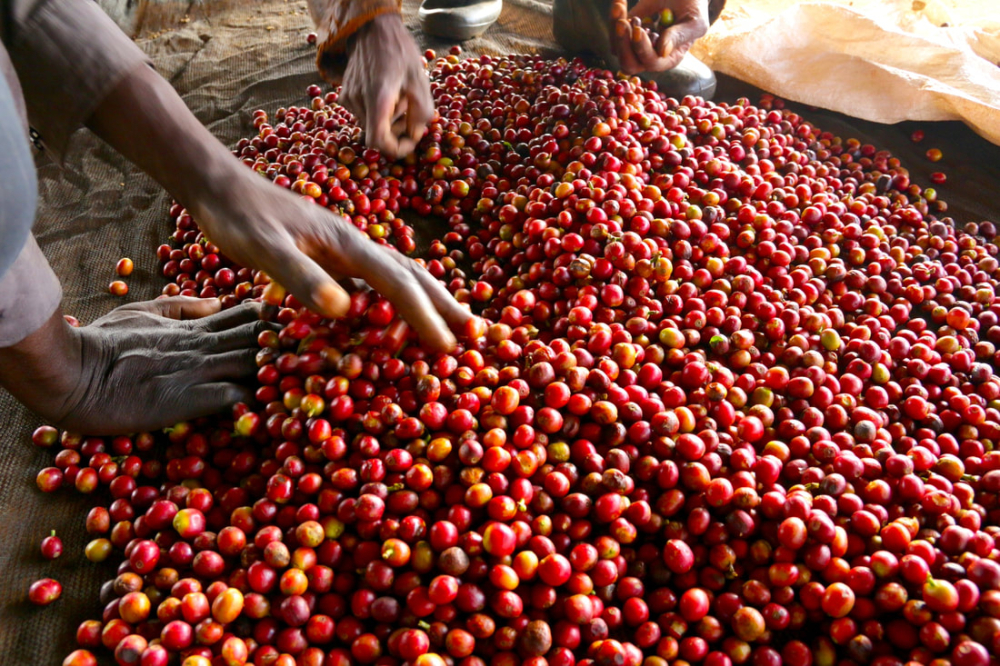
Kenya’s coffee industry gradually took shape in the early 20th century, especially after the country gained independence. By establishing a transparent and institutionalized auction system, it successfully protected the interests of smallholder farmers and established its status as a specialty coffee origin. With two harvest seasons per year thanks to the biannual rainy seasons, about 60% of production is concentrated from October to December, with the remaining 40% harvested between June and August. These unique natural conditions, combined with subsequent institutional and technological advancements, have made Kenyan coffee irreplaceable in the global market.
Kenyan coffee production and sales mainly occur through two channels: one is the centralized grading and auction system operated by the state-established Coffee Board of Kenya, accounting for approximately 85% of total production; the other is the direct trade model (also known as the “second window”) that has gradually emerged in recent years, accounting for around 15%. The auction system dates back to 1934 and operates under an agent system where licensed agents send samples for international buyers to cup and then bid on. However, to address the issue of excessive intermediaries in the past, since 2006 some agents have been allowed to directly contact buyers, significantly improving transaction transparency and farmer income.
Kenya’s coffee cultivation is primarily based on a cooperative model. The country has approximately 270 coffee cooperatives, covering over 700,000 smallholder farmers and a total planting area of 120,000 hectares. These cooperatives generally operate their own processing factories, enabling centralized processing and refining of coffee beans, which is a cornerstone of maintaining Kenya’s high coffee quality. In addition, there are a small number of larger private plantations, with a total planting area of about 40,000 hectares, but they account for a relatively small proportion.
In terms of varieties, Kenyan coffee is most famous for SL28 and SL34. These two varieties were cultivated by the Kenyan government in the 1930s through a variety selection program commissioned to Scott Labs, aiming to identify coffee trees best suited to the local environment with both disease resistance and high quality. SL28 features complex acidity with distinct citrus and dark plum flavors, with bean appearance showing copper-colored leaves and a kidney shape; SL34 has a richer flavor, fuller body, and stronger adaptability to rainfall. Additionally, French Mission Bourbon is an early-introduced variety that retains the original Bourbon flavor; Ruiru 11 is a disease-resistant hybrid variety introduced in 1985, though not classified as specialty grade, it occasionally appears in commercial blends.
Kenya’s coffee grading system is extremely rigorous, primarily based on bean size, shape, and hardness. From highest to lowest, the grades include: AA (or AA+), AB, PB (peaberry), C, E, TT, and T. Among these, AA grade consists of larger beans sized 17 to 18 mesh (screen size of about 6.75mm), usually offering the best flavor performance, while AA+ represents an even higher cup quality tier. PB peaberries are categorized not by size but solely by shape. Additionally, beans are also classified into TOP, PLUS, and FAQ grades based on flavor performance, providing buyers with more flavor-based reference criteria.
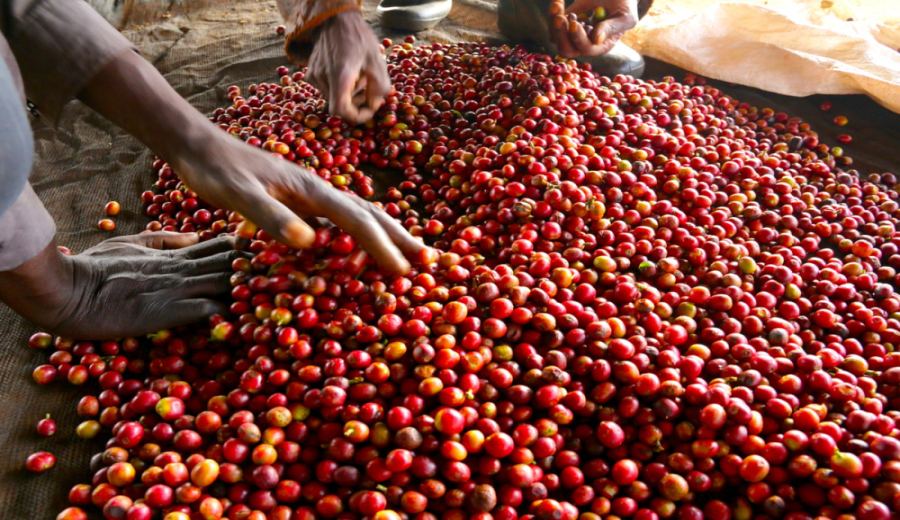
The most representative processing method in Kenya is undoubtedly the K72 washed process. Originating in Kenya, this technique is characterized by three rounds of 24-hour fermentation and washing cycles, totaling 72 hours of processing to fully extract coffee flavors and reduce impurities. During processing, ripe and high-density coffee cherries are first selected via water density sorting, followed by pulping and fermentation. After each fermentation, thorough washing removes mucilage and impurities. Finally, the beans are sun-dried on raised beds, with the whole process taking about 5 to 10 days. This method gives Kenyan coffee a bright, clear acidity, rich fruitiness, and exceptional cleanliness, making it a “flavor benchmark” in the hearts of many coffee lovers.
Kenya has numerous coffee-growing regions, among which the seven most renowned are: Nyeri, Kirinyaga, Murang’a, Embu, Kiambu, Kisii, and Meru. These regions are mostly located at the foothills of Mount Kenya and the Aberdare Mountains, with elevations generally ranging from 1400 to 2000 meters and two harvests per year. Among them, Nyeri and Kirinyaga are widely regarded as the top-tier coffee-producing areas in Kenya, known for their intense flavors, layered complexity, and bright acidity, often showcasing notes of citrus, berries, dark plum, caramel, and tea-like qualities.
Take Nyeri as an example. The region has fertile volcanic red soil, a cool climate suitable for coffee growth, and main varieties including SL28, SL34, Ruiru 11, and Batian. The harvest season is concentrated from October to December, and the coffee produced generally features clear acidity and a rich fruity profile. Kirinyaga, on the other hand, is known for its tightly structured, sweet, and long-lasting aftertaste coffees, also primarily produced by smallholder cooperatives with mature processing techniques, making it a consistent favorite in the specialty coffee market.
Regarding processing factories, for instance, the Karogoto Factory located in Nyeri, affiliated with the Tekangu Farmers Cooperative, is known for producing coffee with fresh acidity, bright profiles, and notes of berries and tea; while the Chania Estates in Thika is famed for its French Mission Bourbon natural process, offering intense dried fruit, vanilla, and mixed fruit flavors, suitable for those who enjoy wild African profiles. In addition, the Asali Honey Factory’s AA TOP grade coffee, processed via the K72 method, showcases an excellent balance of cherry tomato, dark plum, berry, and green tea aromas, making it a top choice for many pour over enthusiasts.
For pour over brewing recommendations for Kenyan coffee, since most are medium-light roasted, it is advised to use a fast-flow V60 filter cone, with water temperature around 91°C, to fully extract its bright acidity and delicate flavors. A recommended powder-to-water ratio is 1:15, with grind size roughly similar to coarse sugar (e.g., EK43s setting 10, 20-mesh sieve passing rate of about 80%). The first step can involve pouring 30 grams of water for a 30-second bloom, followed by adding 95 grams of water, and then pouring the final 100 grams of water when the water level drops to 2/3 of the coffee bed. The total extraction time should be controlled to around 2 minutes. This approach balances sweetness, acidity, and body, highlighting the most captivating flavor profile of Kenyan coffee.
The above content is compiled by CoffeeHunters, a coffee news website.


