







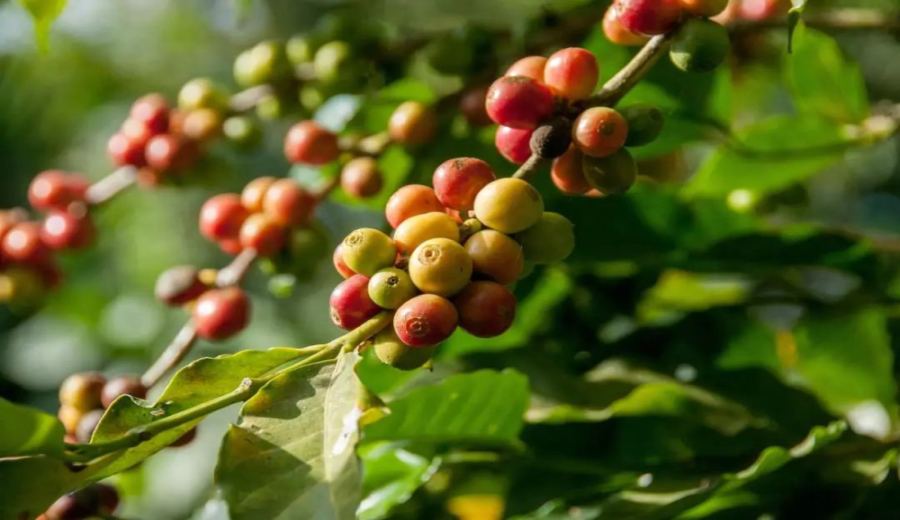
Introduction:Arabica coffee beans dominate the market with over 70% of global production. They have strict requirements for environmental conditions, and differences in altitude, climate, and processing methods across regions result in a rich and diverse flavor profile. This article starts from cultivation conditions and systematically introduces the flavor characteristics and processing techniques of core producing regions in the world's major coffee belts, such as Brazil’s Cerrado, Colombia’s Huila, and Ethiopia’s Yirgacheffe, along with purchasing suggestions and flavor descriptions to help you build your own coffee tasting system.
Arabica is the mainstream of global coffee consumption, accounting for over 70% of total production. These coffee trees are naturally delicate, requiring not only stable temperatures, good drainage, and fertile soil but also high standards for altitude and microclimate. As a result, even within tropical zones, the coffee beans produced in various regions show vastly different characteristics in aroma, acidity, and body due to differences in terrain and climate, forming unique regional flavor profiles.
Where does Arabica grow best? — Understanding the 'Coffee Belt'
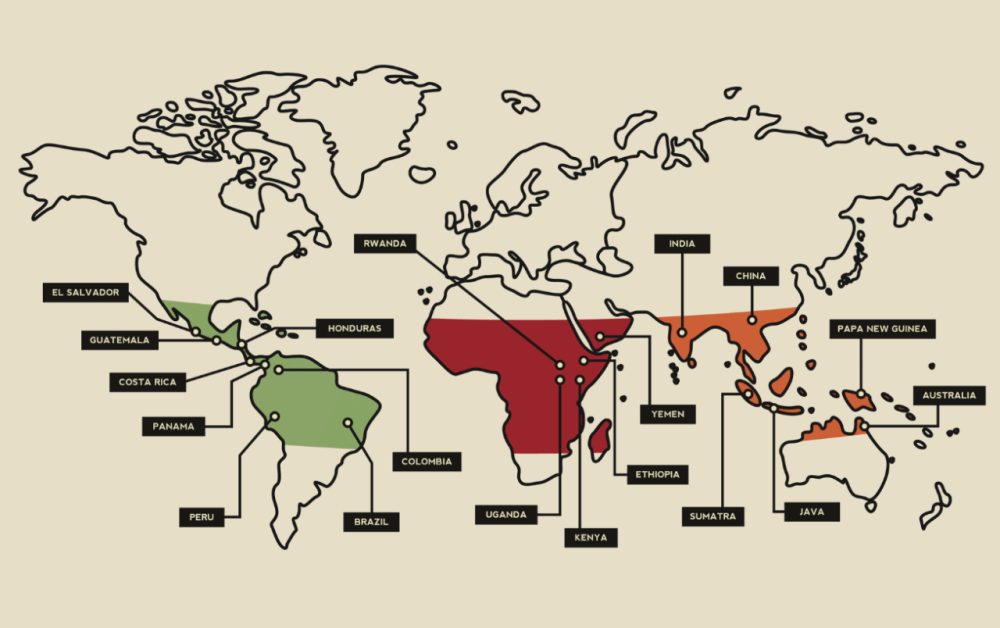
The global coffee-growing belt is concentrated around the equator, between 25 degrees north and south latitude, forming a ring-shaped 'coffee belt.' This region enjoys warm climates, abundant rainfall, and moderate sunlight — ideal growing conditions for most coffee varieties. However, Arabica is even more demanding in terms of its environment and is typically planted at altitudes of900 to 2000 meters, preferring areas with large day-night temperature variations, moderate shade, good air circulation, and no frost.
Compared to Robusta, which can grow at lower altitudes, Arabica contains only0.9% to 1.2%caffeine, but it has significantly higher fat and sugar content, resulting in a smoother taste, brighter acidity, and fruity notes. Additionally, the slow maturation process at high altitudes helps coffee cherries accumulate richer aromatic compounds, leading to more nuanced and complex coffee flavors.
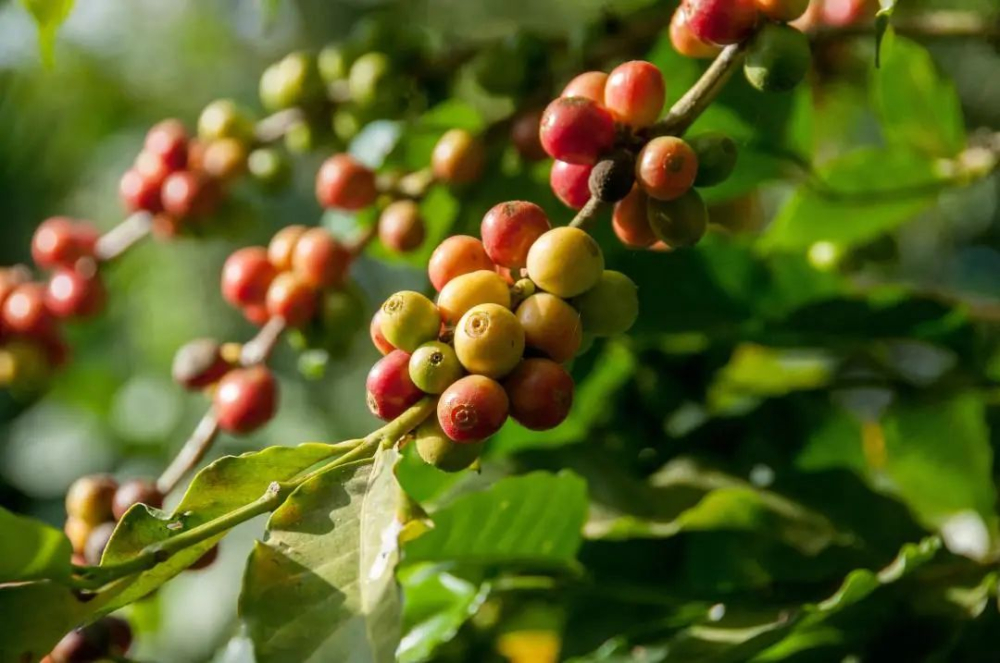
Global Division of the Three Major Producing Regions and Arabica Characteristics
From a geographical and flavor perspective, global Arabica coffee can be broadly divided into three major regions: Latin America, Africa, and Asia-Pacific. Each region possesses distinct flavor personalities due to differing geographic conditions and processing methods. Next, we’ll focus on representative origins within these regions, analyzing them one by one in terms of altitude, climate, processing methods, and flavor profiles.
Latin American Producing Regions
Brazil — Cerrado
Although Brazil is known for its large-scale production, most of its regions are not high-altitude, typically only a few hundred meters, making it difficult to showcase the pronounced fruit acidity of high-altitude coffee. Cerrado, located in Minas Gerais, is Brazil’s first region to receive 'origin' certification. It sits at an altitude of800 to 1300 meters, with a distinct dry and wet season and mineral-rich soil. The coffee produced here often has a smooth texture with notes of nuts, cream, and caramel, offering an overall balanced and full-bodied profile — a classic representation for those looking to understand Brazilian flavors.
Colombia — Huila
Colombia’s coffee-growing regions are distributed along the Andes Mountains. The terraced landscape creates diverse climates, with some areas even allowing year-round harvesting. Huila is located in the southern central mountain range of the country, generally at altitudes exceeding1500 meters, with fertile volcanic soil and stable water sources. The coffee from this area often features rich nutty and chocolate aromas while retaining bright berry acidity, resulting in a refreshing and layered cup — an important representative of Colombia’s specialty coffee.
Guatemala — Huehuetenango
Huehuetenango is located in the western high-altitude non-volcanic region of Guatemala, reaching elevations of up to2000 meters, making it one of the highest-altitude coffee-growing areas in the country. The soil here is derived from volcanoes, consisting of black earth with good structure and excellent drainage. Local coffee is graded by altitude, and the highest-grade SHB (Strictly Hard Bean) beans, when processed using the washed method, often exhibit elegant floral and tea-like notes, bright acidity, and a honeyed sweetness in the aftertaste, with a delicate and varied flavor profile.
Costa Rica — Tarrazú
Tarrazú is located in the volcanic belt near the capital, San José, at altitudes of1500 meters or above. It enjoys a mild climate, stable rainfall, fertile and naturally unpolluted soil. Pesticide use is strictly controlled here, and over 95% of the coffee beans fall under the category of Strictly Hard Beans (SHB). The coffee from this region generally has notes of nuts, cream, and citrus. The staple bean variety used here is a Catuaí and Caturra blend, offering a balanced and soft flavor profile, suitable for everyday drinking.
Asia-Pacific Producing Regions
Indonesia — Sumatra
Sumatra is a historic coffee-producing region, particularly famous for the Lintong and Aceh areas. The area has a tropical rainforest climate with high humidity and long rainy seasons, making traditional washed or sun-dried processing methods difficult to apply. As a result, the uniquewet-hulling methodwas developed, significantly shortening the processing time. This method gives Sumatran coffee its distinctive herbal, spicy, and woody aromas, which, when paired with medium to dark roasts, further highlight the richness of dark chocolate and nuts.
China — Yunnan
Yunnan is China’s main coffee-producing region. Baoshan, with its dry-hot valley terrain and significant day-night temperature variation, produces small-bean coffee with a notable sweet aftertaste. The altitude here is moderate, and rainfall is well-controlled, making it suitable for the growth of the Catimor variety. The recommended Baoshan staple beans are washed-processed, featuring a flavor profile dominated by nuts, chocolate, and brown sugar, with a full body that’s great for everyday enjoyment.
African Producing Regions
Ethiopia — Yirgacheffe
As the birthplace of coffee, Ethiopia is home to numerous heirloom varieties. Among them, Yirgacheffe is renowned for its high altitude (above 2000 meters) and favorable microclimate. The coffee here is mostly grown in a garden-style setting, and after washed processing, it often exhibits outstanding citrus, floral, and tea-like notes, with bright and delicate acidity — considered a 'flavor benchmark' by many coffee enthusiasts.

The above content is compiled by CoffeeHunters, a coffee news website.


