







Introduction:The Huakui coffee has become one of the most representative natural-processed beans from Ethiopia in recent years, thanks to its unique strawberry cream flavor. From winning the natural category in the 2017 TOH competition to the subsequent release of versions 2.0 through 6.0, what are the little-known origin stories behind this series of coffees? How do the flavors differ across generations? This article will delve into the origin background, variety characteristics, version evolution of Huakui, and provide expert roasting and V60 pour-over recommendations, giving you a comprehensive understanding of this globally popular Ethiopian natural specialty bean.
Among the many Ethiopian specialty coffees, Huakui (Drama Queen) is undoubtedly one of the most talked-about natural-processed beans. Since winning the natural category in the Ethiopia National Taste of Harvest Competition in 2017, this coffee from the Buku Abel processing station in the Hambella area of the Sidama region has quickly gained popularity among coffee lovers worldwide, thanks to its rich notes of strawberry, tropical fruits, and cream.
So, where does the name “Huakui” come from? In fact, its floral aroma is not as prominent as the name suggests. Instead, it is known for its multi-layered fruit aromas, including passion fruit, strawberry, mango, jackfruit, and citrus, offering a complex flavor profile. In 2017, this natural batch from the Buku Abel processing station stood out in the competition, and as a result, this batch and the subsequent series of beans produced by the same station and imported by Beijing Hongshun Company were gradually dubbed “Huakui” by the market. It’s worth mentioning that the original championship batch from 2017 is the true first-generation “Huakui,” and Buku Abel has also been affectionately nicknamed the “Huakui Estate” by some enthusiasts.
As Huakui gained recognition in international competitions—especially when Chinese barista Li Jianfei used this Ethiopian natural coffee to win second place in the China Coffee Brewing Championship, breaking the then-dominance of Geisha (also translated as Artisan or Gesha)—Huakui gradually became a popular variety on par with Geisha. However, after that classic showdown in 2017, the two have not faced off again on the competition stage.
Regarding the various versions of the “Huakui” series, strictly speaking, only the batch that won the natural category in the 2017 TOH can be called the original “Huakui.” But to continue the legacy of this widely loved name, Hongshun Company subsequently introduced different batches and harvests from the Buku Abel processing station in the Hambella region of the Guji zone, naming them Huakui 2.0, Huakui 3.0, Huakui 3.1, and even Huakui 4.0 and Huakui 5.0. By 2021, due to the expansion of the producing area and the proliferation of batches, it became difficult to trace whether each batch still came from Buku Abel. Therefore, the industry generally agrees that any beans in this series imported by Hongshun Company can be considered part of the broader “Huakui” coffee family.
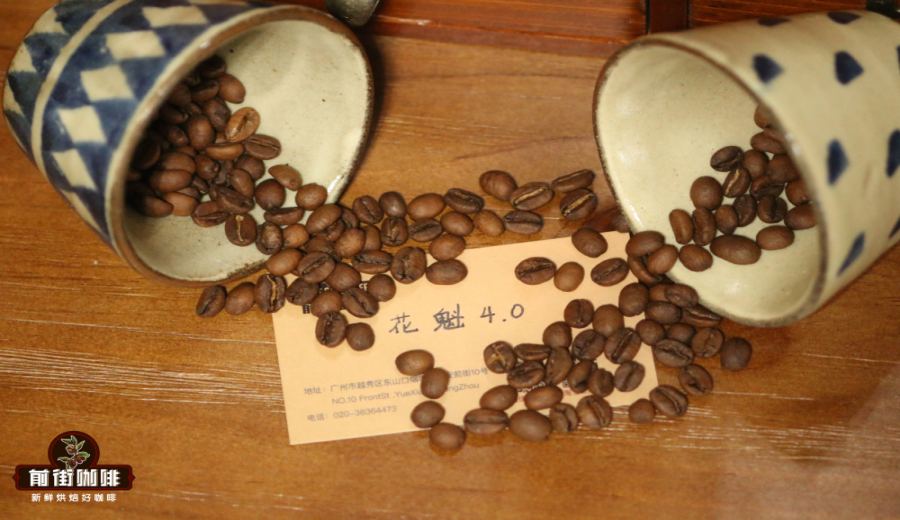
Taking the recent Huakui 4.0 as an example, this coffee still comes from the Buku Abel processing station, located in the Hambella area of the Guji region in southeastern Ethiopia, at an altitude of 2350 meters. The name “Buku Abel” means “new place” in the local language, reflecting the area’s potential as an emerging coffee-growing region. Here, coffee trees often grow in pristine forests and wild environments, coexisting with native banana trees, creating a unique microclimate and ecosystem.
This particular product uses the Dega variety, a rare variety that was ranked among the top 28 in the first Cup of Excellence (CoE) in Ethiopia in 2020. There are two theories about the origin of the name Dega: one says it comes from a type of firewood, as the aroma released during roasting resembles the smell of this wood burning; the other suggests that “dega” in Amharic refers to “highland and shady areas,” and this variety typically grows at higher altitudes. Although Dega did not make it into the top 14 of CoE and flavor data is limited, the 2020 vintage of Huakui 4.0 imported by this company is made from this variety.
By 2021, the Huakui series launched Huakui 5.0, with the origin and processing station remaining the Buku Abel in Hambella, at the same altitude of 2350 meters, but the variety was relabeled as “local landrace.” At this point, the producing area had expanded significantly, making it difficult to fully trace the origin of beans from the original Buku processing station, so the market no longer strictly required every batch to come from Buku Abel, instead using the importer Hongshun as the identifier. In other words, international roasters may not recognize the name “Huakui,” but they are well-acquainted with the “Hambella” region.
In terms of roasting, the company adjusts its roasting strategy based on the flavor descriptions provided by the green bean supplier and the moisture content of the beans. Freshly arrived Huakui green beans often exhibit pronounced coffee flower fermented wine-like aromas, distinct from the grassy scent typical of most green beans. Because Huakui 4.0 and 5.0 have relatively high moisture content, roasters usually extend the drying phase and moderately increase the temperature before first crack to minimize the loss of small-molecule aromatic compounds.
Taking the commonly used Taiwanese Yangjia 800N roaster as an example, it is recommended to start with an inlet temperature of 190°C, completing the drying phase in about 6 minutes and then moving into the yellowing phase (the yellow point is around 150–153°C). First crack usually occurs ataround 9 minutes and 50 seconds,and Huakui’s first crack is quieter than that of other beans. The development time is recommended to be controlled within1 to 1 minute and 30 seconds,which can be adjusted by regulating the air vent and heat. When the sampling spoon detects a clear strawberry jam aroma at approximately193°C,that is the ideal time to drop the beans. The overall roasting time should be kept within11 minutesto preserve the rich fruity and floral notes and sweetness.
For extraction, to fully showcase the layered and juicy fruit flavors of Huakui coffee, it is recommended to use a higher water temperature and finer grind size, paired with the V60 dripper, which allows for smooth water flow. The V60’s60-degree conical designallows the coffee grounds to be centrally distributed, naturally guiding the water flow toward the center during pouring, thereby extending the contact time between water and coffee grounds. Meanwhile, theclockwise spiral ribson the inner wall of the dripper create an appropriate gap between the filter paper and the dripper, increasing water flow speed. Combined with the large bottom hole, the overall extraction becomes more uniform.
The optimal flavor window for Huakui coffee is generally7 to 30 days after roasting.To ensure customers receive the freshest beans, it is recommended to ship the beans within5 days after roasting,allowing consumers to enjoy them at their peak flavor.
Recommended brewing parameters are as follows: usea V60 dripper,water temperature90°C,a coffee-to-water ratio of 1:15,,with 15 grams of coffee,ground to a fineness where 80% of the particles pass through aChinese No. 20 standard sieve,as a reference. Use a three-stage extraction method: first, preheat your equipment, add the coffee grounds, and gently tap to level them. Then pour30 grams of water for a 30-second bloom(don’t let it go too long to avoid astringency). Next, pour120 grams of waterin a circular motion from the center outward, completing this step at approximately1 minute.Finally, when the coffee bed begins to show, pour an additional90 grams of waterand remove the dripper once all the water has drained into the server. The total brew time should be around2 minutes and 05 seconds.。
The flavor profile of Huakui coffee typically features a brightcitrus acidity,a juicystrawberry fruitiness in the mid-palate,and a tea-like finish reminiscent oflemon black tea,with a sweet and balanced aftertaste. Whether you’re a coffee novice or a seasoned enthusiast, you can experience the rich layers and unique charm of Ethiopian natural-processed beans.
The above content is compiled by CoffeeHunters, a coffee news website.


