







Introduction:Delve into the globally renowned Hawaiian Kona coffee, from its 19th-century planting history and geographical conditions to today’s refined grading system and regional distribution. This article explains the five distinct grades of Kona coffee and provides practical pour over parameters and techniques for the Type 1 specialty beans from Queen Farm, helping you easily master this classic coffee that boasts both walnut and caramel notes.
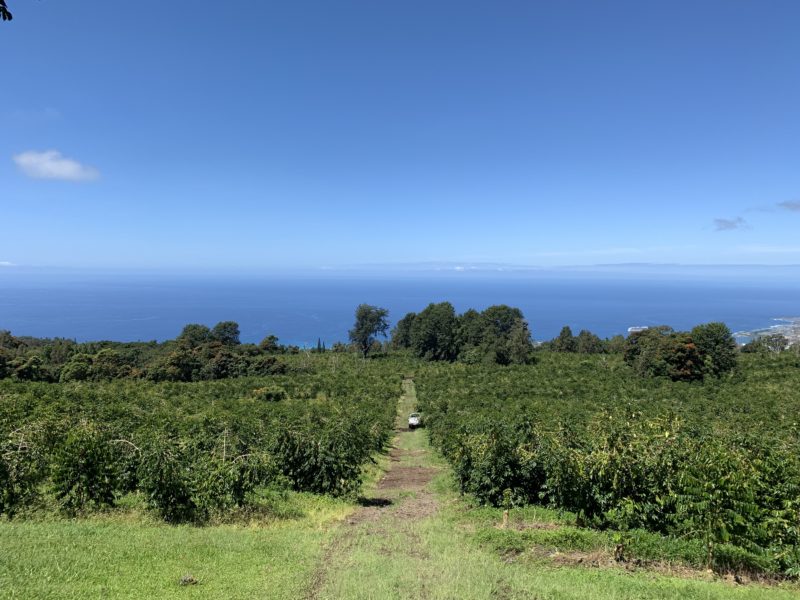
Although Hawaiian Kona coffee is grown in an island environment at altitudes of only 300 to 1100 meters—seemingly not meeting the conventional standards for high-altitude specialty coffee—it has achieved an unshakable position in the global specialty coffee market thanks to its unique volcanic soil, maritime climate, and meticulous management. The coffee here not only enjoys high recognizability but also remains highly sought after by coffee enthusiasts and collectors due to its scarce production and high cultivation costs.
The story of Kona coffee began in 1817, when the first Spanish advisor, Don Francisco de Paula Marin, introduced coffee seedlings to Hawaii, though initial trials were unsuccessful. It wasn’t until 1825, when Chie Boki, the mayor of Oahu, brought new seedlings from Brazil and successfully planted them in the Manoa Valley, that the history of Hawaiian coffee truly began. Subsequently, cultivation gradually expanded to the Big Island (Hawaiʻi Island), Kauaʻi, Maui, Molokaʻi, and Lānaʻi. Today, the state is home to approximately 950 coffee farms, most of which are family-run, covering a total area of 7,900 acres.
Early cultivation was primarily carried out by male labor, though women gradually joined later. However, the coffee industry’s development was not without challenges. In 1858, a coffee tree blight broke out on Kauaʻi, and with the rise of the sugarcane industry, many coffee plantations were forced to convert or were abandoned. After the U.S. took over Hawaii in 1898, the protective coffee tariffs were abolished, prompting even more coffee farmers to switch to sugarcane. It wasn’t until the 1980s, when sugar prices declined, that coffee cultivation regained attention and gradually moved toward the premium market.
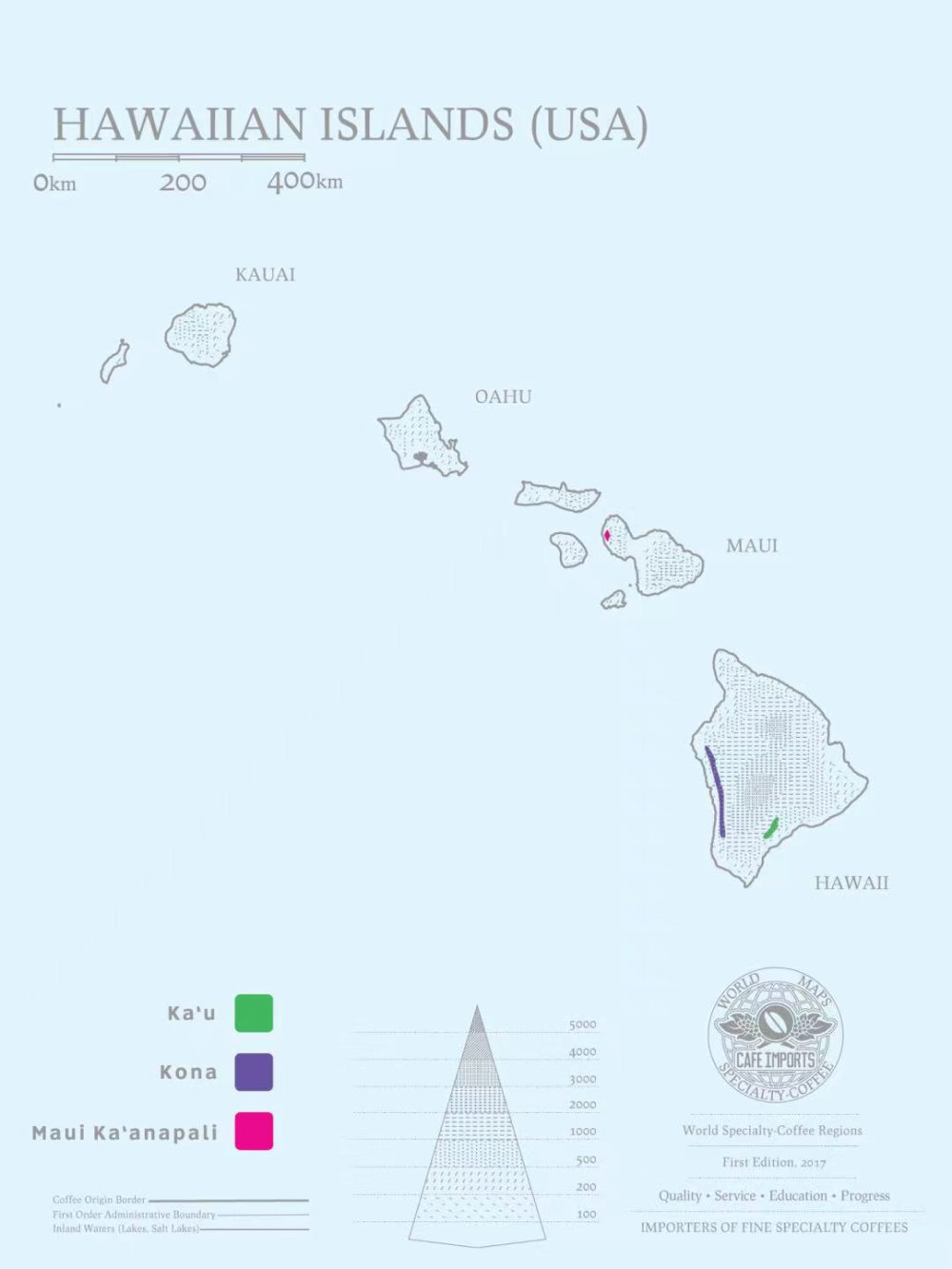
Currently, there are 12 coffee-growing regions across the Hawaiian Islands, among which the Kona region on the Big Island is the most famous. Due to its limited production and high labor costs, Kona coffee is priced comparably to Jamaican Blue Mountain in the market, making it a prized choice among specialty coffee lovers. In addition, coffee farms on islands such as Maui, Kauaʻi, and Lānaʻi have also gradually emerged in recent years, cultivating varieties including Typica, Mocca, and Catuai, offering a diverse range of options for the market.
Hawaiian coffee generally uses the washed processing method, where the pulp layer is removed through fermentation, followed by washing, drying, and hulling to ensure clean beans with clear flavors. Although this processing method is water-intensive, it effectively reduces impurities and enhances the purity of the final flavor.
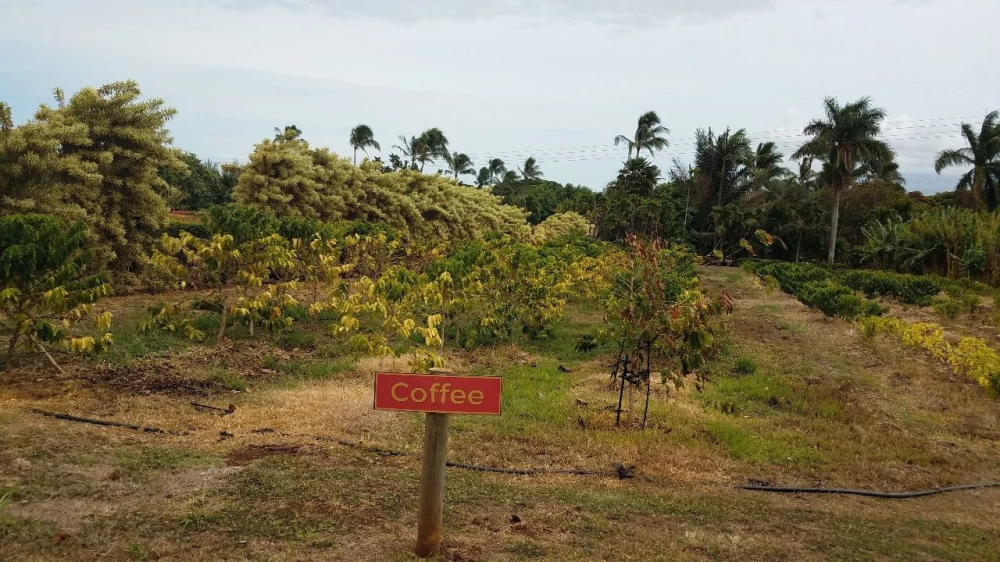
When it comes to Kona coffee, one cannot overlook the most representative Queen Farm. This farm won second place twice at the Hawaii Kona Coffee Cupping Competition in 2009 and 2011. Up to 70% of its coffee beans have been rated as top-tier specialty grade, with consistent quality and widespread acclaim. Even its entry-level specialty beans exhibit rich aroma and good complexity, making them highly favored by roasters.
Kona coffee is divided into two main categories based on bean size and appearance: Type 1 and Type 2. Type 1 refers to standard specialty beans, which are further subdivided into five grades: Extra Fancy, Fancy, Number One, Select, and Prime. Among them,Extra Fancyis the highest grade, not only featuring the largest beans and the most uniform appearance but also requiring strict manual sorting with an extremely low percentage of defective beans. It is the rarest Kona coffee available on the market.
Taking the Type 1 Kona coffee produced by Queen Farm as an example, it uses the Typica variety, grown at high altitudes of around 1100 meters, and is processed using the washed method. It presents a complex flavor profile of walnut, nut, caramel, and cream, with a soft acidity reminiscent of berries, noticeable sweetness, a smooth mouthfeel, and distinct layers—making it an ideal choice for pour over enthusiasts.
If you want to recreate the classic flavor of Kona coffee at home, it is recommended to use a KONO filter cone, paired witha water temperature of 88-89°C,a coffee-to-water ratio of 1:15, and a grind size offine sugar-like granularity(approximately 73% passing rate through a Chinese No. 20 sieve) for a three-stage extraction. The specific steps are as follows: start with a 30-second bloom using twice the amount of water as coffee grounds (e.g., 60 grams of water for 30 grams of coffee), then pour in a small circular motion until reaching 125 grams for the first pour. After the water level drops, continue pouring up to 225 grams to finish the extraction. The total time should be controlled to around 2 minutes, which helps fully highlight its rich aroma and full-bodied taste.
In summary, Hawaiian Kona coffee not only benefits from exceptional geographical and climatic conditions but also owes its unique value to each bean through its refined grading system and strict quality control processes. Whether you are a newcomer exploring specialty coffee or a seasoned connoisseur pursuing ultimate flavor, delving into Kona’s regional stories, grading standards, and pour over techniques will allow you to better appreciate this coffee art from the volcanic islands of the Pacific.
The above content is compiled by CoffeeHunters, a coffee news website.


