








Introduction:Delve into the DWD Santa Vini washing station located in Ethiopia’s high-altitude Sidamo region, and explore its unique “Red Cherry Project” harvesting standards and 96-hour anaerobic natural processing method. This article takes you through the breeding background of the 74158 variety and the captivating flavor profile of this coffee—showcasing citrus, pineapple, guava, and a rich wine-like finish—which makes it an unmissable deep dive for pour over enthusiasts and coffee tasting newcomers alike.
Sidamo, a renowned high-altitude coffee region in southern Ethiopia, produces coffee with rich and varied flavor profiles due to its complex terrain and diverse microclimates. This article focuses on the Santa Vini washing station under the DWD company, offering a comprehensive analysis—from regional environment, harvesting system, processing techniques, to varietal origins—of how this specialty coffee, processed with a 96-hour anaerobic natural method using the 74158 variety, exhibits a unique flavor wheel of citrus, pineapple, guava, and a bold wine-like finish.
The Sidamo region was established in 1942, deriving its name from the local ethnic group “Sidama,” who once had their own kingdom. Although there is ongoing academic and industry debate over the English spelling of the region (Sidamo or Sidama), the term “Sidamo” is more commonly used in international coffee trade. The region is situated on the Ethiopian southern plateau, adjacent to Lake Awassa of the East African Rift Valley and bordering Kenya. Thanks to its high elevation, cool climate, abundant rainfall, fertile soil, and shade from native trees, it provides an ideal environment for coffee cultivation. Coffee here is mostly grown at altitudes between 1,550 and 2,200 meters, especially above 2,050 meters, which not only slows down the ripening process of coffee cherries but also aids in the accumulation of aromatic compounds, resulting in deeper and more complex flavors. It also means the harvest season here tends to be later compared to other areas.
The administrative scope of Sidamo is vast and geographically fragmented. After multiple regional adjustments, it has become one of the most challenging coffee regions in the world in terms of defining clear boundaries. The Ethiopian Commodity Exchange (ECX) divides it into five major zones labeled A to E based on geographical indications, which are further subdivided into numerous sub-regions, totaling over 50 cooperatives and more than 200 wet mills. Due to significant differences in altitude, climate, soil, and microclimates, coffees produced by different villages or washing stations—even within the same region—often exhibit distinct individual characteristics.
The Santa Vini washing station under DWD, located about a 40-minute drive from the local town, is one of the higher-elevation processing facilities among the company’s 17 washing stations. If you visit the site, you’ll witness the scene of large quantities of fully red coffee cherries being processed centrally—all thanks to the “Red Cherry Project” initiated in 2007.
The “Red Cherry Project” was first introduced by a Dutch green coffee trader in 2007, aiming to select higher-quality coffee beans. The project requires coffee farmers to harvest manually and pick only fully ripe red cherries, avoiding unripe green ones, thereby ensuring the purity and consistency of the final extracted flavors. Compared to mechanical harvesting, manual selection is more costly but can effectively enhance the overall quality of the coffee.
The Santa Vini washing station also benefits from unique geographical and climatic conditions. Compared to other washing stations under the same company, such as the Gossi station, the Santa Vini area has a drier climate and lower average temperatures, resulting in a longer growth cycle for coffee cherries and allowing more time for the accumulation of nutrients and flavor precursors. After harvesting, all red cherries undergo preliminary sorting to ensure consistent ripeness before entering the anaerobic fermentation stage.
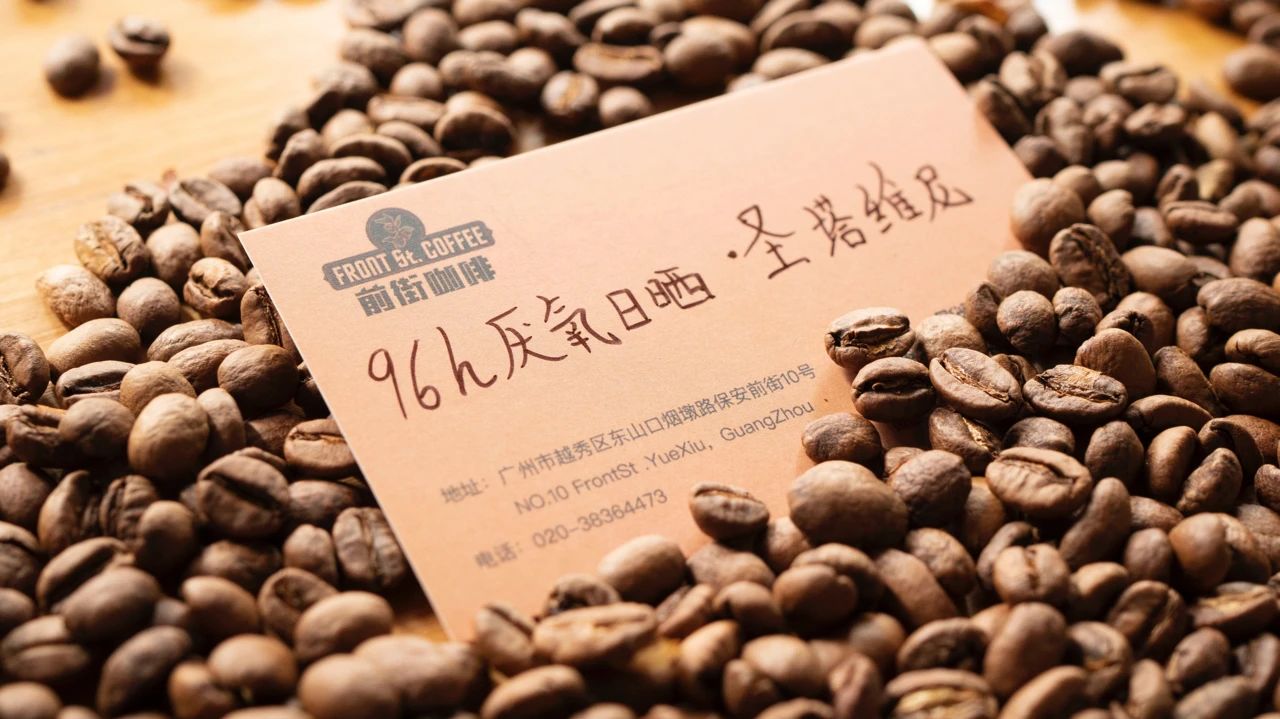
During processing, qualified whole red cherries are placed in sealed fermentation tanks, where carbon dioxide is injected to displace oxygen and initiate the anaerobic fermentation process. This stage lasts for 96 hours and is carried out under strictly controlled temperature and humidity conditions, facilitating the transformation and concentration of flavor compounds. This anaerobic fermentation technique enhances the sweetness, fruitiness, and layered complexity of the coffee, making it one of the popular methods in specialty coffee processing in recent years.
After fermentation, the coffee beans are evenly spread on elevated drying beds for sun drying over a period of 20 to 24 days. They are turned multiple times daily to ensure even moisture reduction. In case of high temperatures, shade nets are used to prevent over-drying or excessive surface exposure. Only when the overall moisture content drops to around 12% are the beans collected into storage for subsequent preservation and export preparation.
Regarding the variety number “74158,” it actually has a history tied to disease-resistant breeding. In the 1970s, Coffee Berry Disease (CBD) rapidly spread across Ethiopia, causing many coffee cherries to turn from green to black, eventually withering on the branches. In severe cases, yield losses could reach up to 80%. Initially, farmers resorted to chemical fungicides, but in the long run, finding varieties with natural resistance was the fundamental solution.
Starting in 1973, an agricultural research center (JARC) in a certain coffee-growing region launched a variety selection program. They set up 19 seed collection points in the southwestern area, gathering a total of 639 seed samples by 1975. After laboratory screening and field trials, 13 varieties were confirmed to have CBD resistance, along with traits such as drought tolerance, high yield, and good flavor. These varieties were subsequently assigned unified codes, starting with “74” or “75,” followed by a three-digit number. The “74” indicates that the variety was officially cataloged in 1974, while the following three digits represent the experiment number. The 74158 is one of them. It has a medium bean size and has gained widespread attention for frequently winning awards in international competitions (such as Ethiopia's Cup of Excellence). It is also the core variety in the top lot from this Santa Vini washing station, recommended by a well-known coffee brand.
The above content is compiled by CoffeeHunters, a coffee news website.


