







Introduction:Kenyan coffee is renowned for its bright acidity and complex flavors, with grades such as AA and PB being top choices for many coffee enthusiasts. But do you know how these grades are determined? This article delves into Kenya’s green bean grading system, including the definitions and characteristics of E, PB, AA, and AB grades, and explains the differences between peaberry and flat beans. Paired with practical cupping insights and pour over brewing recommendations, it helps you choose the right beans and brew them to bring out their best flavors.
Kenyan coffee has consistently earned high praise in the global specialty coffee market, especially for its vibrant fruity acidity, rich berry notes, and clear layered profiles. Among the many Kenyan coffee beans, we often hear grade codes like AA and PB—but do you truly understand what they represent? This article will comprehensively analyze Kenya’s official coffee grading system, from Grade E to Grade T, guiding you step-by-step through the definitions, screen size specifications, and common characteristics of each grade, and comparing the flavor differences between AA and PB peaberries.
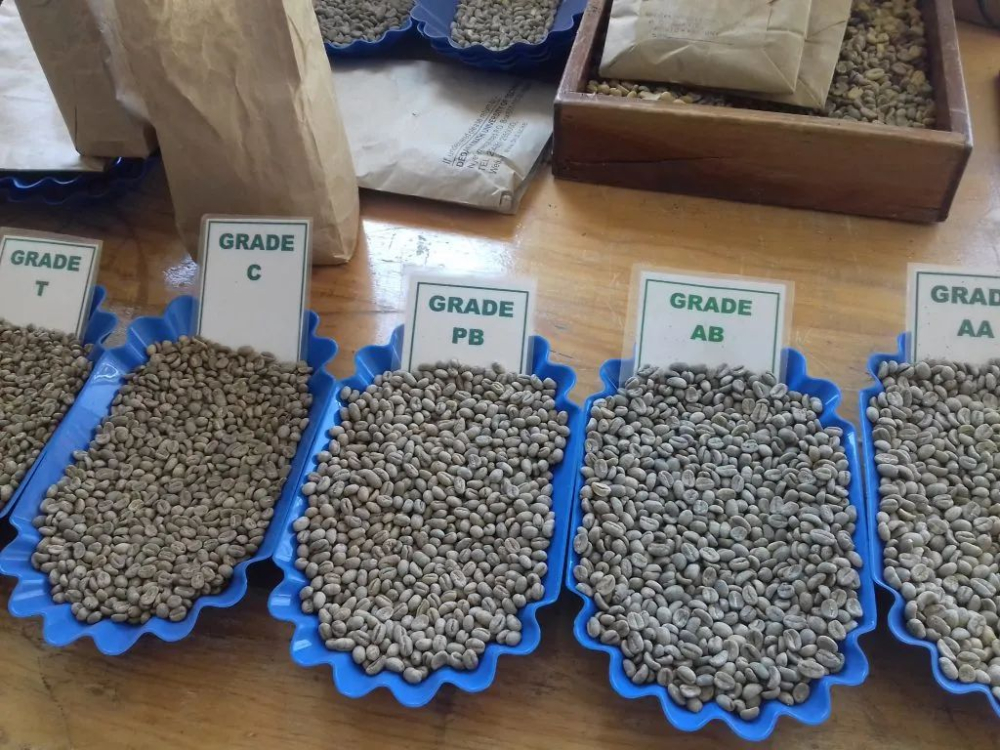
The grading of Kenyan coffee beans is primarily based on the size of the green beans, a method that ensures even heat distribution during roasting and avoids uneven roasting caused by variations in bean size. The most common grades include:Grade E (Elephant Bean),PB (Peaberry, peaberry bean),AA,AB,C,TT,T, and MH/ML (immature beans). Among these, Grade E consists of the largest-sized beans, commonly known as elephant beans, while PB beans occur when only one round bean forms inside the coffee cherry—making up only about 5% of the yield—and are considered to have more concentrated and unique flavor profiles.
Grade AA is one of the highest-rated grades of Kenyan coffee, typically screened at 18 mesh, indicating larger and more uniform bean size. These beans are mostly grown at altitudes above 1700 to 2000 meters and are known for their intense berry acidity and clear fruit tones. Grade AB is a blend of Grade A and Grade B beans screened at 16 mesh, slightly smaller than AA but still offering good flavor, often representing a great value option. Grade C beans are around 15 mesh, with quality and size decreasing further; TT grade beans are lightweight ones sorted from AA, AB, and E grades using air separation; Grade T generally consists of defective, broken, or very small beans. Lastly, MH and ML refer to immature coffee beans, usually exhibiting thinner or unbalanced flavors.
When it comes to flavor, the difference between Kenyan AA and PB peaberries is often a key point of interest for coffee lovers. Grade AA typically exhibits strong, bright acidity—like red berries, lemon, and tomato—paired with a clear sweetness and tea-like aftertaste, making it ideal for those who enjoy well-layered, balanced acidity and sweetness. PB peaberries, being single round beans, experience more concentrated heat distribution during fermentation and roasting. Common flavors include dark berries, black plum, and blackcurrant, with a fuller body and moderate sweetness, while the acidity is relatively softer and the aroma more restrained.
To better understand the actual performance of PB peaberries, we take as an example a pearl-sized peaberry from Kenya’s Nyeri region, produced by the Ichamama Factory. These beans are grown at an altitude of 1700–1750 meters in volcanic soil, with the SL28 and SL34 varieties, and are processed using washed methods followed by African raised bed sun drying. The overall flavor profile is dominated by berries, accompanied by soft acidity and a full body. Given the batch’s higher moisture content and density, we extended the drying phase and adopted a staged firing strategy during roasting to enhance berry aroma and sweetness, while avoiding astringency due to insufficient heat penetration in the bean core.
In practical cupping, we tested four different roasting approaches, including Fast-Start Slow-Finish (FSSF), enhanced Maillard reaction via yellowing-phase firing, caramelization for added sweetness through browning-phase firing, and Slow-Start Fast-Finish (SSFF) with gradual firing. Ultimately, we found that extending the drying time moderately and applying heat during the browning and first crack stages delivered the most complete expression of black plum, blackcurrant, and sugarcane sweetness, while retaining a full body and soft acidity. Compared to the bright, vibrant acidity of traditional Kenyan AA, this PB peaberry showcases a rounder and more restrained fruit character.
For comparison, we also conducted a pour over test using a batch of Kenyan Dimani Girl’s AA coffee beans. These beans come from the Ndima-ini Factory in Nyeri, grown at 1700–1900 meters, also of the SL28 and SL34 varieties, and processed using the K72 washed method. Their flavor highlights include bright dark berries, high acidity, and clear, layered fruit aromas. For pour over brewing, we recommend using a V60 dripper, with water temperature controlled at 90°C, a coffee-to-water ratio of 1:15, and grind size at approximately 77% passing through a standard 20-mesh sieve (medium-fine grind). The extraction method involves a 30-second bloom with 30 grams of water, followed by a slow pour to 125 grams, then continuing to 225 grams to complete the brew, taking about 2 minutes in total—this fully highlights its balanced acidity and sweetness, along with a delicate finish.
In summary, understanding the grade classifications of Kenyan coffee beans not only helps you select beans that suit your taste preferences, but also gives you clearer direction when purchasing and evaluating them. Grade AA is ideal for those seeking high acidity, brightness, and layered fruitiness, while PB peaberries offer a more concentrated, full-bodied, and gentle flavor experience. No matter which grade you choose, pairing it with the right roasting and brewing methods will allow the unique charm of Kenyan coffee to shine through.
The above content is compiled by CoffeeHunters, a coffee news website.


