







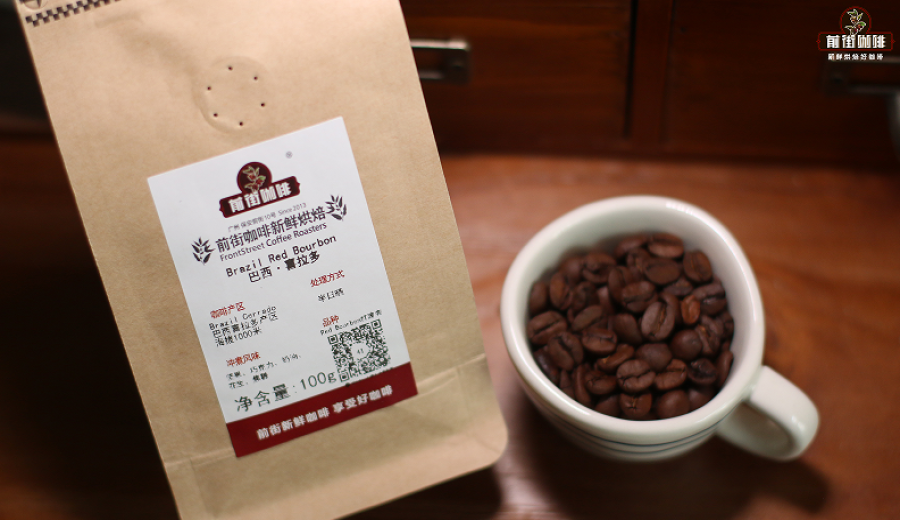
Introduction:Drip bags are a simple way to enjoy freshly ground coffee flavor in a busy life, but do you know how to brew a cup that rivals what you’d get at a café? Taking Brazil’s Cerrado region Red Bourbon drip bag as an example, this article walks you through the story behind this coffee—from the climate challenges of the growing region, variety characteristics, to the honey process. We’ll also break down key steps such as a brewing temperature of 91°C, a coffee-to-water ratio of 1:15, blooming, and pulse pouring, so you can enjoy a layered coffee experience with just a drip bag.
In recent years, more and more people have been enjoying coffee in their daily lives, but for non-professionals, it’s not always easy to enjoy a high-quality cup anytime, anywhere. Drip bags have become an ideal solution that balances convenience and quality. This article focuses on a certain brand’s current-season Brazilian Red Bourbon drip bag coffee, guiding you step-by-step through the producing region background, variety features, and brewing techniques to master the secrets of brewing great-tasting coffee.
Brazil has long been the world’s largest coffee producer. Its coffee plantations are mainly located in the highland areas of tropical savanna climates, with an average annual temperature of about 20°C. The flat terrain and favorable climate make mechanized harvesting and large-scale cultivation possible, creating a massive production base. However, in 2020, affected by both the pandemic and extreme drought, Brazilian Arabica coffee beans faced serious challenges. According to observations by senior industry analysts, some farms experienced drought impact ranging from 30% to 100%. Although Mogiana and Cerrado, thanks to their terrain and better irrigation systems, saw relatively smaller reductions in yield, the overall supply was still disrupted, affecting market price trends.
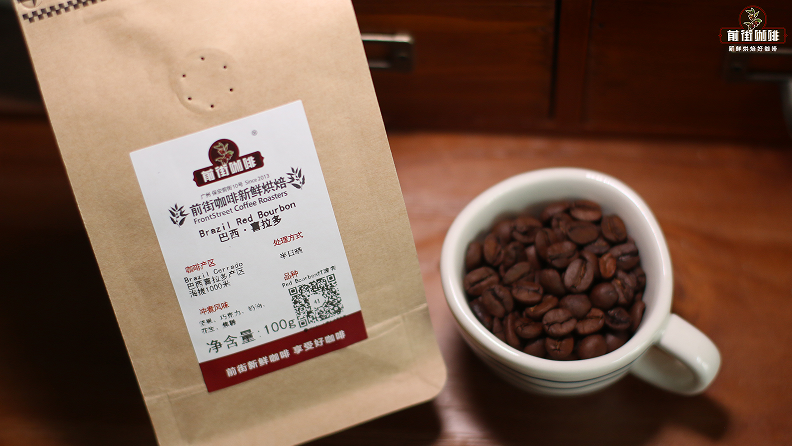
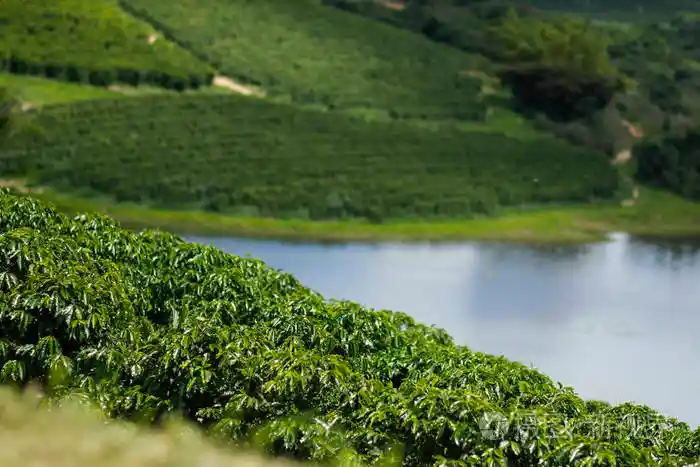
The Brazilian Red Bourbon beans used by a certain brand come from the Cerrado region—considered a representative area for specialty coffee in Brazil, strictly defined as coffee grown at altitudes between 1100 and 1300 meters. This elevation gives the beans a notably rich body and clear sweetness, while avoiding the earthy off-flavors often found at lower altitudes.Coffee trees in the region are typically pruned to a height below 150 cm to facilitate harvesting and maintain fruit quality.Although Cerrado is known for its natural (sun-dried) processing method, the Red Bourbon selected by this brand uses a honey process, retaining some fruity aroma while adding unique fermentation layers.
The so-called Red Bourbon is actually a variety of the Bourbon type, named for its bright red fruit when ripe. Compared to regular Bourbon, Red Bourbon grown at high altitudes often exhibits a richer aromatic profile, with bright acidity and delicate tones reminiscent of red wine. In terms of processing, the honey method combines characteristics of washed and natural processes: the skin and pulp are first removed, but instead of undergoing fermentation in water tanks, the beans are directly sun-dried.This results in significantly less water usage compared to traditional washed processing, yet retains more of the original flavors.Although this method is not mainstream in Cerrado, it brings a unique balance to this Red Bourbon.
Mastering the key points of drip bag brewing allows you to easily recreate café-level flavors. First, tear along the “OPEN HERE” dashed line on the packaging, then place the filter paper holder securely over the cup rim. It’s recommended to use a medium-sized ceramic or glass cup to ensure enough space to observe the extraction process.
Water temperature control is key—using 91°C hot water as the baseline.This temperature effectively extracts the sweetness and acidity of the Red Bourbon without bringing out overly harsh tannins due to excessive heat. Each drip bag contains approximately 10 grams of coffee.The recommended coffee-to-water ratio is 1:15, for a total water volume of about 150 milliliters.This ratio balances richness and freshness.
The actual process is divided into three stages: the first step is to pour about 20 milliliters of hot water in a circular motion to evenly wet the coffee grounds. This action is commonly called “blooming,” aiming to awaken the coffee cells and release aroma. Let it sit for 20 seconds to allow gases to fully escape. Then continue slowly pouring water in concentric circles up to 150 milliliters, maintaining a steady flow and covering the entire coffee bed. The total extraction time is recommended to be around two minutes.
After completion, remove the drip bag and gently press to squeeze out excess liquid (avoid over-squeezing to prevent over-extraction). You can then add milk or sugar according to personal taste. Be careful not to let the water stream directly hit the edge of the filter during brewing to avoid channeling, which can affect extraction evenness. Master these details, and you can enjoy Brazilian Red Bourbon flavors at home that rival those made by professional baristas using pour over methods.
The above content is compiled by CoffeeHunters, a coffee news website.


