








Introduction:The world of specialty coffee is full of jargon, and among the most frequently confused concepts are COE and SOE. The former is a globally renowned specialty green coffee competition, while the latter refers to espresso made from a single-origin bean. This article provides a detailed breakdown of the Cup of Excellence (COE) competition process, judging system, as well as the extraction characteristics of SOE (single-origin espresso), helping readers understand the differences between the two and exploring whether SOE is truly superior to blended espresso.
In the specialty coffee field, the English acronyms COE and SOE often puzzle many coffee enthusiasts. On the surface, they may seem related, but in reality, they belong to entirely different domains. COE, short for Cup of Excellence, is the most authoritative global specialty green coffee competition, first held in Brazil in 1999 by the Alliance for Coffee Excellence (ACE). It has since expanded to major coffee-producing countries such as Colombia, Guatemala, and Panama. SOE, on the other hand, stands for Single Origin Espresso, meaning espresso made using beans from a single origin. This article will delve into the fundamental differences between the two from aspects such as competition mechanisms, judging criteria, and extraction characteristics, and answer the common question of whether SOE is necessarily better than traditional blended espresso.
As specialty coffee becomes more popular, more consumers are beginning to explore the knowledge behind their coffee, and various English abbreviations have emerged. Among them, COE and SOE are often misunderstood as the same thing. In fact, these two represent completely different concepts. COE is the abbreviation for Cup of Excellence, translated in Chinese as “卓越杯” (Excellence Cup), and is internationally recognized as the most authoritative and well-known specialty green coffee competition. The competition was first launched in Brazil in 1999 by the Alliance for Coffee Excellence (ACE), and has now become one of the most credible green coffee competitions in the world.
The COE competition's judging panel consists of international cupping experts. Over the course of approximately three weeks, each competing coffee bean undergoes at least five rounds of rigorous cupping, and the top ten beans face an additional round of finals. Coffee farmers who stand out in the COE competition not only gain international recognition but also achieve substantial earnings through the auction process, which they can reinvest in improving coffee quality. This positive cycle not only gives consumers the chance to taste higher-quality coffee but also promotes sustainable development in coffee-growing regions.
The COE competition originated in Brazil in 1999 and has since been gradually promoted to major producing countries such as Colombia, Guatemala, Panama, Costa Rica, and Nicaragua. In recent years, it was held for the first time in Ethiopia, demonstrating its continuously expanding international influence. The entire competition is divided into three main stages: the pre-selection phase (Pre-selection), the national jury phase (National jury), and the international jury phase (International jury).
During the pre-selection phase (Pre-selection), the judging team is composed of professionals from within each country, with no participation from official ACE judges. This stage’s judging panel typically consists of 12 to 18 professionals, with strict standards set for aspects such as the uniformity of coffee bean roasting and the cupping process. Each entry must pass meticulous scrutiny. Only coffee beans that score 85 points or above in cupping are eligible to advance to the national jury phase. For example, in one particular competition, out of 1,459 entries, 150 beans advanced to the next round due to outstanding performance.
Next comes the national jury phase (National jury), where the judges are still domestic professional cuppers. This phase involves two rounds of cupping: the first round selects 90 beans scoring 85 or above from the initial 150; the second round further narrows these down to 40 beans, which are then sent to the international jury phase. Such a rigorous selection mechanism is one of the reasons why the COE competition enjoys high international authority. For instance, in the first Ethiopian COE competition in 2020, a coffee merchant consortium successfully bid on the 22nd-place coffee bean in collaboration with other traders, showcasing complex flavor notes including citrus, lychee, honey, cream, and fermentation aromas.
Compared to COE, which is positioned as a green coffee competition, SOE (Single Origin Espresso) is a method of preparing espresso — specifically, espresso made from a single-origin coffee bean, in contrast to the traditional commonly used espresso blends. Nowadays, many coffee shops offer SOE options, often available for just a small additional charge. SOEs are generally roasted to a light to medium level, which better highlights the unique flavor characteristics of their origin.
With the spread of specialty coffee concepts, many consumers are beginning to pursue the purity and uniqueness of flavors. Whether it's single-origin pour over or single-origin espresso, both reflect an emphasis on flavor details. However, this has also led some to develop a misconception — that SOE espresso is necessarily better than espresso made from blends. But in reality, whether SOE espresso tastes better is not absolute.
Some SOEs do manage to showcase flavors while maintaining good body, especially when used in milk or water-based drinks. But in most cases, consumers may find that coffee beverages based on SOE do not perform as impressively as expected, and may even be inferior to espresso made from blends. There are several key factors behind this.
First, coffee as an agricultural product is highly susceptible to natural conditions such as climate and soil, and differences in roasting approaches across batches can also lead to flavor fluctuations. Even in the same café, if you’ve previously enjoyed an outstanding SOE, you might find the flavor of the same origin beans less impressive on another occasion — this could be due to a new harvest season or adjustments made by the roaster.
Additionally, early in the industry, it was widely believed that using single-origin beans directly for espresso extraction resulted in overly prominent and unbalanced flavors, leading to the development of the concept of blends. By mixing beans from different origins and processing methods, the extraction flavors are balanced, ensuring stable performance of espresso across different harvest seasons or roast batches.
Another common issue lies in the roast level. To highlight the flavor characteristics of a single origin, many SOEs are roasted lightly, which can showcase bright acidity and fruity floral notes, but often lacks sufficient body. Light-roast beans may demonstrate good body and flavor balance in pour over, but during espresso extraction — where brewing time is shorter — the body-enhancing compounds in light-roast beans are not fully released, resulting in a thinner final drink, which may taste even more bland when milk or water is added.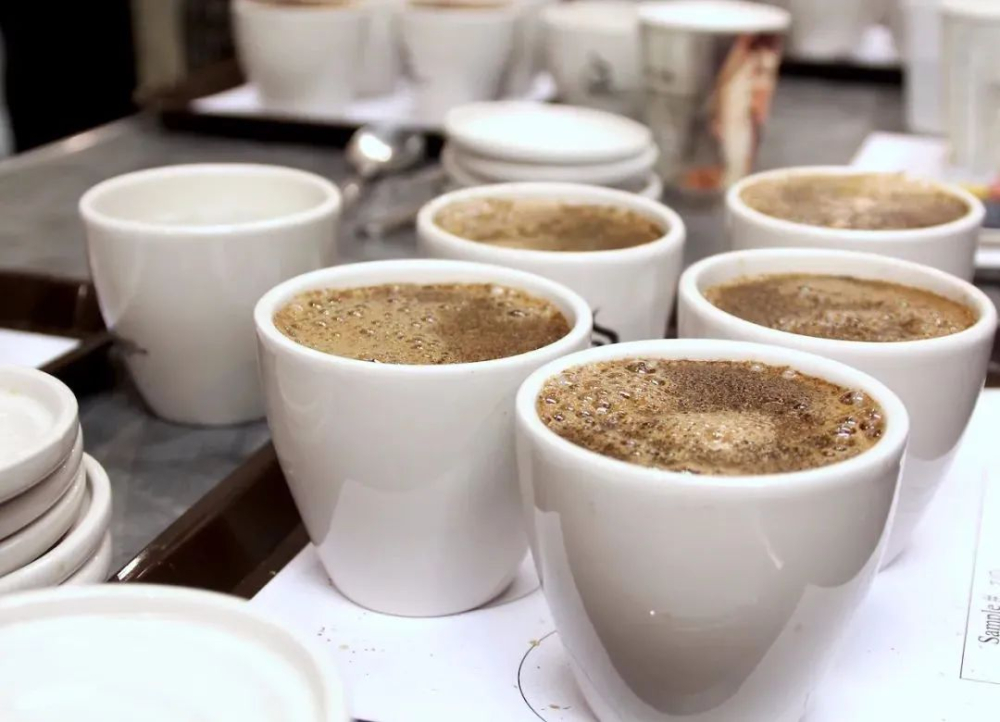
The above content is compiled by CoffeeHunters, a coffee news website.


