







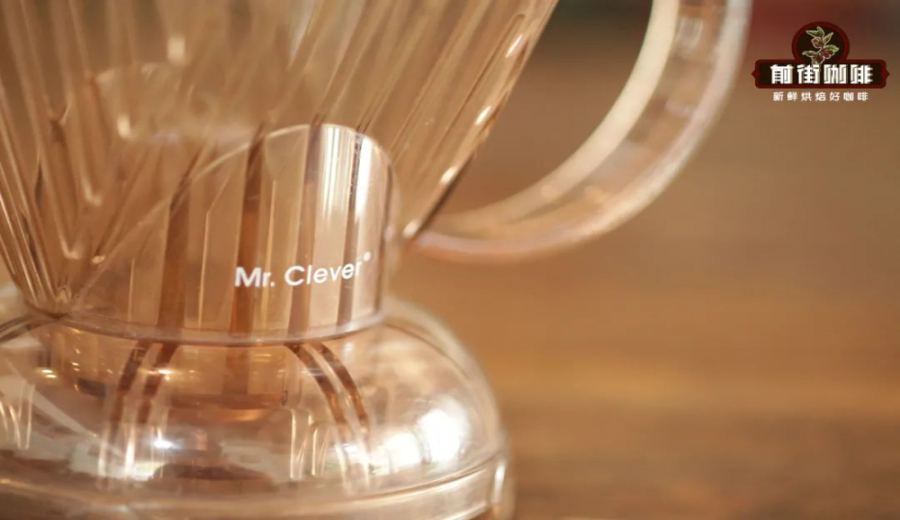
Introduction:The Clever Dripper is an innovative brewer that combines immersion and drip filtration, developed by a Taiwanese manufacturer. Its standout feature is a valve at the bottom that can be controlled to open or close, allowing precise control over the coffee extraction time. This article will detail the design origins, internal structure, and operational principles of the Clever Dripper, and provide practical pour over parameters and hands-on demonstrations for key variables such as grind size, water temperature, coffee-to-water ratio, and immersion time—helping you easily master stable and flavorful extraction techniques.
The Clever Coffee Dripper is an innovative brewer from Taiwan’s EK INTL company. Its most distinctive feature is a valve at the bottom that can be opened or closed, allowing you to freely determine the coffee immersion time. This design sets it apart among various pour over tools. The inspiration for this tool actually comes from the same brand's tea brewing device, the HandyBrew, which cleverly introduces the concept of immersion brewing into coffee. As a result, it differs significantly from common drip brewers like the V60.
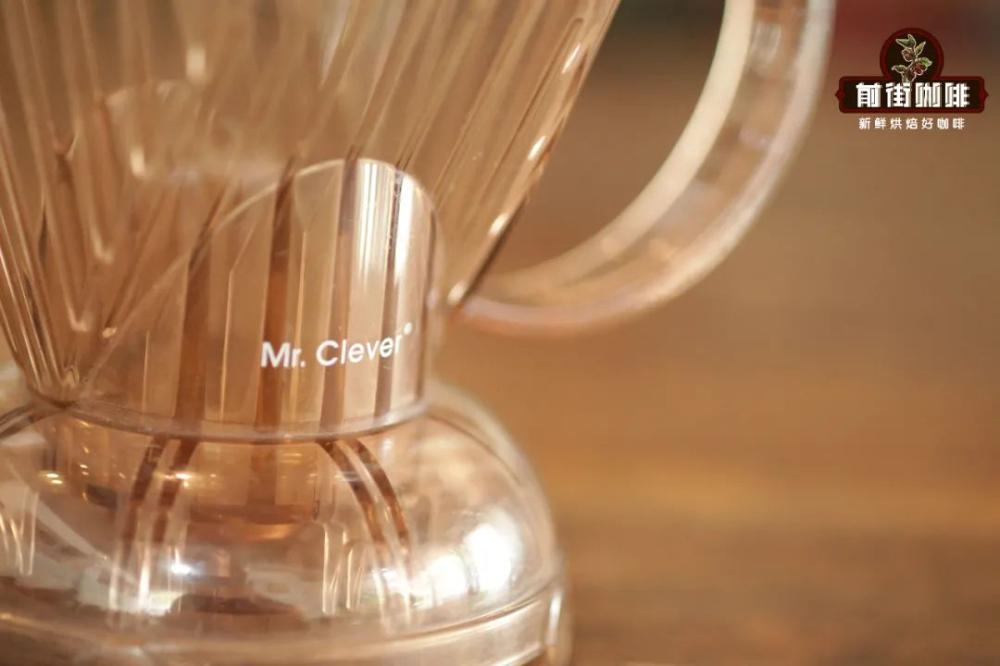
Although many drippers with valves at the bottom on the market are referred to as "Clever Drippers," in reality, only products from the Mr.Clever brand are the authentic original designs. The reason this dripper is so popular is due to its simplicity and ease of use—just set the immersion time, and without any complicated pouring techniques, you can still achieve a consistently balanced cup of coffee. It’s especially beginner-friendly.
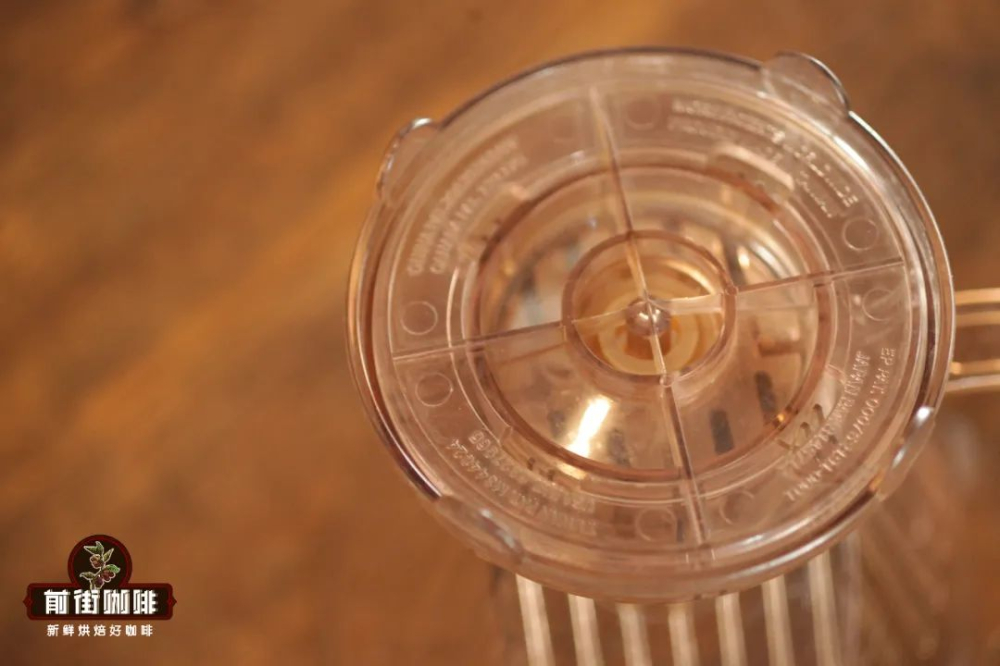
Structurally, the Clever Dripper is generally divided into two layers: an outer support frame and an inner cup that actually holds the coffee grounds and water, equipped with a push-button valve. When the Clever Dripper is placed flat on a table or a server, the valve remains closed, allowing the coffee grounds and hot water to fully immerse. Once the ideal immersion time is reached, simply press the center button at the bottom, and the valve will open, letting the brewed coffee flow into the container below.
Compared to drippers like the V60, which focus on drip filtration, the Clever Dripper’s biggest advantage is its integration of the immersion brewing method. This allows the water and coffee grounds to remain in continuous contact within an enclosed space, reducing the demand for advanced pouring skills. As a result, even beginners can achieve relatively stable and consistent coffee flavors simply by adjusting the immersion time. The key factors influencing the final coffee outcome mainly include grind size, water temperature, coffee-to-water ratio, and immersion time.
For example, using the same coffee beans under fixed water temperature, coffee-to-water ratio, and extraction time—if the grind is too coarse, the extraction of flavor compounds from the coffee may be insufficient, resulting in a thin body and lack of complexity. Conversely, if the grind is too fine, it may lead to over-extraction, producing undesirable flavors like woody or astringent notes. Therefore, choosing the appropriate grind size is particularly important. Generally, for medium to light roasted beans, a medium-fine grind (such as around 75%-80% passing through a #20 standard sieve) is recommended; for medium to dark roasted beans, a medium-coarse grind (around 65%-70% sieve passing rate) is suggested.
In addition, water temperature is also a crucial factor in extraction. Water that is too hot can accelerate flavor release, potentially leading to over-extraction, while water that is too cold may result in under-extraction, failing to fully showcase the coffee’s aroma and acidity. For medium to light roasted beans, a water temperature of about 90°C–91°C is recommended; for medium to dark roasted beans, it is advisable to lower the temperature to 88°C–89°C to achieve a more balanced extraction.
According to experimental references from the SCA Golden Cup Standard, when using a 1:15 coffee-to-water ratio for extraction, the coffee extraction yield typically falls between 17.79%–18.73%. Although this barely meets the edge of the Golden Cup standard, in actual sensory evaluation, this ratio often delivers satisfying flavor performance and is suitable for the brewing needs of most commonly available coffee beans.
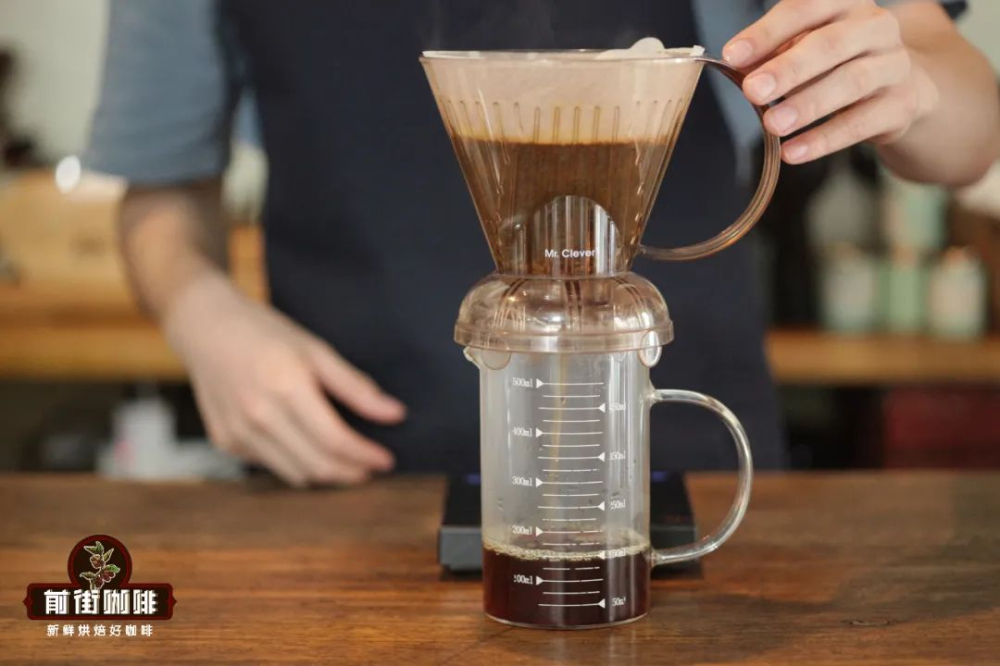
Below is an actual brewing process example using Costa Rica Stone Manor blueberry-flavored coffee beans: water temperature 90°C, coffee dose 15g, coffee-to-water ratio 1:15, using a medium-fine grind (approximately 75% passing through a #20 sieve). First, fold the filter paper and place it into the Clever Dripper. Put the dripper on top of a server or coffee cup, and rinse the filter paper with hot water while preheating the equipment. Next, move the Clever Dripper onto the scale, add the coffee grounds—the valve will naturally close at this point.
The first stage is to pour 30g of hot water for the bloom, lasting about 30 seconds, which helps to awaken the aroma of the coffee grounds. After the bloom, continue pouring until the total water volume reaches 225g, then let it sit and steep for about 1 minute and 50 seconds. Once the steeping time is up, move the Clever Dripper over the receiving vessel, gently press the bottom to open the valve, and allow the brewed coffee to slowly drip out. This process takes about 15 seconds, making the total extraction time approximately 2 minutes and 5 seconds.
Through this immersion-based design, users can more flexibly adjust the coffee concentration and flavor profile according to personal taste by modifying the coffee-to-water ratio or extending/shortening the immersion time. Coffee brewed with the Clever Dripper usually has high clarity and good body, with a rounded sweetness—making it highly suitable for coffee lovers who enjoy balanced flavors.
The above content is compiled by CoffeeHunters, a coffee news website.


