







Introduction:Yirgacheffe is a classic producing region in the specialty coffee world, renowned for its distinctive citrus, jasmine, and berry flavors. This article delves into the region's geographical background, differences in processing methods, introduces how the Red Cherry Project has elevated quality, and details the flavor profiles and distinctions between washed and natural Yirgacheffe, along with practical pour over brewing suggestions to help readers gain a more comprehensive understanding of this popular coffee bean.
Yirgacheffe has long been a classic among specialty coffee enthusiasts. Whether in single-origin pour overs or espresso blends, its signature citrus, jasmine, and berry notes always deliver a bright and refreshing taste experience. This article will start with the origin of the region and the characteristics of the coffee varieties, explore the differences between the two main processing methods—washed and natural—and introduce how the Red Cherry Project has improved local coffee quality, further analyzing the green bean grading system. At the same time, practical pour over parameter suggestions will be provided so that readers can find suitable references whether choosing a daily drinker or trying an advanced lot.
Although Yirgacheffe is often regarded as an independent producing region, it is actually a small town within the Gedeo zone in southern Ethiopia, situated at an altitude of about 1700 to 2100 meters. Originally part of the Sidamo region, it gradually stood out due to its highly distinctive coffee processing style and flavor profile, and is now recognized as a standalone producing area. In ancient Ethiopian, "Yirgacheffe" is composed of "Yirga," meaning peaceful, and "Cheffe," referring to a swamp or wetland, together implying "let us settle in this wetland."
Yirgacheffe coffee is known for its unique citrus fruit aroma, subtle jasmine floral notes, and bright, clean acidity, with an overall clean taste, distinct layers, and almost no off-flavors. To promote the coffee industry, the Ethiopian government registered the flavor profiles of three major regions including Yirgacheffe as commercial trademarks in 2004, and established the Ethiopian Commodity Exchange (ECX) in 2008. Through a unified grading and auction system, it ensures the consistency of quality and flavor in exported coffee.
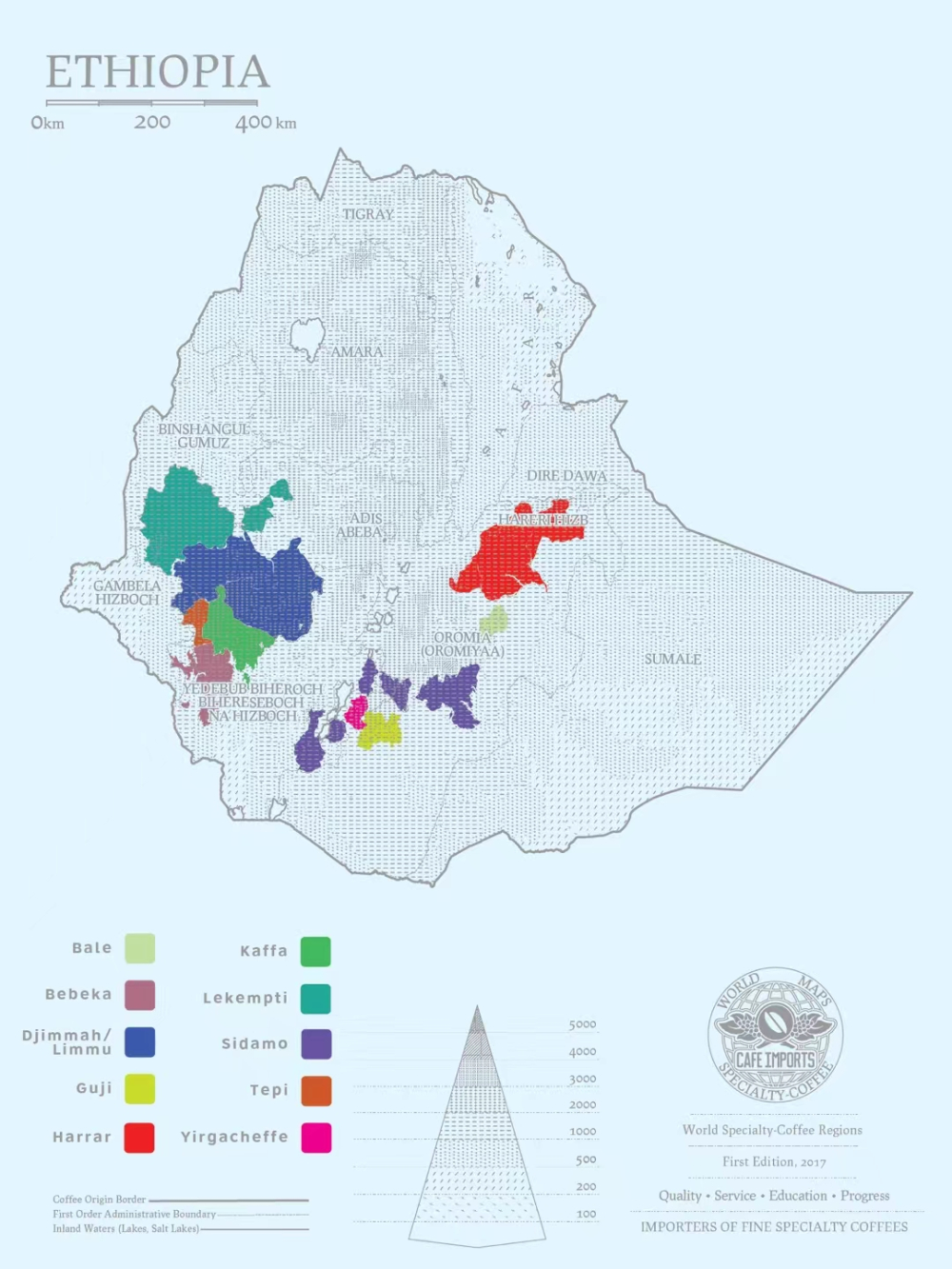
Surrounding Yirgacheffe are smaller regions such as Wenago, Kochere, and Gelena Abaya, whose coffee flavors are similar to those of Yirgacheffe, with Kochere even being categorized under the Yirgacheffe regional classification. The Yirgacheffe Coffee Farmers Cooperative Union (YCFCU), established locally, consists of 28 cooperatives, each typically formed by farmers from a single village. These cooperatives are responsible for processing coffee cherries harvested from their own village or nearby areas and selling them under the cooperative's name. Most farmers still maintain a smallholder model, growing coffee either on their own or intercropped with other crops. After harvest, the coffee cherries are sent to the cooperative for processing, which is why the names of cooperatives, rather than individual farms, are commonly found on retail coffee bags.
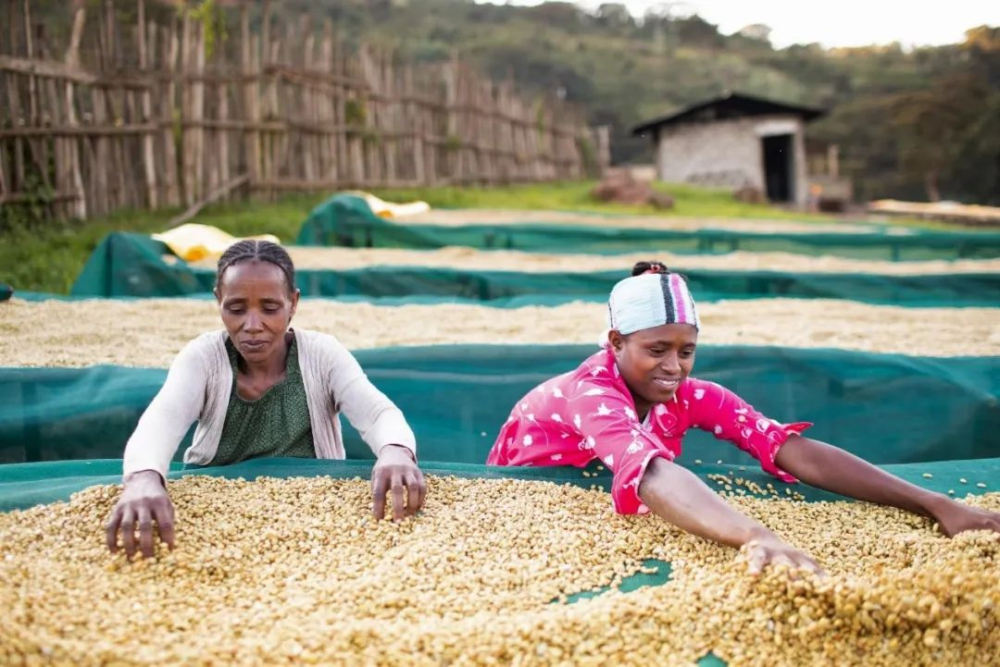
Washed processing is one of the most common methods used for Yirgacheffe. In the early days, traditional African sun drying was often employed, where coffee cherries were directly spread on the ground, but this method was prone to producing off-flavors. Later, washing techniques from Central and South America were introduced, involving the removal of the pulp and skin, fermentation to remove the mucilage, thorough washing with clean water, and finally drying. This method enhances the acidity and floral-fruity aromas of the coffee while reducing the risk of over-fermentation. Typical washed Yirgacheffe often exhibits jasmine floral notes, citrus tones, and soft berry acidity and sweetness, resulting in a clean and layered taste.
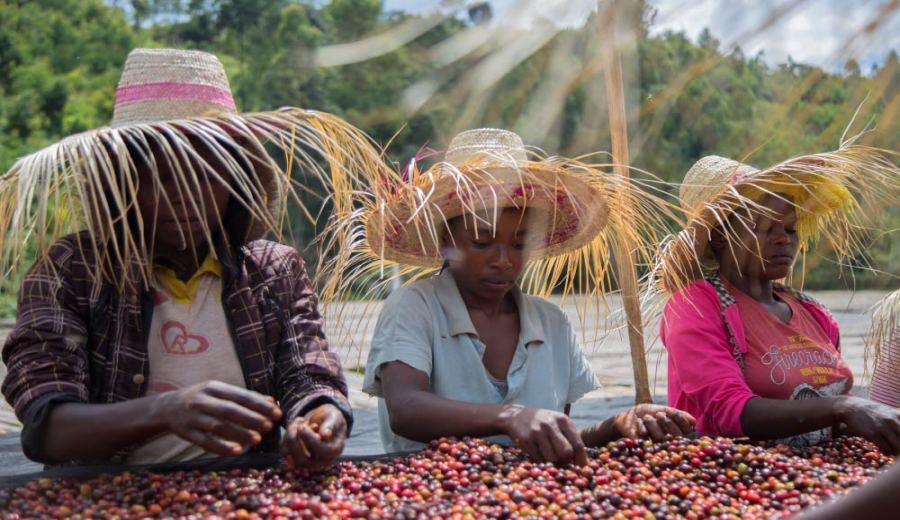
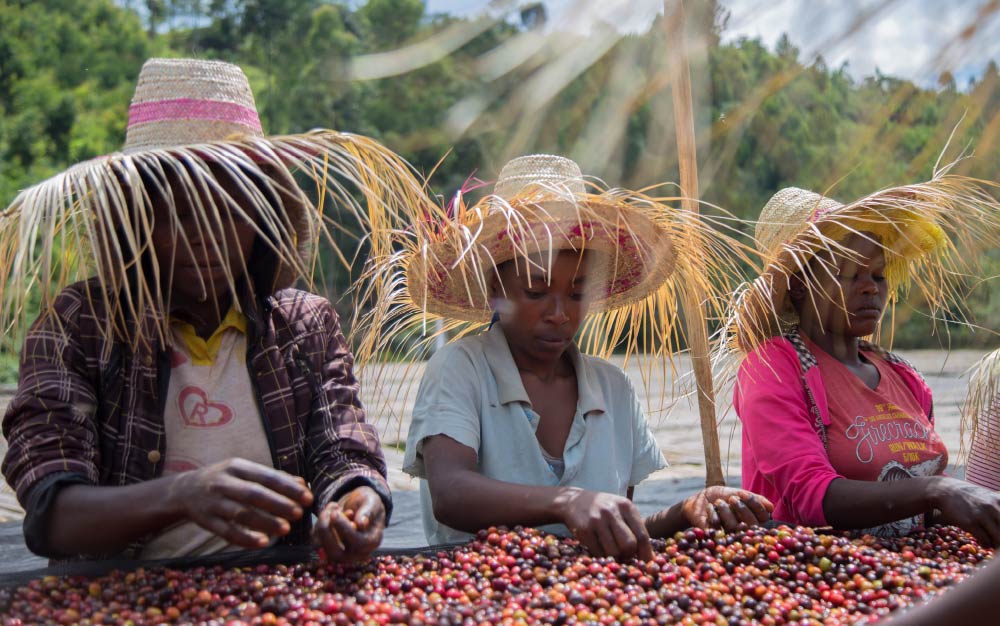
Natural processing is another common method, especially widely used in high-quality projects like the Red Cherry Project. This method selects only fully ripe red coffee cherries, which are then sun-dried over a long period with regular manual turning to ensure even dehydration, reducing the moisture content of the green beans to 11–12%. Natural Yirgacheffe usually has richer berry acidity and a sweet sensation of fermented fruits, offering a more intense and layered flavor. Many roasters use natural lots in espresso blends to add body and complexity to the coffee.
Ethiopia’s coffee grading system is primarily based on processing methods and cupping results. It is generally divided into two main categories: Class A and Class B, and further subdivided into nine grades from G1 to G9. Among these, G1 and G2 are considered high-quality specialty grades, requiring a cupping score of 85 or above. G1 represents extremely low defect levels (0–3 defects per 300 grams), while G2 allows 4–12 defects and is a preferred choice in many high-end coffee markets. This grading system helps buyers select coffee beans with different flavors and price points according to their needs.
When brewing Yirgacheffe, it is recommended to use beans roasted to a medium-light level to highlight its bright acidity and floral-fruit aromas. Since it is grown at high altitudes, the coffee beans have higher density, so a slightly higher water temperature of 92–93°C is suggested, paired with a finer grind size (such as 80% passing through a #20 sieve), and using a fast-flow V60 filter cone, which helps balance the flavor layers. Specific parameters can be set as 15 grams of coffee, a 1:15 coffee-to-water ratio, starting with a 30-second bloom using twice the amount of coffee by weight, followed by segmented pouring—with the first pour reaching 125 grams before a brief pause, then pouring the remaining 100 grams to complete the extraction.
In summary, washed and natural Yirgacheffe each have their own unique characteristics: the washed version typically showcases light jasmine floral notes and clear citrus tones, making it suitable for drinkers who prefer a refreshing taste; the natural process, on the other hand, features richer berry and fermented aromas, with a more full-bodied and sweet flavor. Whether as a daily drinker or an advanced tasting subject, Yirgacheffe offers a rich and varied taste experience.
The above content is compiled by CoffeeHunters, a coffee news website.


