







Introduction:Jamaica Blue Mountain coffee is world-renowned for its exceptional balance of flavors, yet the market is flooded with confusing information. This article delves into the growing regions, official grading classifications of Blue Mountain, High Mountain, and Prime beans, introduces the CIB certification system and the traditional barrel shipping method, and provides expert-level tips for authenticity verification and pour over brewing parameters. Whether you're a beginner or a seasoned connoisseur, you'll find practical insights here.
Jamaica Blue Mountain coffee has long been hailed as one of the world’s finest coffees, with its remarkable balance of acidity, sweetness, body, and bitterness making it highly sought after by coffee enthusiasts. However, few truly understand its regional distribution, grading system, or current market dynamics. This article will take readers into the Blue Mountains, detailing the differences between Blue Mountain coffee, High Mountain coffee, and Jamaica Prime beans, introducing the official CIB certification process and the unique barrel shipping culture, and sharing precise methods for authenticating Blue Mountain beans. Whether you’re looking to purchase genuine Blue Mountain beans or seeking the right brewing approach, this guide offers comprehensive and professional reference.
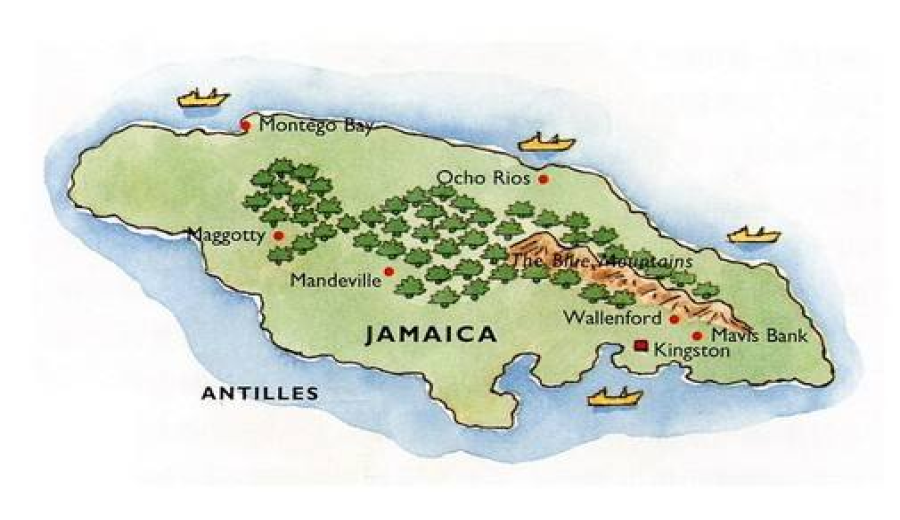
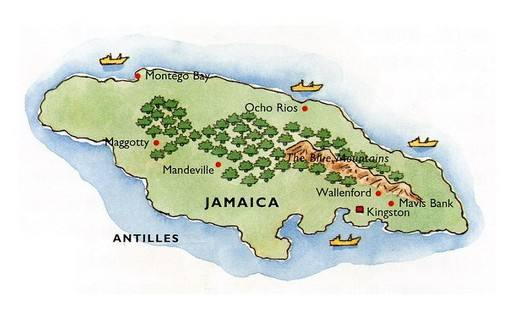 When it comes to Jamaica, many coffee lovers immediately think of the famously prestigious Jamaica Blue Mountain. This coffee is renowned for its perfect harmony of acidity, sweetness, body, and bitterness, with delicate aromas and a smooth mouthfeel, regarded as an ultimate delicacy in the coffee world. Traditionally, the term "Blue Mountain" refers to coffee grown at elevations above 1,000 meters in the Blue Mountain region on the eastern side of Kingston, Jamaica’s capital. Currently, Mavis Bank is the largest coffee estate in the area, with its barrels bearing the exclusive M.B.C.F logo. All Jamaica Blue Mountain coffee is strictly certified by the government-run Coffee Industry Board (CIB).
As for coffee grown at lower elevations or outside the designated Blue Mountain zones, they are classified as Jamaica High Mountain or Jamaica Prime Washed. Although these coffees also come from Jamaica, their flavor profiles differ significantly from those of Blue Mountain coffee. It’s worth noting that the non-Blue Mountain growing areas are nearly twice the size of the core Blue Mountain region, accounting for over 70% of the country’s total coffee production. As a result, even if you visit the area in person, you may not necessarily be able to purchase genuine Blue Mountain coffee.
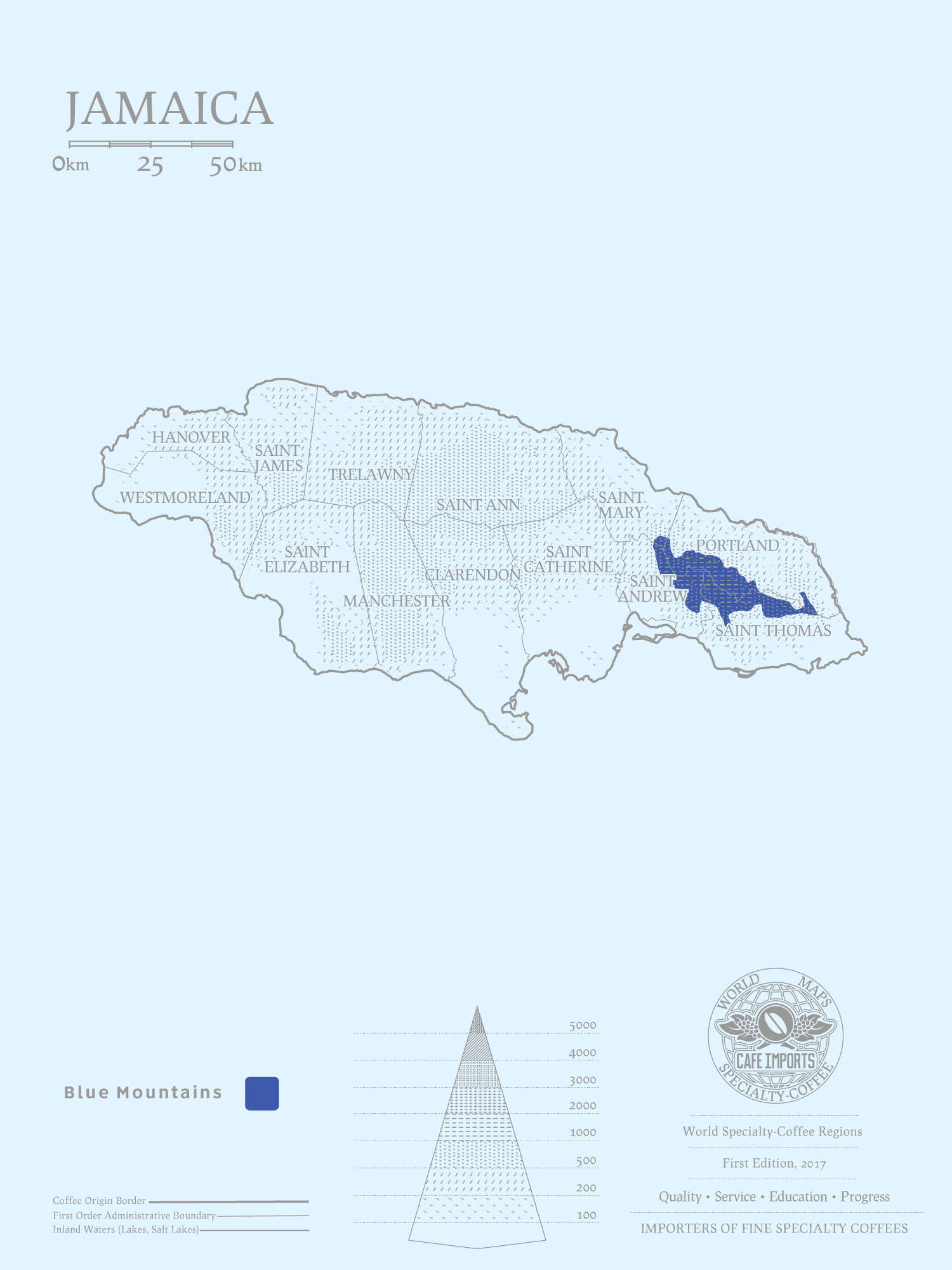
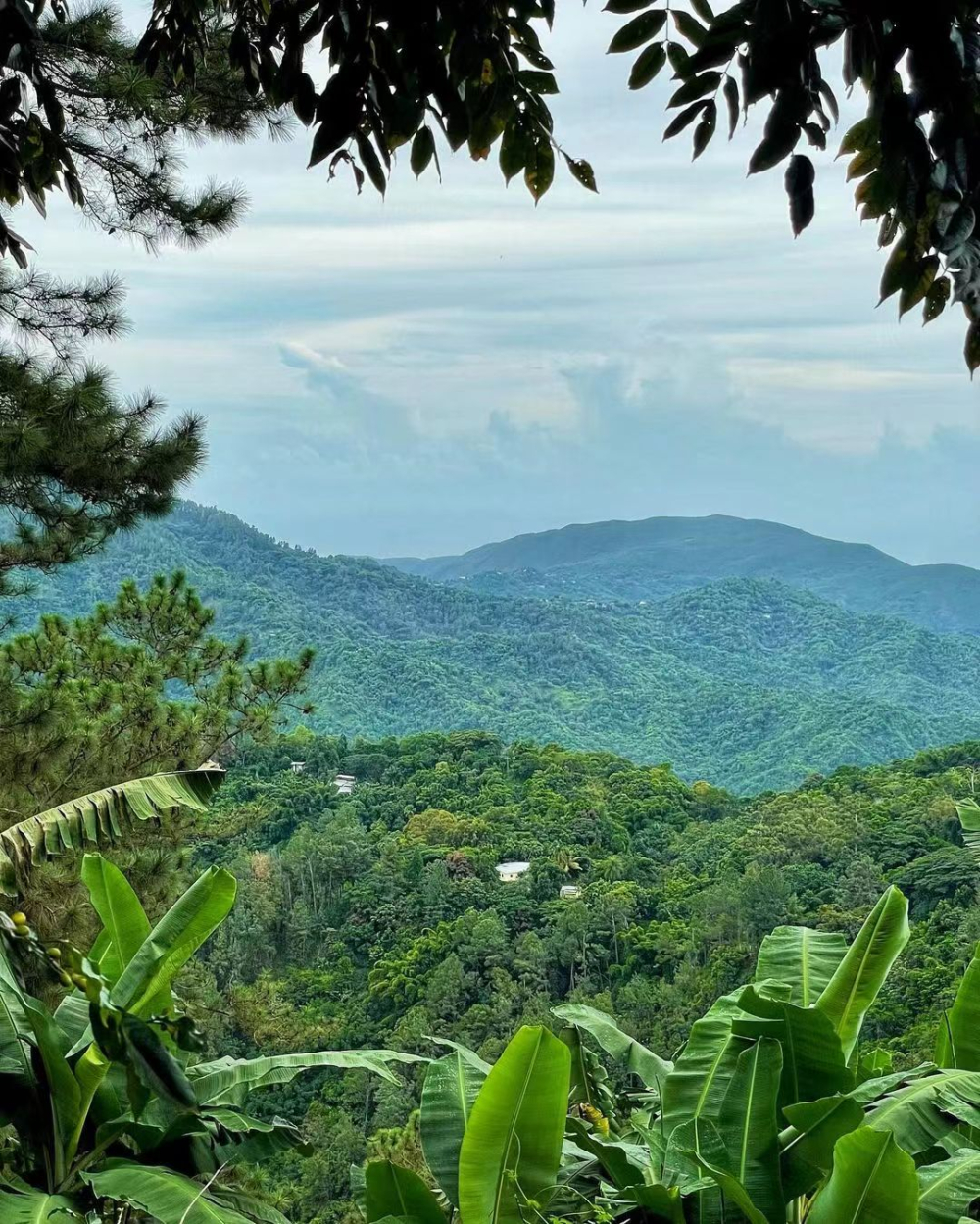
 The core growing regions of Jamaica Blue Mountain include St. Andrew, Portland, and St. Thomas. The actual planted area of the Blue Mountains is only about 6,000 hectares, so not all coffee labeled as "Blue Mountain" on the market necessarily comes from this core zone. Additionally, there are 12,000 hectares of land used to produce High Mountain Supreme and Jamaica Prime Washed coffee. Genuine Blue Mountain coffee enjoys uniquely favorable growing conditions—its cool climate, frequent cloud cover, abundant rainfall, and diverse vegetation such as banana and avocado trees growing alongside coffee in terraces all contribute to its distinctive flavor profile.
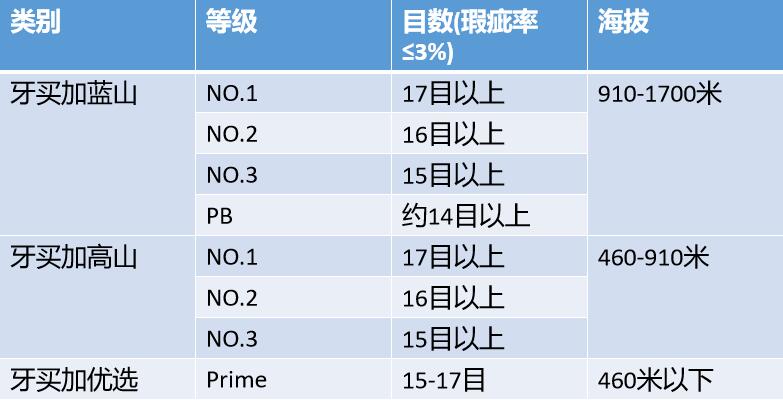
According to CIB standards, both Blue Mountain and High Mountain coffee are divided into four grades: NO.1, NO.2, NO.3, and PB (peaberry), with NO.1 being the highest grade, commonly referred to as "Blue Mountain No.1." Only coffee beans grown at elevations above 910 meters can be officially recognized as Jamaica Blue Mountain coffee. High Mountain Supreme coffee (Jamaica High Mountain Supreme), on the other hand, is grown at elevations below 666 meters. While its flavor is slightly inferior to Blue Mountain, it is still considered a close relative in the industry and serves as an ideal alternative for many consumers unable to access true Blue Mountain coffee.
Blue Mountain coffee is subdivided into different grades based on quality, with NO.1 being the top-tier and PB being the peaberry. Overall, Blue Mountain coffee benefits from one of the most ideal growing conditions in the world. The Blue Mountain range exceeds 2,100 meters in elevation, featuring a cool climate, ample rainfall, and fertile volcanic soil—all providing optimal conditions for coffee cultivation. The region employs a terraced mixed-planting method, where coffee trees often grow alongside banana and avocado trees. This not only offers shade but also enhances microclimate stability.
 The market distribution of Jamaican coffee is highly concentrated. Statistics show that approximately 90% of the world’s Blue Mountain coffee eventually flows into the Japanese market, with less than 10% distributed to other countries, resulting in a persistent supply-demand imbalance. In the past, Britain’s Langford Brothers served as a major supplier, followed by the Edmonds Group, which obtained part of the supply through Jamaica’s Salda Foods. Since Blue Mountain coffee is mostly controlled long-term by Japanese buyers, the general public can typically only access it through specific channels—and at consistently high prices.
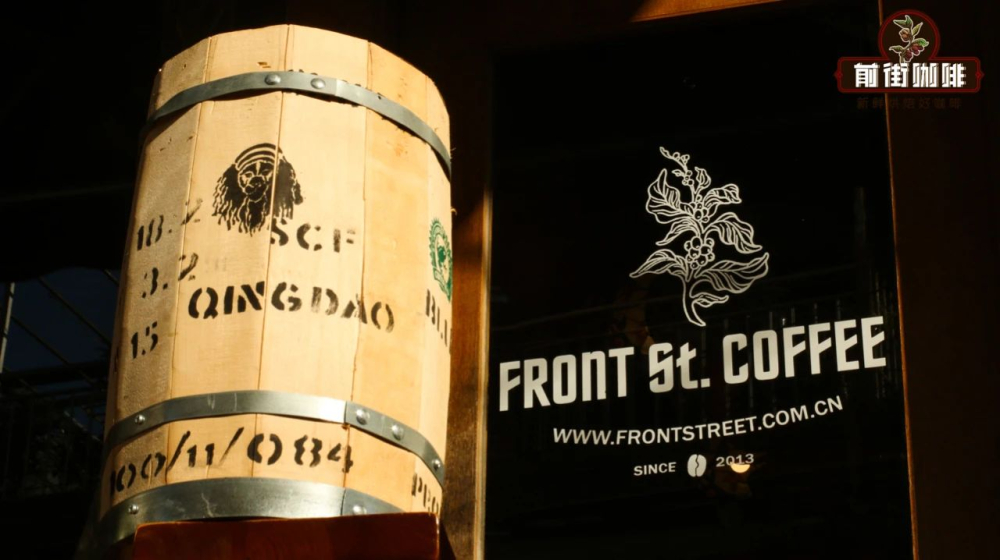
Blue Mountain coffee is transported using traditional wooden barrels, each holding 70 kilograms. These barrels draw inspiration from the Bonifieur barrels previously used in Guadeloupe and usually feature manufacturer and brand information. The Jamaica Coffee Industry Board issues certificates for all exported pure Blue Mountain coffee and stamps an official certification seal before export. It’s important to note that so-called "Blue Mountain-style" or "Blue Mountain blend" coffees on the market are often mixtures of some Blue Mountain beans and High Mountain beans, and cannot deliver the full flavor profile of genuine Blue Mountain coffee.
Authenticating Blue Mountain coffee beans can be approached from multiple aspects. First, observe the appearance: green beans have a natural greenish hue, medium-sized with slight curvature; roasted beans expand noticeably and appear plump. When hand-grinding, the cellular structure—due to high-altitude growth—is relatively loose, giving a crisp and smooth grind feel without significant resistance. Aroma-wise, true Blue Mountain coffee emits a rich and deep fragrance, whereas typical blends struggle to present such dense aromatic intensity. In terms of taste, Blue Mountain coffee is famed for its extreme balance, with harmonious acidity, sweetness, and bitterness, entirely free of harsh bitterness, and often accompanied by a soft fruity aftertaste and lingering richness. Additionally, authenticity can be verified via three types of official certificates: quality certificates, producer authorization to sell certificates, and certificates of origin.
 For brewing recommendations, you can use a KONO filter cone, with 15 grams of coffee grounds, water temperature around 88°C, grind size passing 75% through a Chinese standard No. 20 sieve, and a water-to-coffee ratio of 1:15. Total extraction time should be controlled to around 1 minute and 30 seconds. The first step is to pour 30 grams of water for a 30-second bloom, followed by the first pour to 120 grams then stopping, using a slow, fine stream in circular motions; the second pour continues to 225 grams, slightly increasing the speed to avoid channeling. This parameter setup helps fully showcase the delicate flavors and rich body of Blue Mountain coffee.
Finally, the flavor profile of Blue Mountain coffee is described as clean, layered, and mild, with distinct chocolatey sweetness and strong body. Its acidity, sweetness, and bitterness are perfectly balanced, with almost no noticeable bitterness. The acidity is soft and pleasant, and the finish often carries a lingering fruity aroma, leaving a memorable impression. With the right understanding and brewing approach, you’ll be able to get closer to the true essence of this world-class coffee.
The above content is compiled by CoffeeHunters, a coffee news website.


