







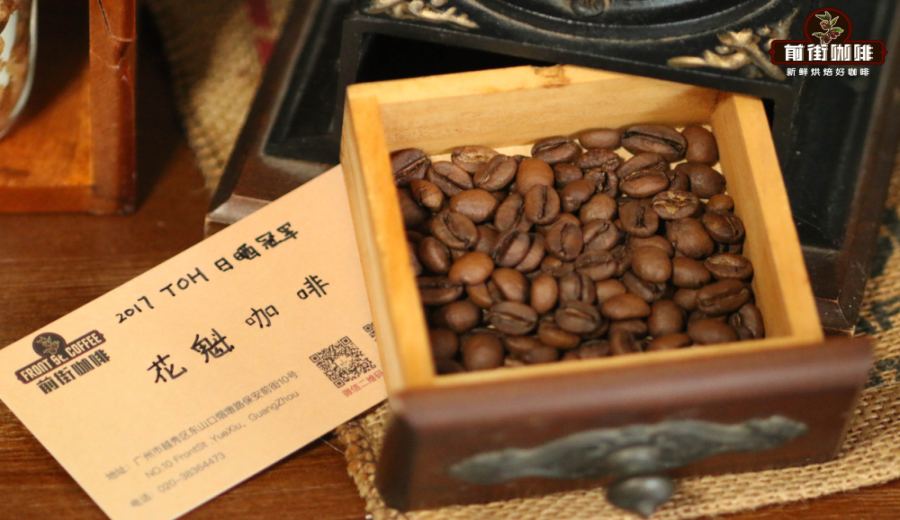
Introduction:Since its debut in 2017, the celebrated Huakui coffee beans from a well-known origin have garnered widespread acclaim for their bright, strawberry-cream-like flavor profile, evolving through to their 8.0 version. However, many coffee enthusiasts have noted changes in the flavor of Huakui in recent years. This article delves into the origin of the Huakui name, the characteristics of its growing region, its natural sun-drying processing method, and provides a detailed look at multiple versions procured by a particular shop over the years—from G1 to 4.0—including roast curves and pour over parameters to help you fully grasp the evolution and unique traits of this classic coffee bean.
Since its launch in 2017, Huakui coffee beans quickly captured the palates of coffee lovers worldwide with their distinctive strawberry-cream flavor notes. These sun-dried beans, sourced from the Hambella area of Ethiopia’s Guji region, have now reached their 8th generation—Huakui 8.0. Yet, many consumers have observed that recent Huakui versions differ from the original. What is it that gives Huakui its unique charm? And why have subsequent versions shown flavor variations? This article will thoroughly dissect the history, regional background, processing methods, and performance of various Huakui versions, providing insights for everyone from beginners to advanced enthusiasts.
When it comes to Yirgacheffe in Ethiopia, “Huakui” is an absolute star bean that cannot be overlooked. Since its initial appearance in 2017, it stunned the market with its intense strawberry and cream aromas, quickly becoming a signature bean for many coffee shops. However, because its first-year performance was so outstanding, each new harvest of Huakui thereafter has faced tough comparisons. To date, the Huakui series has been released up to version 8.0, but some consumers have commented, “This year’s Huakui doesn’t taste like it used to.” What has caused the flavor of this once sensational product to change? We’ll start with the growing region and break it down step by step.
The growing region of Huakui—Guji—was originally part of the Sidamo province until 2010, when the Ethiopian Commodity Exchange (ECX) designated it as a separate region. Guji is located southeast of Yirgacheffe and features diverse terrain, including high mountains, valleys, and plains. The soil is fertile black clay (Vertisol), with layers up to two meters deep, and elevations generally exceed 1800 meters. The large diurnal temperature variation here helps coffee cherries accumulate sugars and flavor compounds, making it an ideal environment for producing specialty coffee.
Among these, Hambella is one of the key sub-regions of Guji, adjacent to Kochore in Yirgacheffe, and also surrounded by smaller regions such as Shakiso, Uraga, and Kercha. Hambella is home to about 20 processing facilities of varying scales. The local residents mostly live in the high mountains at elevations around 2000 meters. Life is simple yet full of optimism and vitality. The Huakui coffee produced on this land is the result of villagers hand-selecting each red cherry, followed by a rigorous processing procedure.
The origins of Huakui can be traced back to 2017. That year, the Buku Abel processing plant under DW Company won the TOH (the Taste Of Harvest) green coffee competition with a lot of sun-dried beans that exhibited strong strawberry and cream aromas. These beans were later introduced to China by a green coffee trader and, due to their outstanding performance in the competition, were given the distinctly Eastern name “Huakui.” It’s worth mentioning that in the same year, a Chinese competitor using this Huakui variety won second place in the China leg of the World Brewers Cup, further boosting its fame.
So, where does the name “Huakui” come from? Originally, this bean was internationally named after its growing region, “Hambella,” but in the Chinese market, to reflect its championship status and elegant flavor profile, it was translated as “Huakui,” meaning “the foremost flower among blooms.” This naming not only aligns with its flavor characteristics but also achieved success in market promotion.
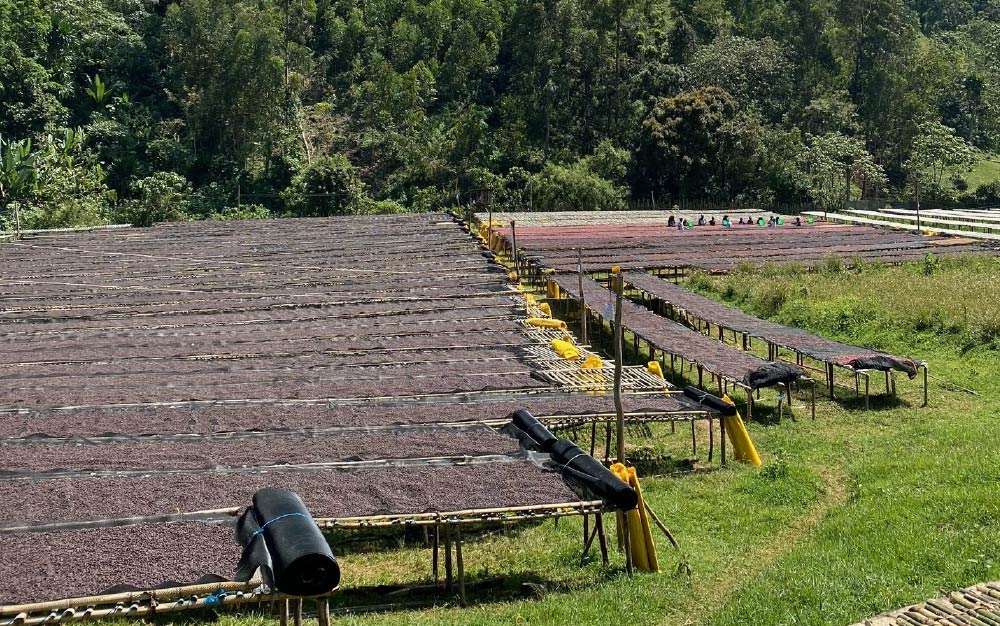
The sun-drying process for Huakui also follows strict standards. The main harvesting season runs from December to January each year, with farmers selecting only red cherries with a sugar content of 30 or higher for sun-drying. The first two days require maintaining appropriate humidity to facilitate fermentation, while leveraging the high-altitude diurnal temperature variation (with nighttime temperatures dropping as low as 12°C) to prevent over-fermentation. Shade is applied during the daytime heat, and rainfall is guarded against at night using thick plastic sheeting. After approximately 18 days of sun-drying, when the moisture content drops to 13%, the process stops. The beans are then rested in an environment of 12-22°C and 45-55% humidity for about 50 days until the moisture stabilizes at around 11%, after which they are hulled and sold.
A certain shop - Huakui G1: Sourced from Hambella, Guji, processed at Buku Able, grown at an altitude of 2250-2350 meters, of local landrace variety, Grade G1, sun-dried. Flavor notes include strawberry, passion fruit, berries, pineapple, cream, and nuts.
Huakui 2.0: Also from Hambella, Guji, but processed at Goro, at an altitude of 2316 meters, of landrace variety, sun-dried, with flavor highlights of floral notes, tropical fruits, red wine, and nuts.
Huakui 3.0: From a similar growing region as the previous one, processed at Goro, at an altitude of 2300 meters, of landrace variety, with flavors leaning toward floral, berries, mango, pineapple, and apricot.
Huakui 3.1: Processed instead by Mansa Shantang Processing Plant, at an altitude of 2125 meters, of Mansa landrace variety, with flavors including tropical fruits, citrus, caramel, and cream.
Huakui 4.0: Returns to Buku Able processing plant, at an altitude of 2350 meters, but the variety changes to Dega—a variety that gained attention in the 2020 CoE competition—with flavors showcasing layers of rose, cream strawberry, citrus, passion fruit, and oolong tea.
Regarding the Dega variety, there are two theories about its name: one suggests it emits an aroma similar to a certain kind of fire starter wood when roasted; the other claims that “Dega” in Amharic refers to highland and shady areas, matching its growing environment. Although it didn’t make the top 14 in CoE, it still holds high potential.
In terms of roasting, a certain shop has developed meticulous roast curves for different versions of Huakui. For instance, Huakui G1 uses a Yangjia 800N machine, with a charge weight of 480g, starting at 160°C, going through a series of temperature and airflow adjustments, and finally dropping at 198.1°C, with a first crack development time of 1 minute and 20 seconds. Each Huakui’s roast curve is fine-tuned according to its regional traits, processing method, and flavor goals to highlight its optimal expression.
Finally, to fully showcase Huakui’s rich layers, it is recommended to use a V60 dripper for pour over, with water temperature controlled at 90-91°C, a brew ratio of 1:15, and grind size around EK43s setting 10 (fine sugar size, 20-mesh sieve bowl sieving to 80%). During brewing, begin with a 30-second bloom using 30 grams of water, followed by sequential pouring totaling 225 grams of water, with total extraction time around 2 minutes and 10 seconds. This brings out Huakui’s bright acidity and complex fruity notes.
In summary, what makes Huakui coffee beans so captivating lies not only in their unique flavor profile but also in the story behind their growing region, refined processing techniques, and continually evolving variety selections. From G1 to 8.0, each generation of Huakui carries the essence of Ethiopian coffee, reflecting subtle shifts in variety, climate, and processing technology. Understanding these details will allow you to appreciate the depth and complexity even more when tasting.
The above content is compiled by CoffeeHunters, a coffee news website.


