








Introduction:Yunnan, as an important coffee-growing region in China, has seen its small-bean coffee gradually make its mark on the international market thanks to its unique geographical conditions and varietal evolution. This article delves into the advantages of Yunnan’s coffee-growing regions, the evolution of its main coffee varieties, and its flavor characteristics, while also analyzing the potential health and weight management benefits of specialty black coffee—offering you a comprehensive understanding of this black brew from the highlands.
Yunnan, a place renowned for its Pu'er tea, is now also one of China's major coffee-producing regions. From the first coffee seedlings introduced by French missionaries to the current commercial cultivation dominated by Catimor, and then transitioning toward a specialty route, Yunnan’s coffee industry has gone through over a century of development. In this region with diverse altitudes and unique climates, coffee cultivation shows great potential, especially in the field of specialty black coffee, whose weight loss and health benefits have garnered attention.

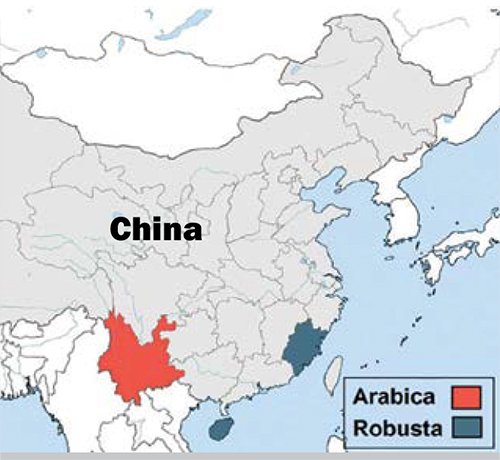
Coffee cultivation in China is mainly concentrated in Yunnan and Hainan. Due to its coastal plains, Hainan’s elevations are generally below 800 meters, coupled with its hot and humid climate, making it unsuitable for growing Arabica, which emphasizes delicate flavors. Instead, it primarily cultivates Robusta, which is more resistant to disease but offers coarser flavors. In contrast, Arabica requires an environment at elevations of at least 1,200 meters or higher, along with suitable temperature, humidity, and meticulous field management, to exhibit rich layers and elegant taste.
Yunnan is located on the plateau with varied terrain, and its coffee-growing areas generally range in altitude from 800 to 1,800 meters. With significant day-night temperature variations, fertile soil, moist air, and distinct dry and rainy seasons, these conditions provide an ideal growing environment for Arabica. As a result, Yunnan has gradually become an important hub for specialty coffee in China, especially as domestic coffee consumption has grown rapidly in recent years, further enhancing its significance.
The history of coffee cultivation in China can be traced back to the late Qing Dynasty, when missionaries played a key role amid the backdrop of foreign powers entering and cultural exchanges. Among them, French missionary Father Timothée Pernot, while traveling to Zhugula Village in Binchuan, Yunnan to build a church and spread Christianity, brought a coffee seedling with him out of personal passion and planted it next to the church—thus marking the beginning of Yunnan’s coffee story.
It wasn’t until the 1950s that Yunnan began large-scale coffee cultivation, primarily for export, especially targeting the Soviet market. Surprisingly, even when domestic coffee consumption was not yet widespread, Yunnan coffee beans gained a good reputation in the international market for their outstanding quality and were hailed as premium beans. This phase laid a solid foundation for the future development of Yunnan coffee.
During the reform and opening-up period, with the entry of international brands such as Nestlé into the Chinese market, Yunnan coffee saw a second wave of development. Nestlé chose to establish a purchasing base in Yunnan. At that time, the main variety cultivated was Typica, which possessed classic Arabica flavors, but due to its weaker disease resistance, Nestlé later promoted Catimor, which had strong resistance to leaf rust but relatively ordinary flavor. This move gradually led to Catimor replacing Typica and becoming the dominant variety in Yunnan’s coffee cultivation, accounting for approximately 90% of total production.
By the 21st century, with the rise of the global specialty coffee movement, Yunnan also began to focus on varietal improvement and a transition toward specialty coffee. However, in 2012, when Nestlé reduced its procurement of Yunnan coffee beans, local growers turned to the specialty coffee path in pursuit of higher quality and market positioning. With the support of national policies and the promotion by media such as 《Coffee or Tea?》 and 《The Road to Wealth》, Yunnan coffee quickly gained prominence.

In exploring varieties and processing methods, Yunnan’s coffee farmers and brands have continuously experimented. For example, one coffee brand, in its ongoing quest for specialty coffee, relocated to Yunnan and took on the challenge of cultivating the traditional and elegantly flavored Typica variety, aiming to restore the essence of Yunnan’s small-bean coffee. In 2021, the brand’s coffee farm in Yunnan saw its first bountiful harvest. Though the yield was only a little over a hundred kilograms, the sun-dried Typica beans produced were highly praised in the market for their pure aroma and rich layers. Their flavor profile included citrus acidity, a nutty backbone, fruity notes, brown sugar sweetness, and black tea aftertaste, fully showcasing the unique terroir of Yunnan’s high-altitude regions.
From a health perspective, black coffee—pure coffee without sugar or milk—has been found in recent years to offer multiple potential benefits. According to a 2021 study, consuming an appropriate amount of black coffee before exercise can enhance fat-burning efficiency. Additionally, research has shown that black coffee has positive effects on preventing chronic diseases such as dementia and liver disease. For consumers seeking a healthy lifestyle or body management, choosing high-quality Yunnan specialty black coffee not only allows them to enjoy its flavor but may also bring additional health benefits.
The above content is compiled by CoffeeHunters, a coffee news website.


