







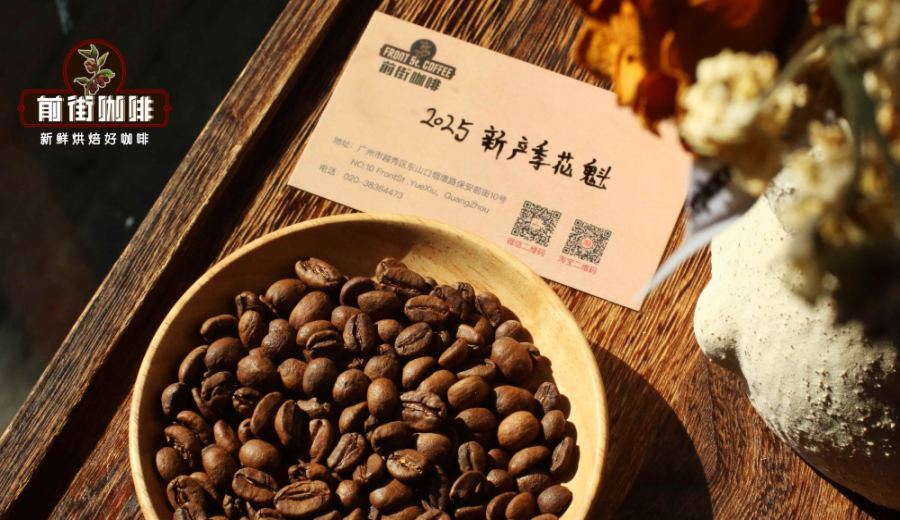
Introduction:Want to understand where the honey-processed coffee from Ethiopia’s Sidamo region comes from? Or how coffee bean grades are strictly categorized? This article delves into the geography and terroir of the Sidamo and Guji regions, explores the naming origin of the Huakui coffee, and details the ECX’s nine-tier grading system. It also provides recommended pour over parameters and real flavor profiles for the 2025 new crop Huakui 5.0, guiding you from origin to cup in mastering this popular specialty bean.
Sidamo is one of Ethiopia’s two premier specialty coffee regions, alongside Yirgacheffe, renowned for its intense juiciness and captivating citrusy aftertaste. But did you know? The term “honey-flavored coffee” from Sidamo is actually a colloquial reference to certain processing flavors of the region, while the true fame of this area comes from a sun-dried bean variety called “Huakui.” This article not only explores how Sidamo’s geography and microclimate shape its unique flavors, but also explains the grading logic of the Ethiopian Commodity Exchange (ECX), and shares the best pour over recommendations and flavor characteristics for the 2025 new crop Huakui 5.0—giving you a full understanding from origin to brew.
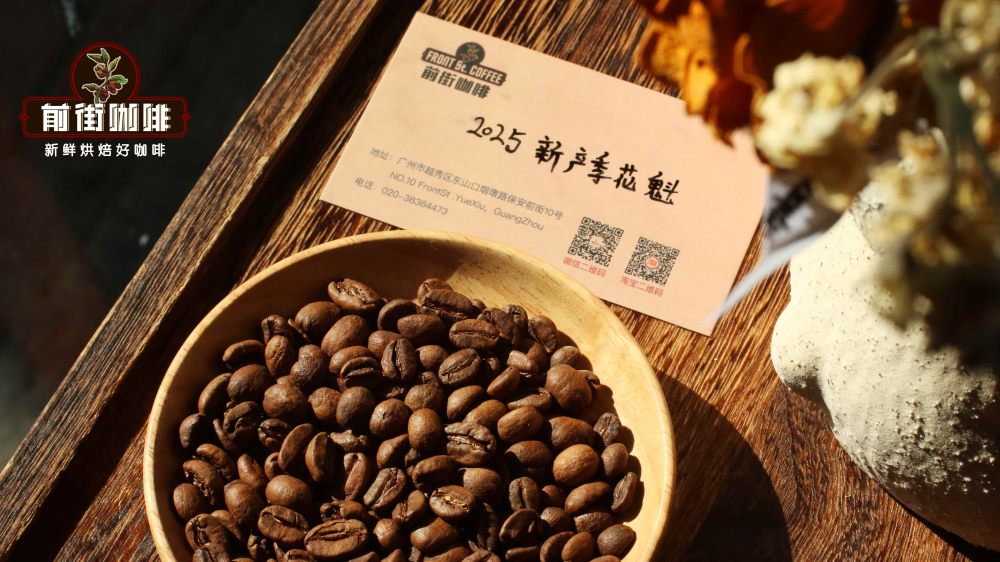
When it comes to Huakui coffee, many beginner coffee enthusiasts may find it unfamiliar, but mention Yirgacheffe and almost everyone thinks of Ethiopia. In fact, Huakui also originates from this birthplace of coffee and is an exceptionally popular specialty-grade bean. In specialty coffee shops, washed Yirgacheffe and Huakui 5.0 are often top sellers. If you’re not accustomed to the bright lemon acidity of Yirgacheffe, you might want to try the lower-acidity, fruit-forward, and citrusy-aftertaste coffee from the Sidamo region.
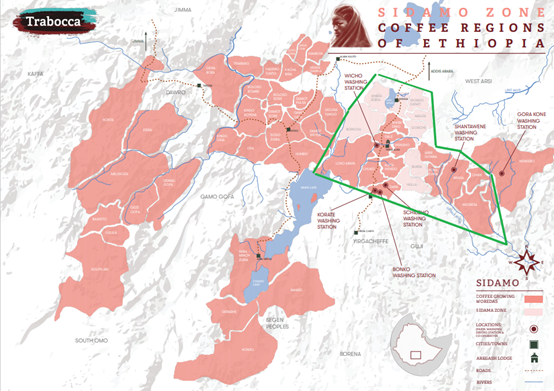
Sidamo is located in southern Ethiopia, within the East African Rift Valley region, spanning a vast area from Arsii and Bale in the east to Gamogofa in the west, with planting altitudes of approximately 1400 to 2000 meters. The region features diverse soils and rich microclimates, along with numerous native coffee varieties, resulting in significant flavor differences across areas. Among them, Guji and West Arsi are the two most representative sub-regions under Sidamo. Notably, Guji was originally part of Sidamo but was independently designated as a new region by the ECX in 2010, showcasing its unique terroir potential.
The Guji region has varied terrain, including high mountains, deep valleys, and expansive plains, with fertile black soil (Vertisol) nearly two meters deep and an average altitude exceeding 1800 meters. The significant diurnal temperature variation and excellent drainage provide ideal conditions for growing specialty coffee. What brought Guji international acclaim is the “Huakui” coffee, which stood out in global competitions.
The so-called Huakui coffee is actually originally named Hambella, produced in Ethiopia’s largest coffee-growing region—Guji, administratively part of the Oromia Region. Hambella holds a unique location, separated from Yirgacheffe Kochere to the west by mountains over 3200 meters high, and bordered by other Guji sub-regions to the northeast and south, making it one of the highest-altitude coffee-growing areas in Ethiopia. The region currently has nearly 20 processing facilities of various sizes, among which the sun-dried lots from the “Buku Abel” processing plant won the Ethiopian group championship at the 2017 TOH (the Taste Of Harvest) green bean competition with their intense strawberry and cream aromas. These beans were later introduced to China by Beijing-based green bean importer Hongshun, and made a splash at that year’s China Brewing Championship, where contestant Li Jianfei took second place using them. Because their performance far surpassed that of the Geisha entries of the same period, they were dubbed “Huakui”—meaning the crème de la crème of geishas.
Later, DW Company established multiple processing plants in the core area of Hambella, Dimtu, including “Buku Abel,” “Buku Saysay,” “Haro Soresa,” and “Tirtiro Goye,” with an annual output of about 1100 tons. However, it’s important to note that strictly speaking, only the sun-dried beans from the “Buku Abel” processing plant can be called “Huakui coffee beans.” Additionally, each year, due to climate variations, the Huakui series is sequentially named as 2.0, 3.0, 3.1, 4.0, 5.0, and the latest 6.0, to distinguish the flavor characteristics of different vintages.
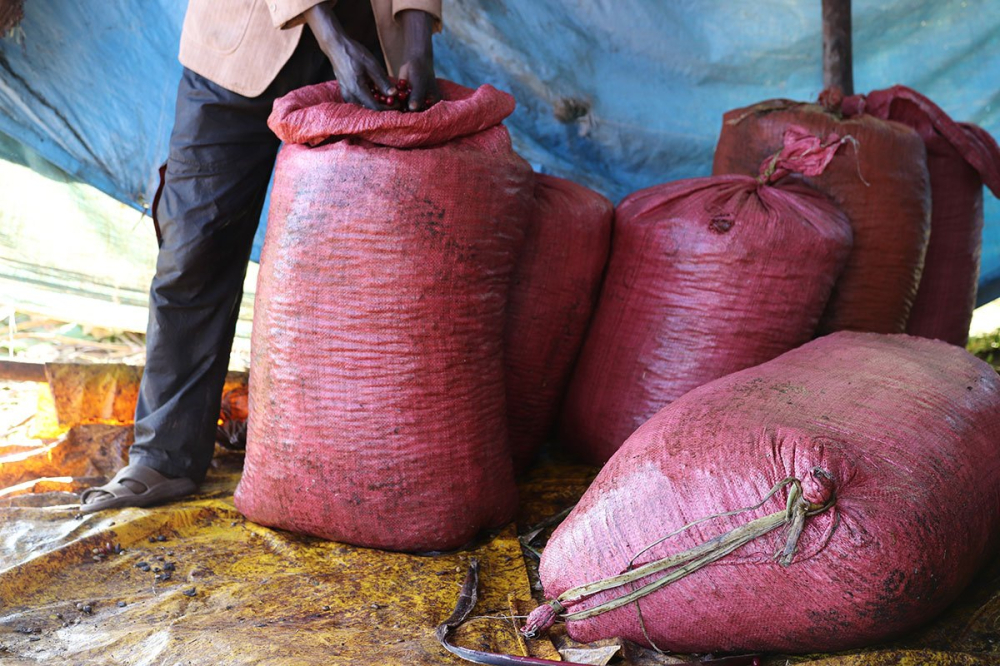
In the Sidamo region, sun-drying is the predominant processing method, believed by local producers to impart richer fruitiness and smoother mouthfeel to the coffee. Locally, farmers only harvest fully ripe red cherries, manually sort out unripe or overripe beans, then evenly spread the coffee cherries on raised drying beds. During drying, the cherries are regularly turned to ensure even moisture loss and any moldy or defective beans are promptly removed. Once the skins are fully hardened, a pulper is used to remove the mucilage and parchment layer, followed by final sorting and grading before export. The 2025 new crop Huakui coffee is graded as G1, the highest grade for Ethiopian green beans.
Before the establishment of the ECX (in 2008), Ethiopian coffee grades were primarily classified based on the number of defects in a 300g sample. Washed beans were typically G1 to G2, while sun-dried beans, due to technical limitations, were mostly G3 to G5. However, with advancements in processing techniques, high-quality sun-dried beans can now also achieve G1–G2 grades. After the ECX was founded, grading shifted to a comprehensive evaluation of “physical characteristics” and “cupping flavor,” categorizing coffee into three classes: Specialty (few defects, good flavor), Commercial (above domestic consumption level but not yet specialty), and Local/Domestic (many defects, poorer flavor, often stale or improperly stored).
Among these, Specialty and Commercial grades are mainly for export, with scoring weights of 40% for physical characteristics (including defect count, bean size, color, and aroma) and 60% for cup quality. For physical traits, washed beans emphasize defect count (20%), size (10%), color (5%), and aroma (5%); sun-dried beans prioritize defect count (30%) and aroma (10%). G1 to G3 beans are also cupped again according to SCAA standards, with scores ≥85 classified as Q1 Specialty, 80–85 as Q2 Specialty, and those below 80 downgraded to G3. G4 to G9 are all grouped under Commercial grade, with no further subdivision.
Now that you understand the grading, how can you brew Huakui to bring out its best flavors? The key lies in bean freshness—all shipped coffee is roasted within five days, and it’s recommended to rest the beans for 4 to 7 days to fully develop aroma and complexity. If you purchase pre-ground coffee, while you can brew it immediately, the flavors dissipate faster, so it’s best consumed soon. The optimal approach is still to buy whole beans, grind them fresh, and brew for the complete flavor experience.
It is recommended to use a V60 dripper, with water at 90°C, a 1:15 coffee-to-water ratio (15g coffee), and a grind size passing 80% through a Chinese No. 20 standard sieve (approximately fine sugar texture). Use a staged extraction: start with a 30-second bloom using twice the coffee’s weight in water (30g), to release CO₂; then pour in a slow circular motion up to 125g, followed by a second pour to reach a total of 225g. Keep the total brew time to exactly 2 minutes. These parameters fully highlight Huakui’s layered profile, avoiding over-extraction or excessive acidity.
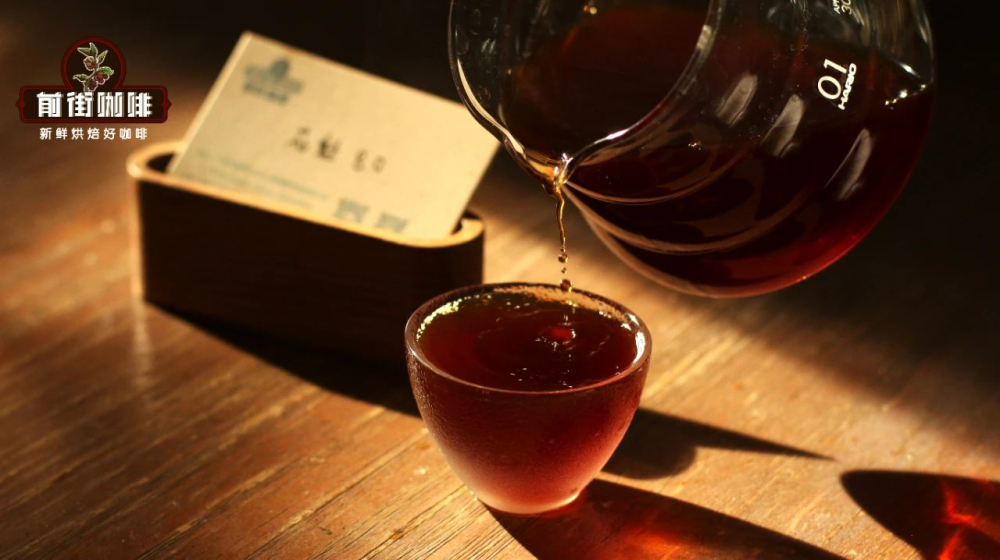
The 2025 new crop Huakui 5.0 exhibits distinct tropical fruit notes, including floral, berry, citrus, plum-like acidity and sweetness, along with a rich mango juice character. The finish delivers sweet notes of honey and black tea, overall balanced and multi-layered. Whether you prefer bright fruity flavors or mellow, lingering aftertastes, this bean will surprise you. With diverse flavor profiles across Ethiopia’s regions and over a dozen imported single-origin beans each with its own charm, explore the endless possibilities of this coffee kingdom.
The above content is compiled by CoffeeHunters, a coffee news website.


