







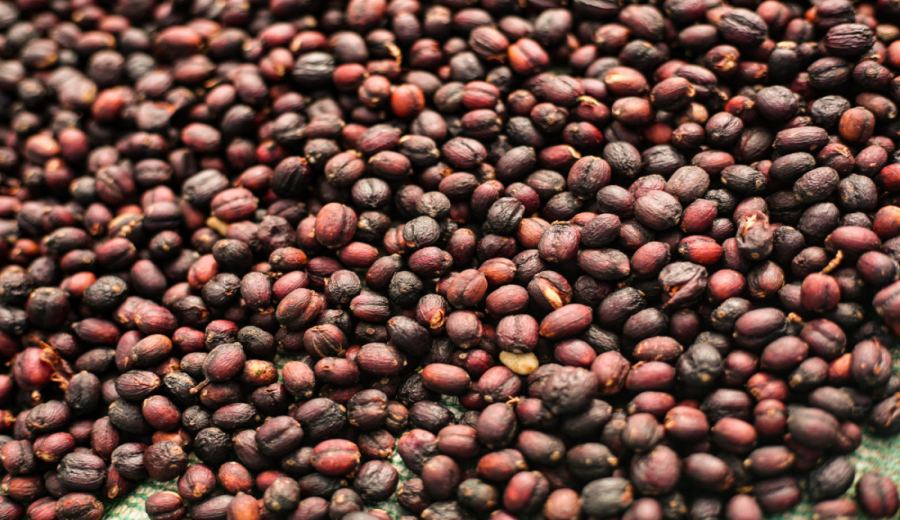
Introduction:An in-depth exploration of the Hambella region’s Huaku small-bean coffee from Ethiopia — covering its growing environment, historical evolution, flavor profile, and a side-by-side cupping comparison between the small-bean Huaku and Huaku 5.0. Professional pour over grind size and brewing parameters are also provided to help coffee enthusiasts master the brewing techniques for this popular bean.
Hambella (Hambella) is part of Ethiopia’s Guji zone, situated in the high-altitude areas of the Oromia region, and is one of the country’s highest-altitude coffee-growing sub-regions. Known not only for its refined natural (sun-dried) processing but also for gaining fame in 2017 when a coffee that won the TOH (Top of the World) Natural category championship was shipped to China and named “Huaku” (Flower Queen), kicking off the subsequent series of highly regarded Huaku coffees.
As more washing stations emerged within the Hambella region, the Huaku series gradually developed an X.0 coding system based on the harvest year — for example, Huaku 5.0 represents the 2020 crop. However, unlike the mainstream X.0 series, the small-bean Huaku is a unique version created by using a special small-sized bean variety and an independent processing method. Though it also comes from Hambella, it presents a distinctly different flavor profile compared to the mainstream Huaku.
Hambella features red-brown soil rich in humus, with an overall altitude of around 2,300 meters and significant day-night temperature variation. These conditions result in slow maturation of the coffee cherries, which is beneficial for the accumulation of flavor compounds. Local farmers only harvest fully red-ripe coffee cherries and employ a traditional refined natural processing method. During processing, the cherries are spread on African beds, strictly limited to 2–3 layers. For the first three days, the cherries are hand-sorted twice daily, with about 10% removed each time. Afterward, they are turned every three hours, and covered at noon and night to prevent rain or dew from affecting fermentation. The entire process takes approximately 21 days to ensure a final cup that is both intense and balanced.
Going back to 2017, Buku Abel washing station under DW Company won the TOH championship with a natural processed lot. When this coffee entered the Chinese market, it was named “Huaku,” instantly sparking widespread discussion due to its intense strawberry and cream aromas. Notably, in the same year, a Chinese barista using this Huaku coffee won the runner-up position in the China leg of the World Brewers Cup, further boosting its popularity. It’s important to clarify that the “Huaku” at the time referred specifically to the 2017 natural champion lot produced by Buku Abel washing station.
Subsequently, DW Company continued to expand by establishing multiple washing stations in Hambella, including Buku Abel, Buku Saysay, Haro Soresa, and Tirtiro Goye, and successively released Huaku 2.0, 3.0, 3.1, 4.0, and even Huaku 5.0 in 2021. Observing the naming logic, the Huaku X.0 series is generally ordered by harvest year — for instance, Huaku 3.0 corresponds to the 2019 crop, Huaku 4.0 to the 2020 crop, and Huaku 5.0 to the 2021 crop. However, as the scale of the washing stations grew and production increased, the overall flavor profile of the later Huaku series began to differ noticeably from the original 2017 Huaku. Therefore, strictly speaking, only the natural beans produced by Buku Abel washing station can be considered the original “Huaku.”
In contrast, the emergence of the small-bean Huaku dates back to 2018–2019, when some consumers detected flavors reminiscent of the 2017 champion lot in certain Huaku batches, though with slightly less body and aftertaste. Upon investigation, it was found that these distinctive flavors mainly came from a batch of smaller-sized coffee beans. Starting in 2020, the washing stations decided to process this type of small-bean variety separately, no longer including it in the X.0 series, thus forming what we now know as “small-bean Huaku.”
Here is a cupping comparison of the 2021 crop small-bean Huaku and Huaku 5.0 obtained by a coffee brand: Both beans are from the same new crop year. In terms of green and roasted bean appearance, the small-bean Huaku has noticeably smaller beans, with a higher proportion of the small-bean variety. Under the same cupping conditions, the small-bean Huaku exhibited deeper and more intense strawberry aromas, along with rich berry sweetness, and its flavor profile is closer to the original 2017 Huaku. In contrast, Huaku 5.0 showed a livelier berry acidity, with bright acidity accompanied by citrus, honey, mango, and floral notes. Its overall flavor leaned more toward the typical berry acidity and juice-like character commonly found in Guji coffees.
The specific flavor profiles are summarized as follows:
Small-bean Huaku: Creamy strawberry, citrus, passion fruit, fermented wine aroma
Huaku 5.0: Berry, citrus, honey, mango, floral
For the pour over test, we used a V60 #01 filter cone, with a water temperature set at 90–91°C, a coffee dose of 15 grams, a brew ratio of 1:15, and a medium-fine grind (using a Chinese standard No. 20 sieve, with about 80% extraction).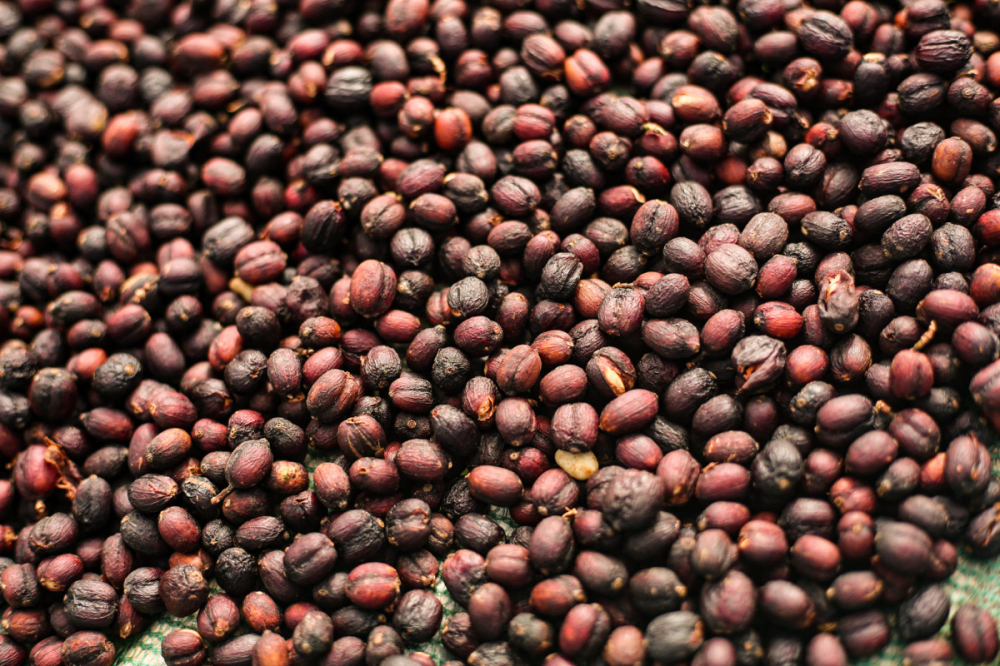 The brewing method followed a three-stage pour: The first pour involved adding 30 grams of water for a 30-second bloom, followed by a slow spiral pour to reach 125 grams for the first break. When the water level dropped close to exposing the coffee bed, water was added again up to a total of 225 grams, then the brew was stopped just before the coffee bed was about to be exposed again. The total brew time was controlled to exactly 2 minutes.
The actual cupping flavor comparison is as follows:
A brand’s small-bean Huaku: Prominent sweet berry notes, with intense creamy strawberry and passion fruit characteristics, a full-bodied mouthfeel, and outstanding fruity sweetness.
A brand’s Huaku 5.0: Showcased a fresh floral base, layered with berry, citrus, and plum-like acidity and sweetness, with a finish featuring mango juice-like sweetness and honey tones, and an aftertaste resembling the mellow sweetness of black tea.
Overall, if you prefer intense fruit aromas and a full-bodied mouthfeel, the small-bean Huaku is an excellent choice; if you enjoy a brighter acidity and juicy flavors, Huaku 5.0 is more suitable. Additionally, for pour over brewing, you may fine-tune the grind size according to personal taste. If you find the extraction insufficient, you can adjust to a slightly finer grind (around 82% extraction); if you experience over-extraction and excessive acidity, try a coarser grind (around 78% extraction) and reduce the water temperature to 89°C to achieve the best balance.
The above content is compiled by CoffeeHunters, a coffee news website.


